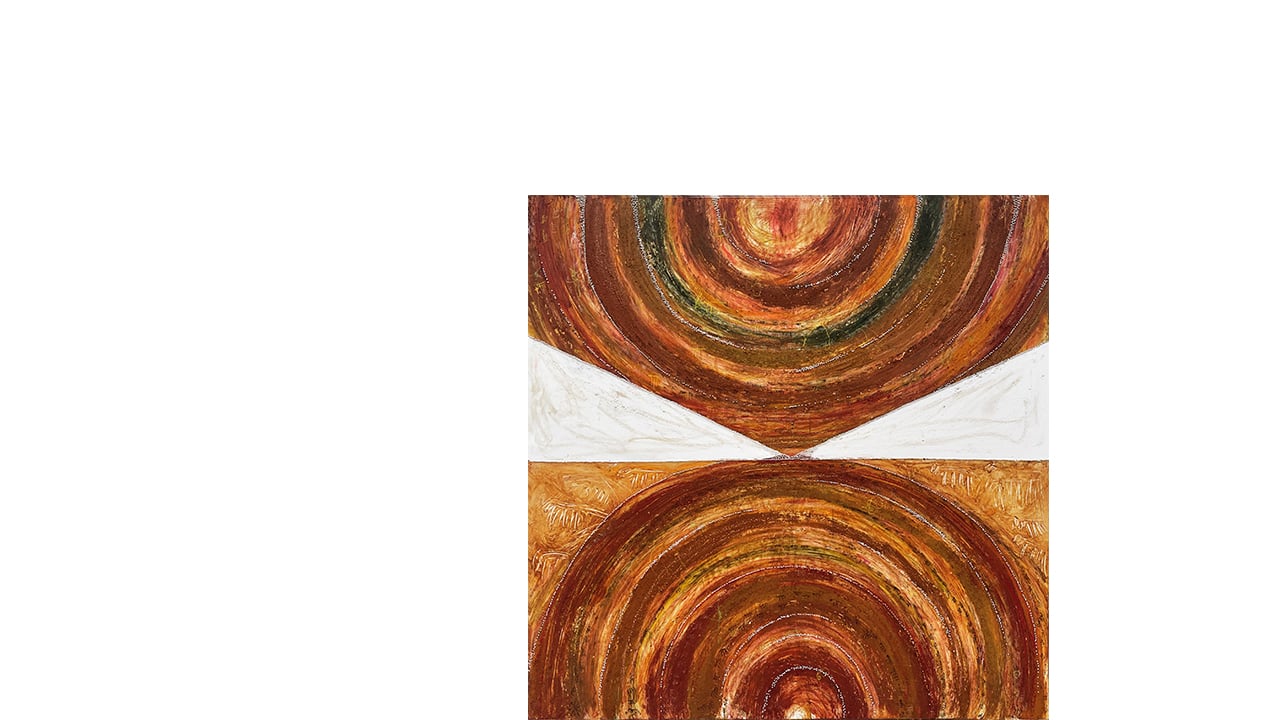
Jazoo Yang : All that will remain, something that will never disappear
Jazoo Yang

PIBI Gallery
125-6 Bukchon-ro, Jongro-gu, Seoul, Seoul 03053
Tue–Sat 11:00–18:00, closed Sun, Mon
Admission
Free Admission
About
PIBI Gallery presents solo exhibition by Jazoo Yang All that will remain, something that will never disappear from August 12 to October 3, 2026. Based in Korea and Berlin, Yang explores the memories and sensations that accumulate within urban environments, as well as the relationship between people and places. She collects objects and traces left behind at redevelopment sites and on the streets, incorporating them into a wide-ranging practice that encompasses painting, installation, live painting, and public art projects. Marking Yang's first solo exhibition with PIBI Gallery, the exhibition presents the new Bulgasari series (2026) along with Skin of Everything (2023–), a series combining large-scale paintings with sound and the Thorns series (2020–). The new Bulgasari series emerged from the age-old system of perception that Yang encountered in Yeongdeok's natural environment and the life of its local community after returning to Korea from Berlin in the wake of the COVID-19 pandemic. Practices such as the villagers' ways of reading the weather and their attitudes toward the sea and the mountains, often dismissed as unscientific or superstitious, offered the artist another way of engaging with the world. This perspective resonated with Yang's long-standing interest in Claude Lévi- Strauss's structuralism, particularly the idea that opposing terms such as nature and culture, or life and death, generate new meaning through a mediating presence. This line of thought, in turn, extended to Bulgasari, a creature from Korean folklore. An immortal being that grows by feeding on metal, Bulgasari cannot be killed by any weapon and regenerates even after being consumed by fire. In this exhibition, it serves as a metaphor for vitality and transformation, suggesting survival through continual changes in form. The Bulgasari series uses castor aralia thorns and pearl-headed pins as its primary materials. The two materials have opposing properties: the thorns grow outward to protect the plant, while the pins pierce the surface. They overlap on the canvas to form a surface that evokes skin, scales, and wounds. This process, in which disparate sensations and memories, as well as the natural and the artificial, establish new relationships, calls to mind Bulgasari's mode of existence, one of constant change and survival. The exhibition highlights the physical properties of Yang's materials and the bodily sensations involved in handling them. This is evident in the contrast between thorns and pearl- headed pins in the Bulgasari series, and in the Thorns series, in which castor aralia thorns are densely affixed to the interiors of storage boxes. In the Skin of Everything series, Yang responds spontaneously to the sensations she experiences upon encountering the canvas's elasticity, capturing the vibrations and reverberations that arise in the process as sound. The artist's physical acts of attaching, applying, and pressing materials by hand give rise to new tactile imagery from their surfaces. Meanwhile, the sounds produced by her bodily movements amplify immaterial sensation. Through the textures and forms of the works on display, these material and bodily sensations connect to a primordial state in which sensation and reality intermingle. Working both within and beyond institutional frameworks, Yang sustains a practice that unfolds almost like a form of prayer or invocation. Her approach is imbued with reverence and respect for things that have acquired vitality over long periods of time. (Excerpt from Heeseung Choi, Wishing for [ ] , 2026) Through the figure of Bulgasari, All that will remain, something that will never disappear seeks to summon onto the surface of painting what has been pushed beyond the bounds of rationality and has gradually disappeared, along with what ultimately remains and returns. Much as myths continually change across time and place, the works in the exhibition resist a single fixed meaning and call forth sensations that elude both linguistic and scientific explanation.