Tokyo Jazz Club, Tokyo
Jessy Razafimandimby

sans titre
13 rue Michel Le Comte, Paris, France 75003
Wednesday – Saturday: 12:00 – 19:00
Admission
Free Admission
About
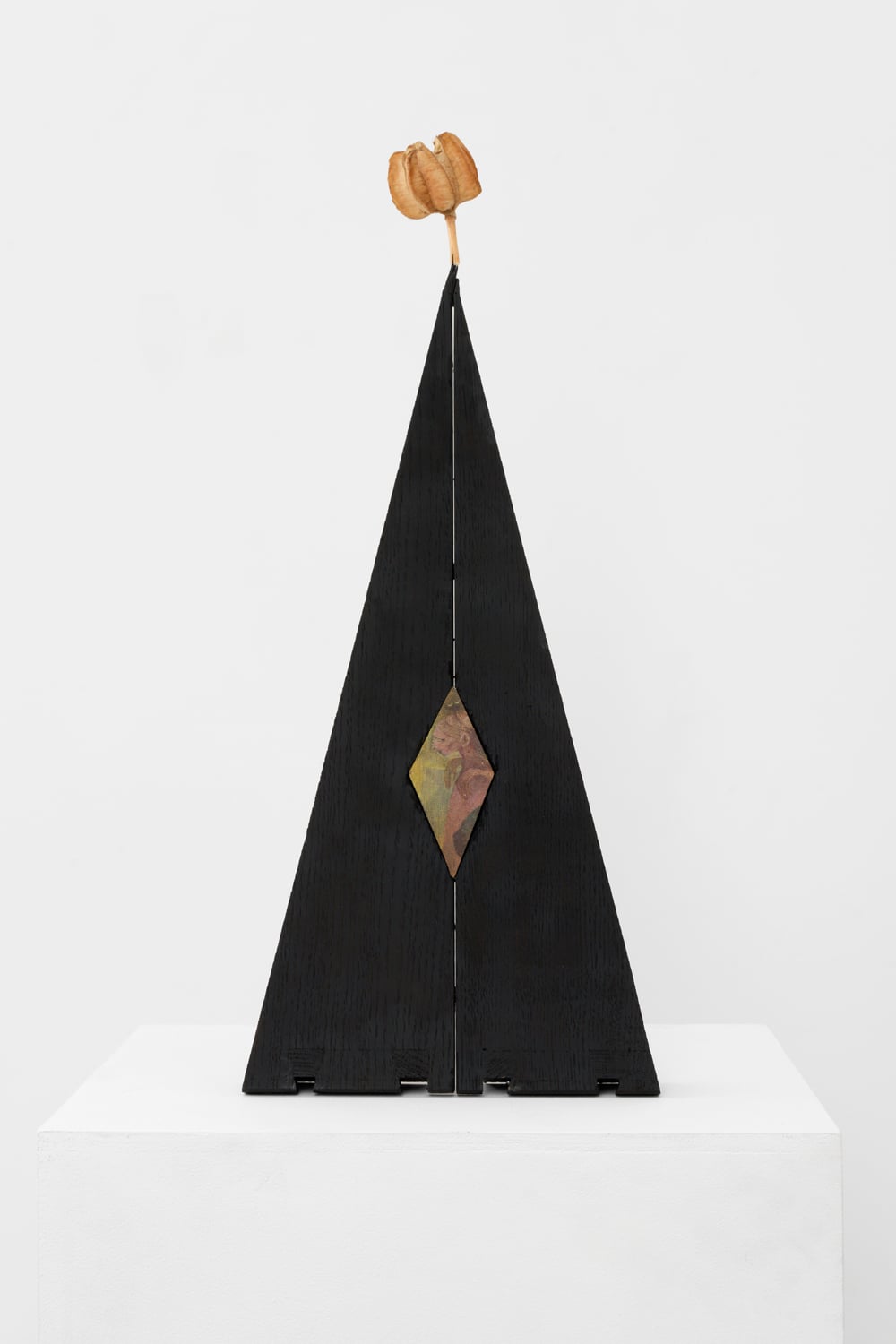
On the occasion of Tokyo Jazz Club, Sans titre presents a new series of paintings and sculptures by Jessy Razafimandimby (b. 1995, Madagascar), further exploring his ongoing interest in domesticity, memory, and the relationships between living beings and the objects that surround them. Wood takes on a central role in this new body of work. As a material imbued with memory, it retains traces of the gestures, uses, and histories that have shaped it. The artist works with fragments of old wood, preserving their original forms and the traces of time and use. By incorporating painted elements, he gives these materials a new narrative dimension, transforming their original purpose. Wood thus becomes both a support, a frame, and an integral part of the artwork, blurring the boundaries between painting, sculpture, and domestic object. These small constructions, reminiscent of miniature architectures, do not necessarily represent houses, but rather the seeds of possible worlds. Their intimate scale invites viewers to slow down, move closer, and lean in to discover images sometimes concealed within the wood. Smallness thus becomes a space in which the imagination can expand. Conceived for Tokyo, this presentation also resonates with certain Japanese traditions that place particular importance on the spiritual presence of objects, the changing seasons, and gestures of offering. In Stardust (2026), delicate dried flowers rest in a small black wooden vessel, evoking a silent offering. Here, the artist develops a poetics of attentiveness, in which an object's value lies less in its function than in the care and consideration it receives. In the paintings, human and animal figures coexist and surrender to moments of rest. The dog, a recurring motif in Razafimandimby's work, embodies a quiet resistance to the demands of productivity and the social conventions governing domestic life. Moving between painting and sculpture, the works form a fragmented narrative, inviting us to reconsider what might otherwise seem insignificant and to imagine alternative ways of coexisting with other beings and things.