Godspeed You Black Emperor
Ladji Diaby
Galerie Crèvecœur
9 rue des Cascades, Paris, Paris 75020
Tue–Fri 10am–6pm, Sat 11am–7pm
Admission
Free Admission
About
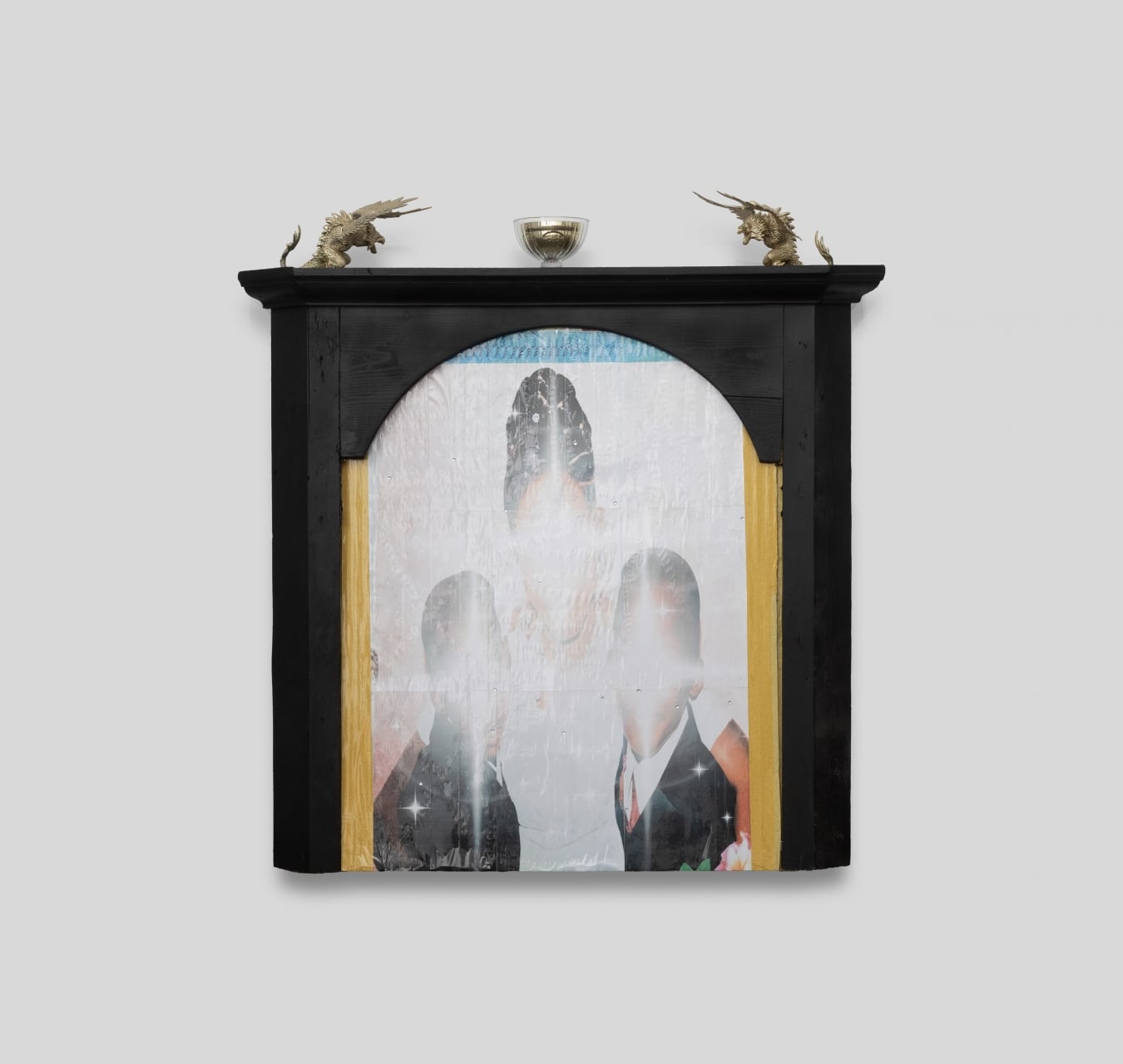
Né en 2000, franco-malien, diplômé des Beaux-Arts de Paris, Ladji Diaby travaille la sculpture, l'installation, l'image et la vidéo. Un foyer ne se résume pas aux murs qui l'érigent : il naît de gestes, d'objets qui traversent les générations. C'est cette logique que l'artiste transpose à l'exposition — une demeure provisoire, occupée quelques semaines avant de disparaître à son tour. Sa pratique part d'un geste hérité de l'enfance : les brocantes d'Ivry-sur-Seine avec sa mère, qui customisait les meubles ramenés à la maison — tissus, couleurs, décorations — pour leur donner une dimension plus personnelle et spirituelle. De cette collecte d'objets et de ce glanage d'images en ligne, Ladji Diaby construit des assemblages par voisinage : une lampe pharaon à côté d'un objet domestique, des Power Rangers près de motifs familiaux. Il compare volontiers sa méthode au sampling musical — un principe qu'il résume ainsi : « sampling, comme technique et choix stylistique ». Chaque objet devient un talisman, qui ne vaut que parce qu'il agit collectivement. Déplacer un meuble suffit parfois à déplacer tout un système de valeurs : une figure longtemps jugée démoniaque devient protectrice, un objet ordinaire devient sculpture. Comme il l'explique, ses installations naissent d'une tension entre systèmes de valeurs, un geste qu'il décrit comme « symptomatic d'un monde en déclin », confronté à une reconstruction encore incertaine. Première exposition personnelle de l'artiste à la galerie, ce projet prolonge un parcours marqué par plusieurs présentations institutionnelles récentes, notamment à Lafayette Anticipations, au Kunstverein Nürnberg, à la Fondation CAB, ainsi qu'à travers différentes expositions aux Beaux-Arts de Paris. Born in 2000, French-Malian artist Ladji Diaby graduated from the École nationale supérieure des Beaux-Arts de Paris. He works across sculpture, installation, image, and video. A home is never defined solely by its walls; it is shaped by gestures, by objects that pass from one generation to the next. Diaby extends this logic to the exhibition itself, conceived as a temporary dwelling inhabited for a few weeks before disappearing in turn. His practice begins with a gesture inherited from childhood: wandering through the flea markets of Ivry-sur-Seine with his mother, who transformed the furniture they brought home by covering it with fabrics, colours, and decorative patterns, giving each object a more personal and spiritual presence. From this collection of found objects and the gleaning of images online, Ladji Diaby constructs assemblages through proximity: a pharaoh-shaped lamp beside a domestic object, Power Rangers alongside motifs drawn from family traditions. He readily compares his method to musical sampling—a principle he describes as "both a technique and a stylistic choice." Each object becomes a talisman, deriving its value through its capacity to act collectively. Sometimes moving a single piece of furniture is enough to unsettle an entire system of values: a figure once considered demonic becomes protective, an ordinary object becomes sculpture. As Diaby explains, his installations emerge from the tension between different systems of value, a gesture he describes as "symptomatic of a world in decline," confronted with a reconstruction that remains uncertain. Marking the artist's first solo exhibition with the gallery, the exhibition follows a series of recent institutional presentations, including at Lafayette Anticipations, Kunstverein Nürnberg, Fondation CAB, and in several exhibitions at the École nationale supérieure des Beaux-Arts de Paris.