Heritage in Resistance From Timbuktu to Odesa
Emeric Lhuisset, Najah Albukaï, Kateryna Lisovenko, Eraste Muthangi

Cité de l’architecture et du patrimoine
1, Place du Trocadéro et du 11 Novembre, Paris, CA 75116
Mon, Wed, Fri-Sun 11am–7pm, Thu 11am–9pm, Tue Closed
Admission
13 €
13 € (full rate) / 10 € (reduced rate)
About
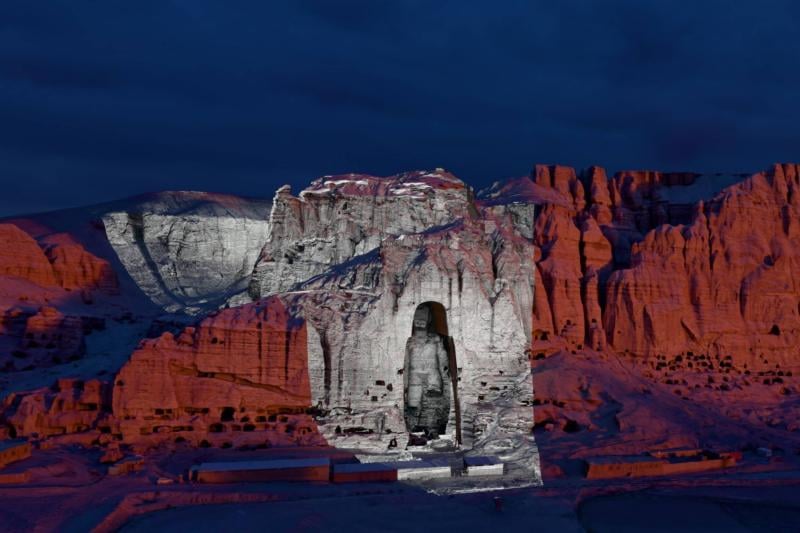
From Timbuktu to Odesa, from Bamiyan to Gaza, armed conflicts make heritage a prime target. In the face of these destructions, the exhibition Heritage in Resistance examines acts of erasure, as well as the forms of resistance and repair that make it possible to envision the future from the ruins. In 2012, the destruction of the mausoleums of Timbuktu, listed as UNESCO World Heritage sites, marked a historic turning point: for the first time, the deliberate annihilation of cultural monuments was classified as a war crime by the International Criminal Court. An unprecedented international mobilization then began to rebuild the destroyed sites, drawing on archaeological excavations and the memory of Malian artisans. While war has always brought destruction, the beginning of the 21st century reveals an intensification and a systematization of attacks on cultural and natural heritage. The exhibition sheds light on this contemporary reality and raises an essential question: how does war reveal what is irretrievably lost, while at the same time bringing forth acts of resistance that make future repair possible? Through a remarkable ensemble of maps, texts, models, photographs, videos, contemporary artworks, and digital replicas produced by Iconem, the exhibition offers a journey in three sequences. Conceived as a major report, it weaves a documented, visual, and sensitive narrative, bringing together the perspectives of architects, artists, researchers, field actors, and witnesses. Sequences of the Exhibition Erasing Today, the destruction of heritage takes multiple forms: the dynamiting of emblematic sites, the massive bombardment of cities, the deliberate abandonment of territories, the looting and trafficking of cultural property. This erasure also affects ordinary and intangible heritage through population displacement, “cultural cleansing,” urbicide, ruricide, and ecocide. Far from the image of a “clean” war, these practices reveal the extent of the violence inflicted on places and societies. Resisting In the face of erasure, forms of resistance emerge. Alongside major international institutions, NGOs, associations, citizen groups, architects, and researchers work to protect, document, and transmit endangered heritage. In conflict zones, every everyday gesture, every story, becomes an act of resistance, helping to preserve memory and support the physical and psychological survival of populations. Restoring In the 21st century, post-conflict repair goes beyond material reconstruction alone. It involves a holistic approach attentive to territories, bodies, and minds. To repair is also to “rebuild society,” to restore bonds, transmit knowledge, and place memory at the heart of processes of renewal. Heritage thus becomes an essential lever for imagining a shared future, in continuity with the past and with the living world.