Isabel Rower, Imago
Isabel Rower

Marta
3021 Rowena Avenue, Los Angeles, CA 90039-2004
Wednesday – Saturday Noon – 5PM, Closed Sunday – Tuesday
Admission
Free Admission
About
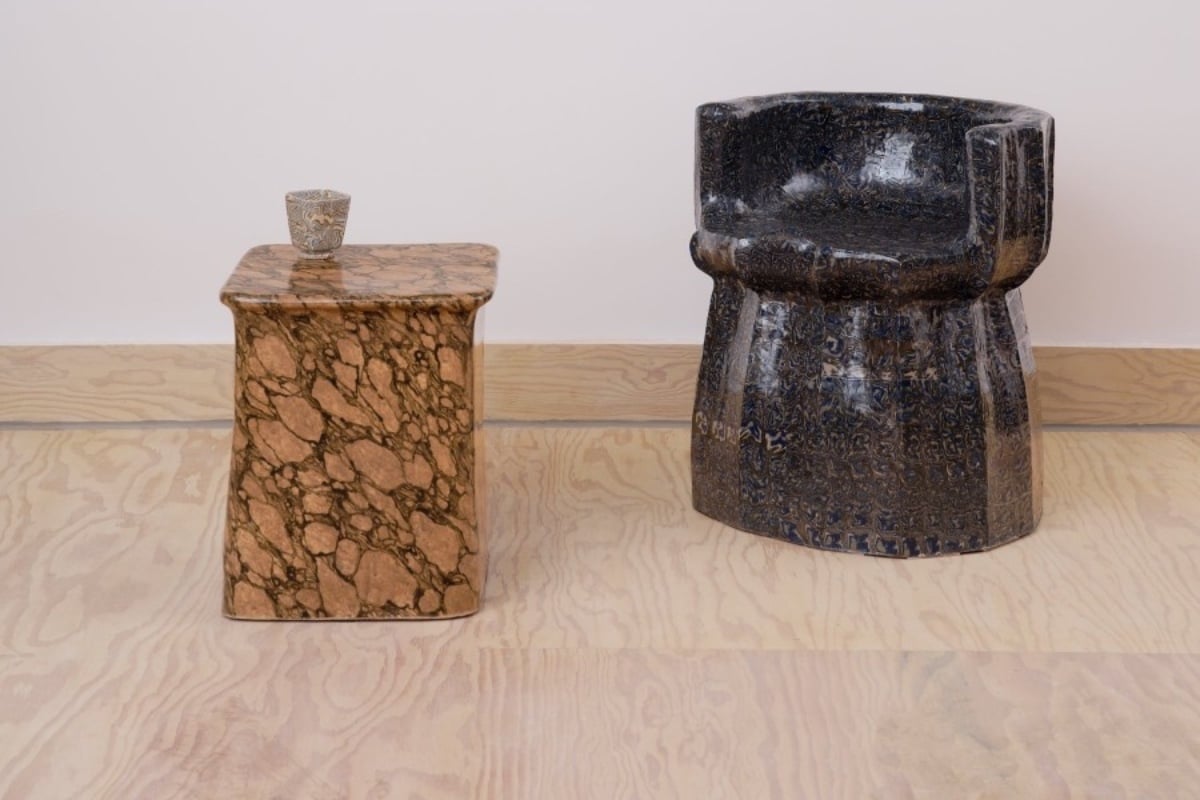
Imago Mart a is delighted to announce Imago, an expansive presentation by New York-based artist Isabel Rower. Comprised of seating, tabling, vessels, and paintings, the artist's new body of work defies and embraces the terminology (applied-, decorative-, and fine-) we have long depended on to categorize artistic output, offering an exhibition that, as its title suggests, emerges from the chrysalis of Rower's vision, an entity informed and transformed by the imitation and reinterpretation of historical design. Drawing inspiration from the so-called Garden Room, the frescoed dining room, or triclinium, in the Villa of Livia, the residence of Livia Drusilla, the third wife of Augustus, the founder of the Roman Empire, Rower casts a perimeter around the gallery via twelve paintings realized on antique linens—bedsheets, washcloths, and tablecloths—that enclose the artist's functional-sculptural work within an evocative boundary. Intimate in their display, they allude to larger, contextualized, environments: moody forests and orchards rendered in the rich greens, browns, and golds of Flemish tapestries, their watery imagery both haunting and sacred. With lush leaves, dark limbs, and luminescent fruit, these treescapes operate through reference and mimicry, inducing a sense of the ancient in the contemporary that is shared by Rower's ceramic works: each of her vessels and stoneware chairs, throne-like in their hand-built constructions, are easily mistaken for marble or travertine, the intricate patterning and painterly application of their glazes applied as the skins that indicate, once fired, their final stage of development—their imago. This interest in trompe l'œil, previously explored in Box Works (2024), the artist's first solo presentation with Mart a , extends to the paper pulp tables and seats that Rower has created, a material that feigns stone through its ornate surface treatments and alludes to the papier-mâché furniture and objet d'art that became popular in eighteenth- and nineteenth-century Europe. Marbled legs support the scalloped tabletop of Twelve Pointed Cloud while inlaid ribbon and long-stemmed flowers sculpted in epoxy spread across the circular face of Pierian Spring and along the seat backs of Oleander and Loosener of Limbs, Love. In Rower's hands, the functional becomes poetic, descendants from a lineage of traditions that celebrate the lyric possibilities of every room and place of rest—a belief that wherever our eyes and hands fall, there should exist beauty.