The Page Before Me
Susan Te Kahurangi King

James Fuentes Gallery LA
5015 Melrose Ave, Los Angeles, CA 90038
Tue-Sat 10am-6pm
Admission
Free Admission
About
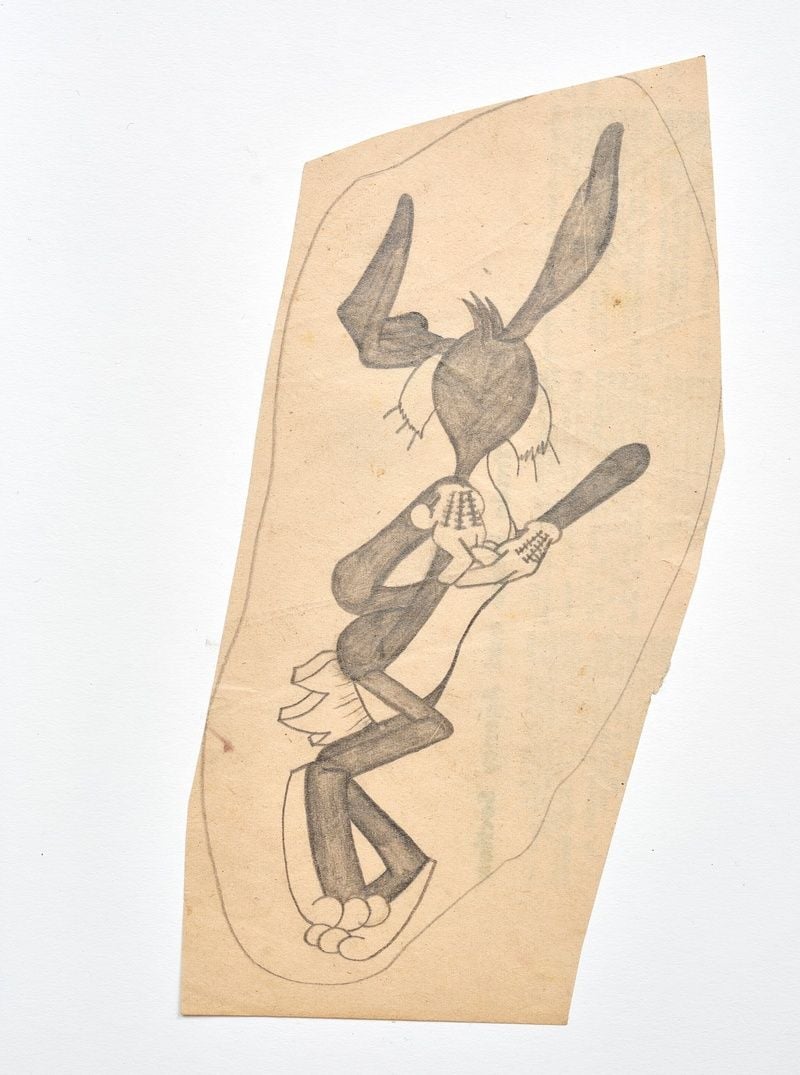
James Fuentes is thrilled to present Susan Te Kahurangi King, The Page Before Me in Los Angeles. Born in 1951 in Te Aroha, New Zealand, King took up drawing at a young age, developing a profound and prolific visual language recognized for its bold intensity, graphic refinement, and long arc of development. The practice has since remained her primary mode of expression. Offering a comprehensive overview spanning the late 1950s through to the present—including several of her earliest drawings as well as her largest work to date—The Page Before Me marks the first solo exhibition of King’s work on the West Coast. Through elaborate, multi-planar scenes, King expands the history of drawing in several directions at once. Challenging easy distinctions between figuration and abstraction, her work builds an alternative world in which image and form continually merge and mutate across the page. King’s images are populated by an expansive range of cartoon characters, creatures, objects, events, and recognizable symbols, figures, and forms, while others resemble map-like structures or rhythmic fields—often stretching and layering both modes within a single work. In this sense, her oeuvre is almost encyclopedic in scope. Suggesting a private system of image-making rather than illustration in the conventional sense, hers is a continually expanding visual language that gathers images and impressions encountered across many different moments, moods, and settings. James Fuentes is thrilled to present Susan Te Kahurangi King, The Page Before Me in Los Angeles. Born in 1951 in Te Aroha, New Zealand, King took up drawing at a young age, developing a profound and prolific visual language recognized for its bold intensity, graphic refinement, and long arc of development. The practice has since remained her primary mode of expression. Offering a comprehensive overview spanning the late 1950s through to the present—including several of her earliest drawings as well as her largest work to date—The Page Before Me marks the first solo exhibition of King’s work on the West Coast. Through elaborate, multi-planar scenes, King expands the history of drawing in several directions at once. Challenging easy distinctions between figuration and abstraction, her work builds an alternative world in which image and form continually merge and mutate across the page. King’s images are populated by an expansive range of cartoon characters, creatures, objects, events, and recognizable symbols, figures, and forms, while others resemble map-like structures or rhythmic fields—often stretching and layering both modes within a single work. In this sense, her oeuvre is almost encyclopedic in scope. Suggesting a private system of image-making rather than illustration in the conventional sense, hers is a continually expanding visual language that gathers images and impressions encountered across many different moments, moods, and settings. Defined by King’s use of drawing as her main mode of direct expression, and characterized by their material immediacy—with no delay or drying time between the artist and the page—her works bridge intimate self-expression and art-historical significance. Central to the exhibition, Untitled (c. 1967) maintains the intimate scale characteristic of King’s work, even as it stretches more than sixteen feet in length. By far the largest of four such “scroll” works, one can imagine the vertical edges of the page rolled up or cascading out of view as she continued rightward over a period of time. As a whole, the work illuminates key features of King’s practice: pastel and graphite on found paper, self-contained zones of color and image, shifting orientations and perspectives, and layered imagery that occasionally tips into optical illusion. The composition assembles a familiar cast of figures—the iconic Fanta Clown, Mickey Mouse, Donald and Daisy Duck, Huey, Dewey, and Louie—alongside shoes, lollipops, and birds, at once recognizable and fantastical. Read from left to right, they appear to fragment then flatten into pure blocks of color. At the far end, color yields to graphite patterning that seems to camouflage against the paper’s black satin finish. In this and many other works, King uses drawn partitions, dotted lines, or cloud-like borders to section off one area of the image from another, creating a series of internal boundaries within a single composition. At times, these devices mark the close of a working session, sealing off the image until she returns to continue a new section or “chapter” in the drawing. King’s characters and objects often appear from multiple perspectives at once: as if viewed from behind, underfoot, overhead, at a distance, or in extreme close-up. Through foreshortening, contortion, and partial concealment, she creates a strong sense of depth and a dynamic visual instability. King’s sensitivity to three-dimensional features is mirrored in her treatment of written language, numbers, and common symbols as visual components rather than conceptual, literal, or even phonetic ones. Through this process, she builds a larger network of line, pattern, and energy, where the original reference becomes only one layer in a more complex visual system. By a rare directness and purity of means, King translates experience into visual form.