Alexis Smith: Rapido
Alexis Smith
François Ghebaly - LA
2245 E Washington Boulevard, Los Angeles, CA 90021
Tue–Sat 11am–6pm
Admission
Free Admission
About
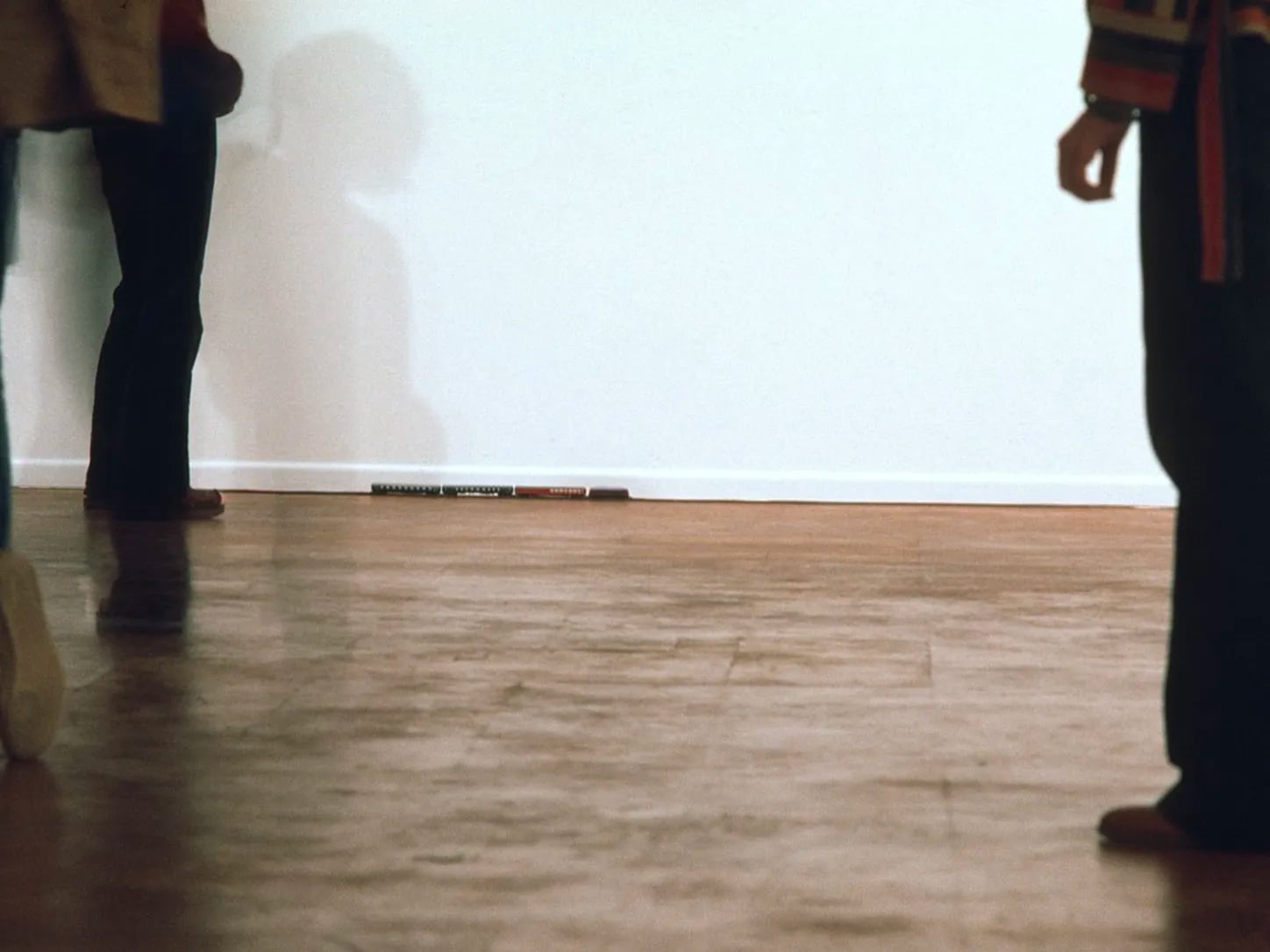
François Ghebaly is pleased to present _Rapido_, an exhibition of historic works by artist Alexis Smith. Featuring an installation and works on paper dating from the 1970s, it brings together a group of rarely exhibited works from a formative period in the artist's career. The exhibition is anchored by _Rapido_, Smith's installation in which a model train travels continuously around the perimeter of an otherwise empty gallery. Exhibited here for the first time since its original installation at the UC Santa Barbara Art Galleries in 1975, _Rapido_ reorients one's sense of scale. The enclosed space of the gallery becomes a vast and barren landscape in which the viewer is an oversized interloper. Time and distance expand as the train makes its nonstop, lonely circuit around the gallery. While many of Smith's installations incorporate collages, wall paintings, texts, and architectural interventions, _Rapido_ is comparatively reserved. Yet the spare, conceptual rigor of _Rapido_'s presentation is suffused with the artist's idiosyncratic humor, at once enigmatic and playful. A second gallery focuses on a series of works on paper made between 1972 and 1974, among the earliest of Smith's career. Their presentation at François Ghebaly is the first time these works have been exhibited publicly. Produced during a formative period when Smith was part of Los Angeles's emerging Conceptual art scene, this series points toward many of the concerns that would come to define her practice: narrative, popular culture, literary appropriation, chance associations, and the construction of meaning through sequence. These works were originally presented in highly choreographed, one-on-one encounters with visitors to her studio. Smith would set the sheets out on a felt topped table, stacked and presented for individuals to move through at their own pace. As she later recalled, these early works functioned as "one of a kind books" whose primary subject was the experience of reading itself. Meaning emerges through an unfolding of found images, fragments of language, and unexpected juxtapositions; much like the view from a train winding through the country.