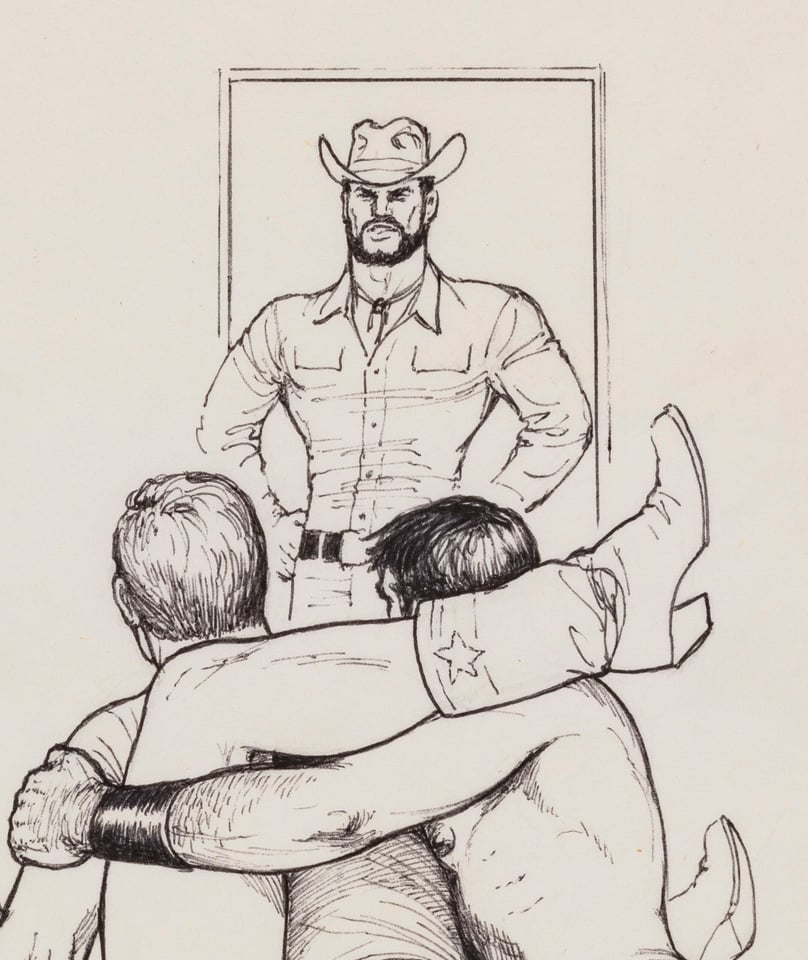
Tom’s Stretch
Tom of Finland, Ramsey Alderson, Angels of Light, Steven Arnold, Matthew Barney, Ana Benaroya, Peter Berlin, Huma Bhabha, James Bidgood, Nayland Blake, Matthew Brannon, Jared Buckhiester, Scott Burton, Paul Cadmus, Cassils, Julien Ceccaldi, Jonathan Lyndon Chase, Kye Christensen-Knowles, The Cockettes, R. Crumb, Christopher Culver, Jory Drew, Jason Fox, Greg Gaar, Aaron Gilbert, Robert Gober, Felix Gonzalez-Torres, Jenna Gribbon, Mark Grotjahn, Namio Harukawa, Richard Hawkins, Hardy Hill, Nick Hoecker, Peter Hujar, G.B. Jones, William E. Jones, Mike Kelley, Mike Kuchar, Doron Langberg, Steve Locke, Tiona Nekkia McClodden, Sam McKinniss, Go Mishima, Bob Mizer, Donald Moffett, Victor Moscoso, Ebecho Muslimova, Ruby Neri, Paul P., Breyer P-Orridge, George Quaintance, David Rappeneau, Spain Rodriguez, Paul Mpagi Sepuya, Jim Shaw, Cindy Sherman, Jack Smith, Hajime Sorayama, P. Staff, Anita Steckel, Hugh Steers, Joey Strella, Elizabeth Sunflower, Ken Tisa, Salman Toor, S. Clay Wilson, Basil Wolverton, Martin Wong, Jonas Wood

David Kordansky Gallery - LA
5130 W Edgewood Pl, Los Angeles, CA 90019
Tuesday–Saturday, 10 AM–6 PM
Admission
Free Admission
About
David Kordansky Gallery is pleased to present _Tom’s Stretch_, an exhibition of works spanning over eighty years by more than seventy artists engaging with Tom of Finland’s radical ability to imagine a physique—and a world—that did not yet exist in popular culture. The exhibition is on view in Los Angeles at 5130 W. Edgewood Pl. from July 10 through August 22, 2026. An opening reception will be held on Friday, July 10, from 6 – 8 PM. This generation-spanning exhibition includes works by Tom of Finland alongside Ramsey Alderson, Angels of Light, Steven Arnold, Matthew Barney, Ana Benaroya, Peter Berlin, Huma Bhabha, James Bidgood, Nayland Blake, Matthew Brannon, Jared Buckhiester, Scott Burton, Paul Cadmus, Cassils, Julien Ceccaldi, Jonathan Lyndon Chase, Kye Christensen-Knowles, The Cockettes, R. Crumb, Christopher Culver, Jory Drew, Jason Fox, Greg Gaar, Aaron Gilbert, Robert Gober, Felix Gonzalez-Torres, Jenna Gribbon, Mark Grotjahn, Namio Harukawa, Richard Hawkins, Hardy Hill, Nick Hoecker, Peter Hujar, G.B. Jones, William E. Jones, Mike Kelley, Mike Kuchar, Doron Langberg, Steve Locke, Tiona Nekkia McClodden, Sam McKinniss, Go Mishima, Bob Mizer, Donald Moffett, Victor Moscoso, Ebecho Muslimova, Ruby Neri, Paul P., Breyer P-Orridge, George Quaintance, David Rappeneau, Spain Rodriguez, Paul Mpagi Sepuya, Jim Shaw, Cindy Sherman, Jack Smith, Hajime Sorayama, P. Staff, Anita Steckel, Hugh Steers, Joey Strella, Elizabeth Sunflower, Ken Tisa, Salman Toor, S. Clay Wilson, Basil Wolverton, Martin Wong, and Jonas Wood. By channeling private fantasy into virtuosic drawings, Tom of Finland (Touko Laaksonen, 1920–1991) created a libidinal realm in which freedom and pleasure were the reigning tenets. _Tom’s Stretch_ gestures toward the lasting reach of Tom’s legacy, and the expanded, transformative, and more permissive definitions of the body—and of art itself—that his work makes possible. Throughout the exhibition, his iconic visual language forms a link between the early underground worlds of queer desire and an ever-evolving semiotics of the figure, as charted by countless artists of subsequent generations. Long before the era of HGH and steroid-sculpted torsos, Tom’s muscle-bound studs, and the homoerotic dramas he placed them in, redrew the boundaries of what art should or could represent. Just as Tom recast jackbooted figures of authority as emblems of sexual freedom, many of the works on view transgress normative representations of the body in favor of more expansive, subjective expressions. Huma Bhabha sees the figure as a cypher for natural, cultural, and speculative histories, while Ana Benaroya, Ebecho Muslimova, and Ruby Neri respond to the art historical template of the nude through representations that are, by turns, ripped, assertive, and ribald. Other works connect the project of feminism to broader calls for liberation, as in Anita Steckel’s late-career photomontages, in which romantic female nudes serve as monumental guardians of Tom’s lovers. Where depictions of intimacy, agency, and vulnerability capture the relational power of in-real-life encounters, elsewhere the figure appears as fragment, surface, or abstraction—flesh transmogrified into object, or a presence implied through negative space. In a theme reiterated throughout the exhibition, the body is imagined as an instrument for unbridled fantasy and wish fulfillment. The camp reveries of James Bidgood’s late-1960s photographs look to costuming and set design to suggest alternative Hollywood narratives, while the painting by Mike Kuchar, whose illustrations appeared in homoerotic magazines in the 1980s and 90s, literalizes the idea of the "catch" to mythologic proportions. Represented through archival ephemera, the Cockettes, a legendary theater troupe active in the late 1960s and early 1970s, combined psychedelia, satire, and pageantry in avant-garde drag performances just as San Francisco’s gay rights movement was gaining momentum. Many of the artworks on view were created in the brief window between the Stonewall Uprising and the AIDS epidemic, imbuing them with the devastating poignancy of _what if_. The risks Tom took in his imagery were matched by his groundbreaking approach to production and distribution. Constrained by obscenity laws early in his career, Tom’s drawings circulated in transcontinental underground networks, first printed in beefcake magazines like Bob Mizer’s trailblazing _Physique Pictorial_ and eventually in self-published zines and mail-order graphic novels. These alternative models of creation and distribution exemplify a DIY approach that helped shape a burgeoning punk ethos while simultaneously galvanizing a global gay community. In Japan, Go Mishima was empowered to begin making art after encountering Tom’s drawings in the 1950s, while Canadian artist G.B. Jones’s _Tom Girls_ zine reimagines her predecessor’s artworks through a lesbian lens. In the late 1960s, _Zap Comix_—the countercultural publication whose contributors included R. Crumb, Spain Rodriguez, and others—harnessed, as Tom did, the legibility and easy reproducibility of the comic form to wage incisive critiques against the status quo. A generation later, the radical permissiveness at the heart of Tom’s continuing output inspired a cadre of LA artists. Mike Kelley, for example—celebrated for his _sui generis_ ability to evoke the psychic via the vernacular—actively collected Tom’s work and invited him to lecture at CalArts in 1985, where he cited Tom’s influence on his practice. Likewise, the visual language of multidisciplinary artist Richard Hawkins, whom Kelley mentored, shares a mood of exuberant hedonism with Tom’s erotic fictions. Hawkins’s engagement with Tom extended in professional and personal ways, too: for years he served as a steward of the artist’s legacy through his work with the Tom of Finland Company (now the Tom of Finland Foundation) at its Echo Park headquarters. Tom established a new paradigm of queer visibility by illustrating a utopic social territory in which love and liberation counter oppression and restriction. In the seventy years since his first works circulated, as cultural and political battles around bodily autonomy continue, the artworks assembled in _Tom's Stretch_ ask, what does a fully embodied life really look like? What forms can it take? And how does it feel?