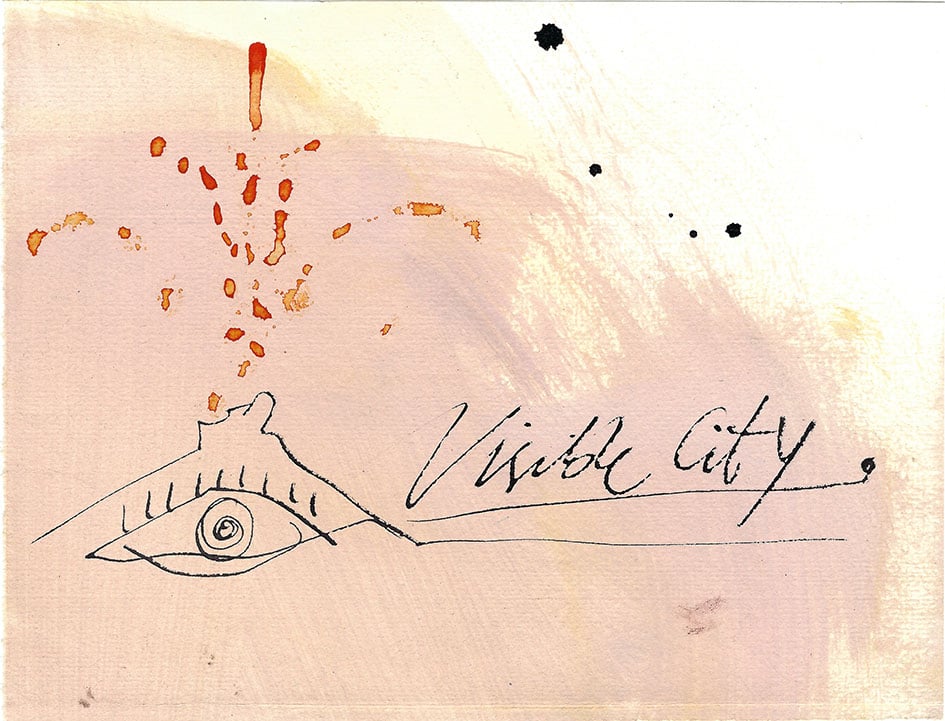
Visible City
Charlott Weise
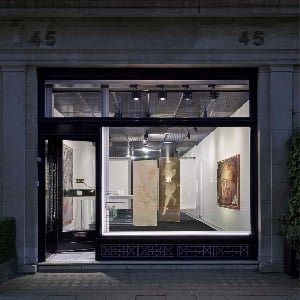
Belmacz
45 Davies St, London W1K 4LX, UK W1K 4LX
Mon-Fri 10am-6pm
Admission
Free Admission
About
"The blush is beautiful, but it is sometimes inconvenient." — Carlo Goldoni, La Pamela, 1750 "Blue suns and grey lagoons Silver starfish with honeymoons All these and more to choose If you" — Roxy Music, 'Grey Lagoons', For Your Pleasure, 1973 It is with great pleasure that Galleria Diciotto and Belmacz present Visible City in San Marco: a juxtaposition of new 'pages' by Charlott Weise with Venetian glass momentous curated by Federico Zanini. Glass, like in its spiritual essence painting, inhabits liquified quality. Both deriving from the fluid state their processes are workable, until layers render them firmly poised, their surfaces an aura of seeming serenity. Through reflections, refractions and obfuscations optical potency is achieved, while the memory of the thought original is contained in each reservoir of motion. Completion is so masterly, the severity and strives so veiled to be akin to the lazzi of the Commedia dell'arte [1] : gestures rehearsed to the point of seeming spontaneous, movements whose labour dissolve into grace. Floating freely in space, Charlott Weise's pages possess a distinctly liquid odyssey. [2] Unstretched, suspended canvases, they commence from the ground where Weise saturates the fabric with pigments, dirts, cosmetic powders, and staining agents, adjusting as these soak, pool, and sediment the surface. Layers amass with tidal rhythm, colours bleed and condense, the canvas becoming a site of slow accumulation almost like the lagoon itself. Illumination animates the surface, scenes appearing as moments of arrested flow, frozen movement held in suspension. In a city commanded by water, Weise reflects the material and visual poetics, her pages recalling the translucence of glass, the masters' deliberacy of palette and the chromatic atmospheres of velatura. [3] Visible City demonstrates the enduring sway of the lagoon to dictate distinction, the contemporary intention with the ancient fortuity. For the insight and intimacy with glass developed through Venice's particular aquatic situation, a destination for those seeking solace from the barbarian invasions dominating the Roman Empire's final moments. With glassmakers arriving from Rome on one side, and Byzantium and the Middle East the other, knowledge and styles soon entwined to form new. With glass factories often catching fire, the decision was made in 1291 to isolate production to Murano to protect the city, while such containment would also better protect the secrets and methods that had become so prized. Between the 12th and 14th centuries, sustained exchange with the Eastern Mediterranean furthered significant technical and aesthetic developments. Yet glass was not fully recognised as an autonomous art form until the 19th and early 20th centuries, when visionary figures such as Carlo Scarpa, Alfredo Barbini and Napoleone Martinuzzi reimagined its expressive potential, coupling centuries-old artisanal knowledge with modern design sensibilities. In essence Visible City is liquid inspired by liquid, the origin of all the fluid dwellings of the lagoon. A publication produced by Belmacz and Damocle Edizioni will accompany the exhibition, with contributions by Ines Weizman and Federico Zanini.