Classical Selection 2026

Rossi & Rossi Wong Chuk Hang
11/F, M Place, Hong Kong
Tue–Sat, 11am–6pm
Admission
Free Admission
About
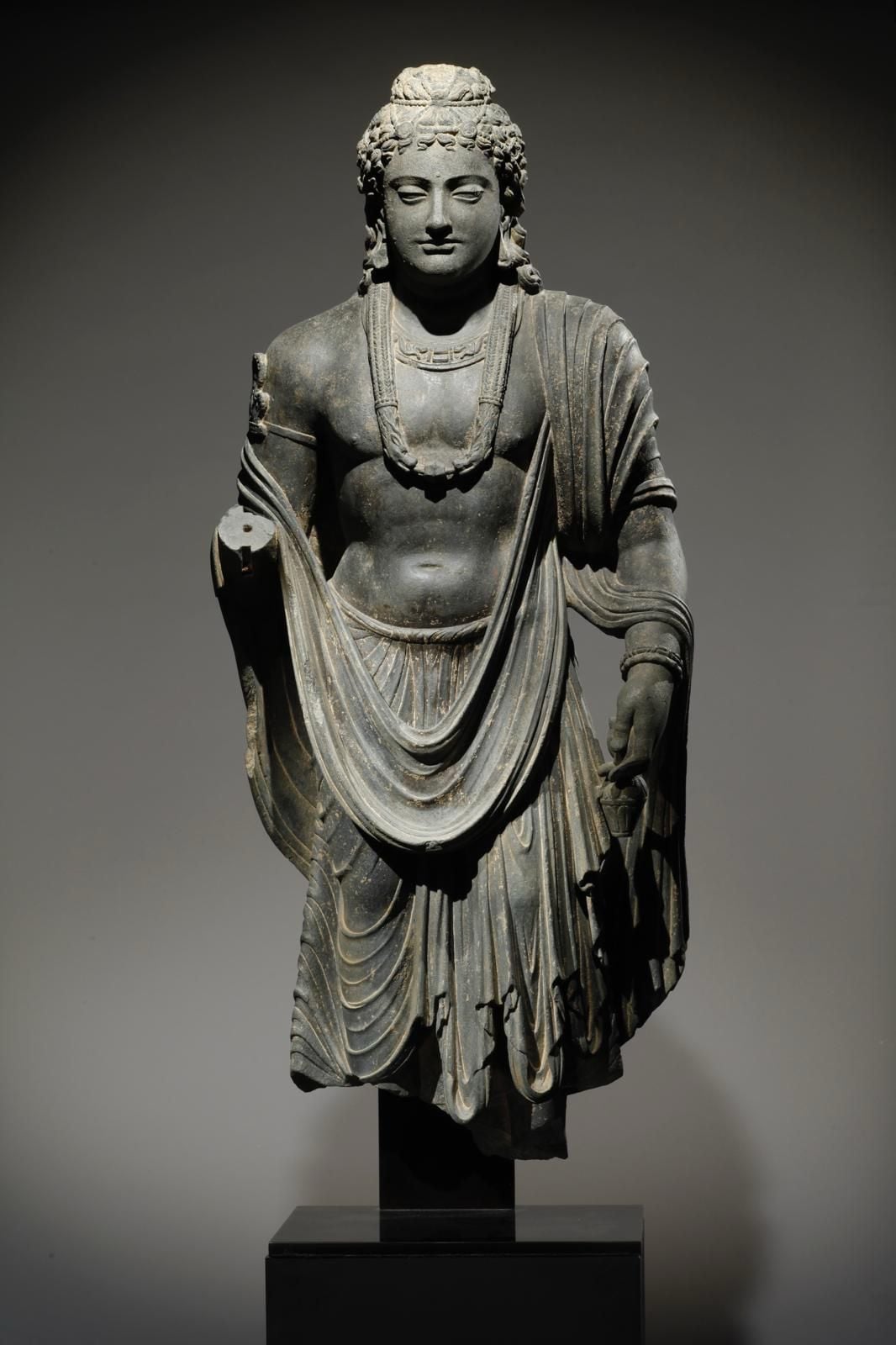
Every autumn, Rossi & Rossi unveils a carefully selected presentation of classical Himalayan works of art from Tibet, Nepal and India. This year is no exception. Opening on 27 October, _Classical Selection 2026_ highlights early-period stone sculptures, bronzes and paintings from the Himalayas dating from the third century BCE to the thirteenth century AD. The exhibition unfolds across Rossi & Rossi's gallery space on the 11th floor of M Place in Wong Chuk Hang, extending into a newly inaugurated space on the 12th floor dedicated to classical Himalayan art. When icons of Buddhist deities first appeared in human form more than 2,000 years ago around today's Peshawar Valley, they were portrayed with distinct Graeco-Roman features, which came to be known as Gandharan style. A prime illustration of the height of achievement in Gandharan art, **Bodhisattva Maitreya Holding a Flask** (ca. 2nd–3rd century AD), is on view in the exhibition at Rossi & Rossi. In this example, Bodhisattva Maitreya, regarded as a future Buddha in Buddhist eschatology, wears _uttariya_ (outer robe) covering the upper left arm and passing under the shoulder making a loop of very high edge. The torso, left bare, is modelled with raised rounded breasts and abdomen. The _pariahâna_ with a girdle has projecting drapery joining the flask. He is richly dressed with lavish jewellery. The deity's head is oval to round, with a narrow forehead marked with the urn in low relief. His hairstyle consists of vertical curled bands thicker below the diadem and ending in abundant curls falling on the shoulders. The upper locks move upwards into a relatively high _ushnisha_ secured by a band of beads. Fast-forward to the 10th century, when the Pala dynasty saw the flourishing of Buddhist art in the Bihar region and the Bengals. On display in the gallery's current presentation is a **stele depicting Shakyamuni's Enlightenment** (10th–11th century) that embodies the stylistic characteristics of art from this period. The central figure of the Buddha is seated in _dhyanasana_ (meditation posture) on a lotus supported by a faceted pedestal throne, where a pair of addorsed lions flank a silk textile. His hands rest in _dhyana_ mudra (meditation gesture). The Buddha's robe is sheer and adheres closely to his body in the manner of a Sarnath-style robe. He wears no ornaments, and his face is distinguished by a countenance both benevolent and benign. The nimbus framing his head is bordered by stylised flames. The upper, arched section of the stele is decorated with two stupas in high relief centring a Buddhist inscription, which translates as: 'All phenomena arise from causes; Those causes have been explained by the Tathagata; And their cessation, too, has been taught by the Great Shramana'. After years of asceticism, the Buddha achieved Enlightenment in Bodh Gaya, where he sat under a sacred fig tree and began to meditate. His Enlightenment, or bodhi, was an awakening to the true nature of reality, leading to the end of suffering. Also on exhibit is another stunning highlight of early Himalayan art: a 14th-century **painting of the Bodhisattva Avalokiteshvara** from Nepal. The work is fine example of a style that flourished in both the Kathmandu Valley and the Sakya tradition of Tibet from about 1250 to the early 15th century. Bedecked profusely in delicate jewellery, the monumental central figure represents an esoteric form of Avalokiteshvara. With his uppermost hands, the red-complected bodhisattva holds a rosary and a book; his second pair of hands displays the gesture of charity and a white lotus, his distinctive attribute; and his third pair forms the _dharmachakra_, the gesture of turning the wheel of dharma, against his chest. Except for one attribute – a pot, instead of a lotus – the form agrees with that known as Sukhavati Lokeshvara, as seen in the Machhinder Bahal in Kathmandu. The delicacy and finesse of the ornamental details, along with the firm, confident draughtsmanship and the penchant for elaborate thrones, are some of the major characteristics of this style. The exhibition is on view at Rossi & Rossi until 28 November 2026.