Pınar Öğrenci: Glück auf in Deutschland
Harvard Art Museums
32 Quincy Street, Cambridge, MA 02138
Tue–Sun 10am–5pm, Thu until 9pm
Admission
Free Admission
Visit our galleries for free every day.
About
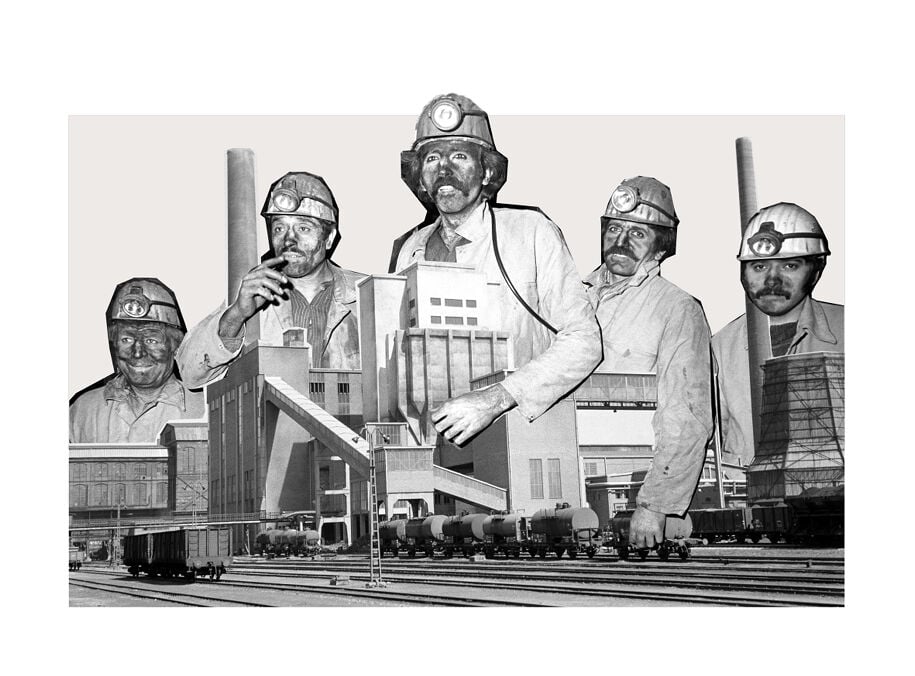
Reflect on memory, labor, and belonging in this first major U.S. exhibition by Pınar Öğrenci. _Glück auf in Deutschland_ marks the first major exhibition in the United States by Berlin-based artist and filmmaker Pınar Öğrenci (b. 1973). The artist’s work invites viewers to question what has been remembered or erased while imagining a future grounded in justice, equality, and collective healing and shaped by layered experiences of survival, resistance, and resilience. The exhibition includes Öğrenci’s 2024 film _Glück auf in Deutschland_ (Good Luck in Germany), which addresses the construction of postwar German identity in the Ruhrgebiet, a heavily industrialized region known for coal mining and steel production. Five related collages are also on view, reimagining the bodies of workers and their families within the Ruhr landscape and its architecture. Öğrenci’s use of the phrase _Glück auf_ — a common way that miners wish one another a safe return after their physically grueling and dangerous work underground — resonates with the experiences of immigrant communities in present-day Germany facing right-wing extremism. The photographs in the film and collages were drawn largely from the Ruhr Museum archive in Essen, Germany, and include works by artists from the 1950s and ’60s. In her interventions, Öğrenci reveals how photography helped shape a homogenous, male-centered identity for both the region and the German nation; she seeks instead to present a more inclusive visual record. Öğrenci’s work is displayed alongside historical photographs from the Busch-Reisinger Museum’s collection. Curated by Lynette Roth, Daimler Curator of the Busch-Reisinger Museum. This exhibition is supported by the Charles Kuhn Endowment Fund in the Busch-Reisinger Museum. Modern and contemporary art programs at the Harvard Art Museums are made possible in part by generous support from the Emily Rauh Pulitzer and Joseph Pulitzer, Jr., Fund for Modern and Contemporary Art.