Adriana Varejão: Modernisms
Adriana Varejão
Victoria Miro Venice
Sestiere di San Marco 1994 Calle Drio la Chiesa, Venice, IT 30124
Gallery opening hours during exhibitions Tuesday–Saturday: 10am–1pm & 2–6pm Monday by appointment
Admission
Free Admission
About
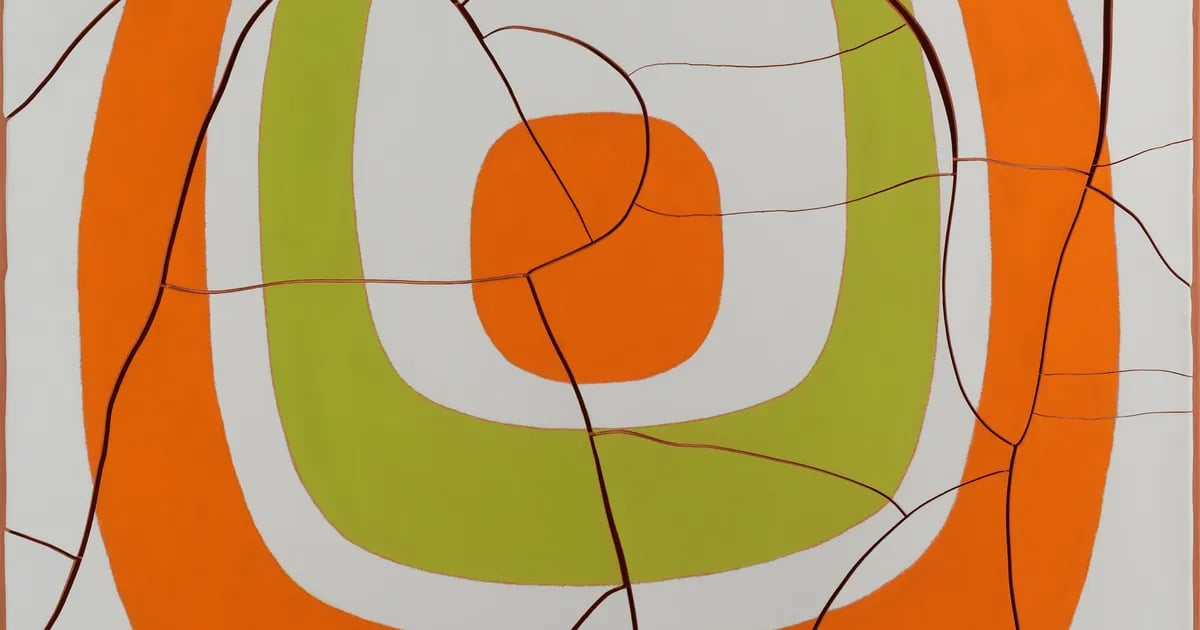
Victoria Miro is delighted to present Modernisms, an exhibition of new paintings by Adriana Varejão. This body of work is conceived in direct dialogue with the artist's participation in the Brazilian Pavilion at the 61st International Art Exhibition of La Biennale di Venezia (on view until 22 November 2026). While the tile paintings presented in the pavilion draw inspiration from Baroque and religious tilework of the eighteenth and nineteenth centuries, the paintings in Modernisms shift the investigation towards Brazil's modern period. They represent a temporal leap: from colonial tilework to modernist tiles, and from a tradition inherited from Portugal to a visual language that Brazil reinvented and made its own. More than a historical survey, this exhibition proposes an act of recovery. It seeks to bring to light a body of work that shaped the Brazilian urban imagination and that, despite its extraordinary formal richness, often remains invisible. For more than three decades, Varejão's research has primarily focused on the Portuguese tiles that arrived in Brazil during the colonial period. These images constitute a vast iconographic archive that has nourished much of the artist's production. In recent years, however, Varejão's attention has turned towards a more recent history: the presence of tilework in modern Brazilian architecture. Beginning in the 1940s and 1950s, tiles came to occupy a central role in shaping Brazil's urban landscape, appearing on façades, public buildings and housing developments. Their revival within modern Brazilian architecture was not a nostalgic gesture but a singular cultural operation. Having been pushed into the background by movements that rejected everything associated with the neo-colonial repertoire, with the rise of modern architecture, the art of tilework was reborn. Its return took place when Brazilian modernism found its own way of reconciling tradition and the avant-garde, transforming inherited materials and techniques into instruments for affirming a distinctly Brazilian modernity. Tiles became a privileged element of this synthesis. Rooted in the Luso-Brazilian tradition, they were incorporated into modern architecture not as remnants of the past but as a contemporary language. 'In the wake of Brazilian modernism, the Portuguese colonial tradition of tilework was reinterpreted and transformed into a distinctly Brazilian, modern and widely shared visual language – one embedded in everyday urban life rather than in representations of permanence and power,' says Varejão. Over nearly two years, Varejão carried out extensive research into twentieth-century tilework in the cities of Rio de Janeiro, São Paulo, Salvador and Belo Horizonte. Drawing on books, period magazines and an extensive photographic survey of surviving tilework in these cities, the artist assembled an image archive dedicated to this body of work, a visual heritage that remains largely undocumented. The research moves across different moments within this history, beginning with the tilework associated with the Brazilian modernist project of the 1940s to the 1960s, deeply connected to the integration of art and architecture. This was the period in which artists and architects such as Oscar Niemeyer, Lúcio Costa, Roberto Burle Marx, and, especially, Athos Bulcão made tilework a fundamental element of modern Brazilian architecture. Varejão's research is also concerned with the proliferation of industrially produced and anonymous patterns that, from the 1970s onwards, came to cover the façades of residential buildings, entrance halls, leisure areas, walls, swimming pools and domestic interiors. It was during this period that tilework became part of the visual imagination of Brazil's urban middle class. Countless repetitive, geometric, optical and colourful modular patterns emerged, often without any identified authorship. This recent research also has a personal dimension, as the artist explains, 'I spent much of my childhood in Brasília, the emblematic city of Brazilian modernism, where tiles are woven into the everyday experience of Oscar Niemeyer's architecture. Since then, they have remained a constant presence in my visual memory and artistic practice.'