Nigel Cooke: Bad Habits
Nigel Cooke

Querini Stampalia Foundation
Castello 5252, Santa Maria Formosa, Venezia, CA 30122
Tue–Sun 10am–6pm (ticket office closes 5:30pm), Closed Mon
Admission
Check website
Admission to the museum is required.
About
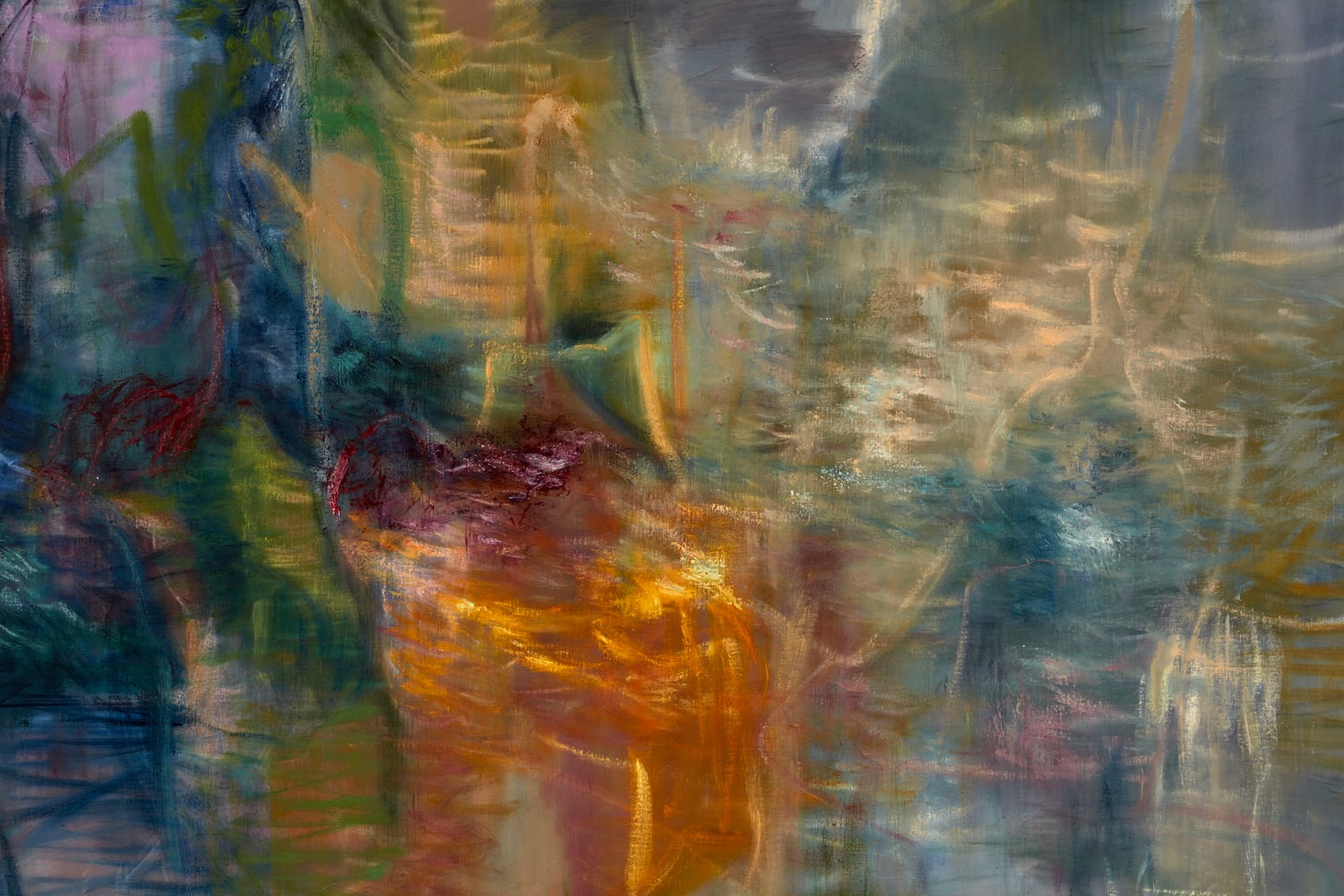
On the occasion of the 61st International Art Exhibition – La Biennale di Venezia, the Fondazione Querini Stampalia will present Nigel Cooke: Bad Habits, an exhibition curated by Evelyn C. Hankins, on view from May 5 through November 22, 2026. This will be the artist’s first solo exhibition in Italy. This spring, Cooke will be the Fondazione Querini Stampalia’s first-ever artist in residence. During his stay in Venice, he will focus on a series of large-scale, atmospheric paintings that draw inspiration from the palazzo’s historic and cultural heritage, as well as the living fabric of the city. The residency, proposed by the museum, has been conceived as a period of immersion in Venice and its storied lagoon, canals, and singular conditions of light. One of Venice’s oldest and most prestigious institutions, the Fondazione Querini Stampalia will host Cooke in its Portego della Biblioteca, now transformed into an artist studio. Adjacent to the museum’s historic library and directly above the Carlo Scarpa-designed ground floor rooms, the space overlooks the waters of the Rio di Santa Maria Formosa. Following the residency, five paintings will be exhibited in the same place they were completed, drawing a continuous line from artist to viewer. Cooke’s practice is often guided by his experiences in different parts of the world and other autobiographical material. The new paintings find their origins in a trip the artist made to Athens, where, while making studies of broken statues in museums, he meditated on the city’s ancient ruins. Over the millennia, Athens has become a living palimpsest, revealing thousands of years of collective and individual experience upon its surfaces. The Greek word θραῦσμα, thraûsma— meaning ruin, trauma, or fragment—became a foundational idea for Cooke’s new work. Elements of this word appear in the paintings’ early compositional stages, functioning as both text and image and creating a tension with other kinds of mark-making he has recently explored. Venice’s complex, layered history and its role as a global crossroads have also informed Cooke’s thinking. Like the Greek capital, the city has long been a repository for the remnants of past civilizations, an inheritance that has nurtured its rich tradition of scientific and cultural thought. The artist also draws on the darker side of Venice’s past, as well as his impressions of current world events. These are reflected in the paintings’ deep, nocturnal palette, from which fragments of figures, objects, and animals emerge. In Cooke’s words, the new works “evoke moments of uncertainty and darkness, with threads of hope and the possibility of change glimmering as moonlit fragments.” Deeply engaged with the history of painting, Cooke holds a significant place in the development of contemporary British painting. He joins a lineage of artists who have found creative inspiration in Venice. For Cooke, the new paintings—like the city itself—have become a site in which the self can be reimagined. Through his abstracted marks, they trace repeating patterns in which past and present, personal and collective, circle and reflect upon one another, suspended in a state of wavering uncertainty. Since the late 1990s, Nigel Cooke (b. 1973, Manchester, United Kingdom) has explored and stretched the boundaries of figurative painting, creating a highly diverse and distinctive body of work. More recently, his work has assessed this output, moving into a succinct language with which to investigate his wide range of interests. Informed by a range of fields from paleontology, neuroscience, classical mythology, and zoology, the linear construction of Cooke’s latest paintings recalls brain circuitry, the human or animal body and landscape formations simultaneously. The artist is interested in folding familiar dualities such as the mind and body, or the human brain and the natural world, into a single fluid gesture. His organic abstractions are loaded with mammalian and geological fragments, creating an instability and movement in the image as well as an ambiguity between a vast array of natural associations. Cooke earned an MA from the Royal College of Art, London, in 1997 and graduated from Goldsmiths College, London, in 2004 where he earned a PhD in Philosophy, writing about non-linear systems in the thought of George Bataille, Michel Serres and others. Making often atypical connections between disparate fields—cave paintings and surrealism, insect mimicry and information physics—his theoretical writings ultimately explored representation as a function of the natural world and formed the basis of his conception of the value of painting and its possibilities. His work is held in numerous public collections worldwide including the Astrup Fearnley Museum of Modern Art, Oslo; British Council Collection, London; Solomon R. Guggenheim Museum, New York; Hammer Museum, University of California, Los Angeles; Museum of Contemporary Art, Tehran; Museum of Contemporary Art, Los Angeles; The Museum of Modern Art, New York; and Tate, London. Evelyn C. Hankins is a curator and art historian with twenty-five years of experience working with artists and museums. From 2008 to 2025, she was a curator at the Hirshhorn Museum and Sculpture Garden, culminating with her appointment as Head Curator in 2020. In that role, she oversaw all aspects of the curatorial team’s exhibitions, acquisitions, publications, and programs, including implementing a new collections strategy and successfully realizing a campaign of 50 major artwork gifts in honor of the Museum’s 50th anniversary. At the Hirshhorn, she organized exhibitions spanning the 20th and 21st centuries, including Adam Pendleton: Love, Queen (2025), Pat Steir: Color Wheel (2019-2020), Marcel Duchamp: The Barbara and Aaron Levine Collection (2019-21), Charline von Heyl: Snake Eyes (2018–2019), Mark Bradford: Pickett’s Charge (2017–Ongoing), and Robert Irwin: All the Rules Will Change (2016). Upon her departure, the Smithsonian awarded her the title Head Curator Emerita. Previously, Hankins held curatorial positions at the Robert Hull Fleming Museum at the University of Vermont, Burlington and the Whitney Museum of American Art. She earned an M.A. and Ph.D. in art history, with an emphasis in 20th century American art, from Stanford University and a B.A. in art history from the University of California, Santa Barbara. The Fondazione Querini Stampalia is one of Italy’s oldest and most prestigious cultural foundations. Established in 1869, for over 150 years it has embodied the vision of its founder, Count Giovanni, a bold and visionary pioneer who imagined it as a place for research and education, for meeting and discussion, for personal growth and the dissemination of knowledge. Located in the heart of Venice, the Foundation is a vibrant crossroads where past and present intertwine: from its precious art collections to its rich library, to the spaces redesigned by some of the masters of contemporary architecture such as Carlo Scarpa, Valeriano Pastor, Mario Botta, and Michele De Lucchi. A courageous, welcoming, and curious institution, capable of enhancing its surprising heritage to win people’s trust and make every visit memorable. Its history began with a radical and profoundly innovative decision. Giovanni Querini, the last heir of a noble Venetian family, chose to make his home, library, and entire estate available to the community, giving rise to an open and inclusive institution. This was a forward-thinking vision based on the belief that art, culture, and knowledge are common goods that should be made accessible to all through education, dialogue, and participation. Today, the Querini Stampalia Foundation renews that original vocation by opening itself decisively to the present and to international exchange, establishing itself as a space for cultural experimentation, discussion, and research, capable of interpreting its heritage not as a static legacy but as a dynamic platform for contemporary thought. Director Cristiana Collu believes in the Querini Stampalia as a place to fill up on wonder, a true Wonder Booster, and at the same time as a space in which to learn to dream responsibly about the future. Nigel Cooke: Bad Habits is made possible with the support of Pace Gallery.