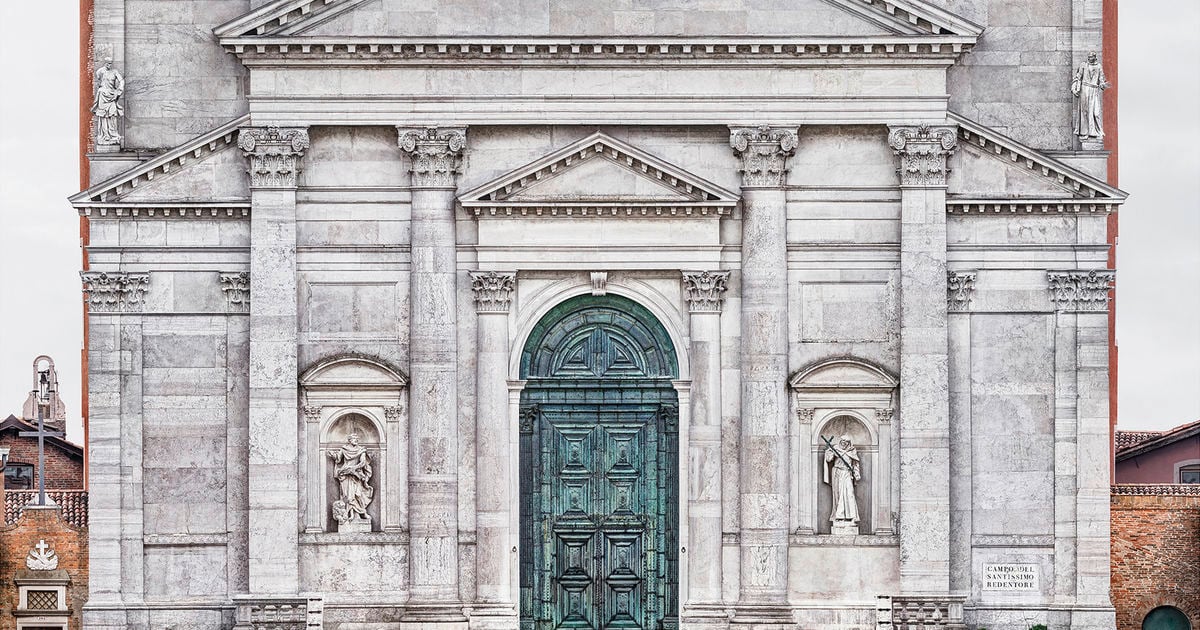
Markus Brunetti: FACADES IV
Markus Brunetti

Yossi Milo
245 10th Ave, New York, NY 10001
Tue-Sat 10am-6pm
Admission
Free Admission
About
Markus Brunetti's (b. 1965; Bavaria, Germany) new works further his mission to document Europe's religious architecture, and FACADES IV emphasizes his visions of prominent churches, monasteries, and cathedrals in Italy, France and Spain. These buildings are representative of Europe's foremost religious architecture, and Brunetti has finally realized them in the FACADES series after having spent more than two decades constantly refining his self-devised photographic technique. Together, Brunetti and Schöner travel Europe in a converted firetruck-turned-photo lab. The two live and work on the road, returning to their subjects over years to take thousands of photographs of each structure, going meter-by-meter. Brunetti then edits, layers, and arranges each shot into composite images that provide an otherwise impossible, perfected view of the building's façade. With each new entry to the series, the demand for precision and consistency increases, and with it, the difficulty. The result exceeds the possibilities of any single photograph, even at the highest possible resolution, creating works that stand as monuments in and of themselves. Brunetti's practice could be likened to Bernd and Hilla Becher's serial photographs documenting German industrial buildings, yet the artist likens his methods more closely to conventions of Old Master painting. Though digital, the hand-constructed nature of the FACADES series speaks to the same root concerns for which contemporary audiences turn to traditional mediums—a dedication to beauty crafted for aesthetic and spiritual transcendence. Brunetti and Schöner share that interest, accomplishing their work without the assistance or interference of artificial intelligence. Architecture, in both historical artworks and in the FACADES series, cannot be understood by a prompt or a snapshot. Like the masters of the Renaissance, the artist offers subjective interpretations of his monumental subjects, not simply by photographing them, but by crafting a view of each structure according to his conceptual understanding of architecture as a practice. Brunetti's images translate the presence of each building in an idealized, draftsman-like way, and they present renderings that resemble how a building's architects might have imagined it as much as they do the building itself.