Forest of Stars
Sheida Soleimani
Yancey Richardson
525 W 22nd St, New York, NY 10011
Tue-Sat 10am-6pm
Admission
Free Admission
Commercial gallery - no admission fee mentioned
About
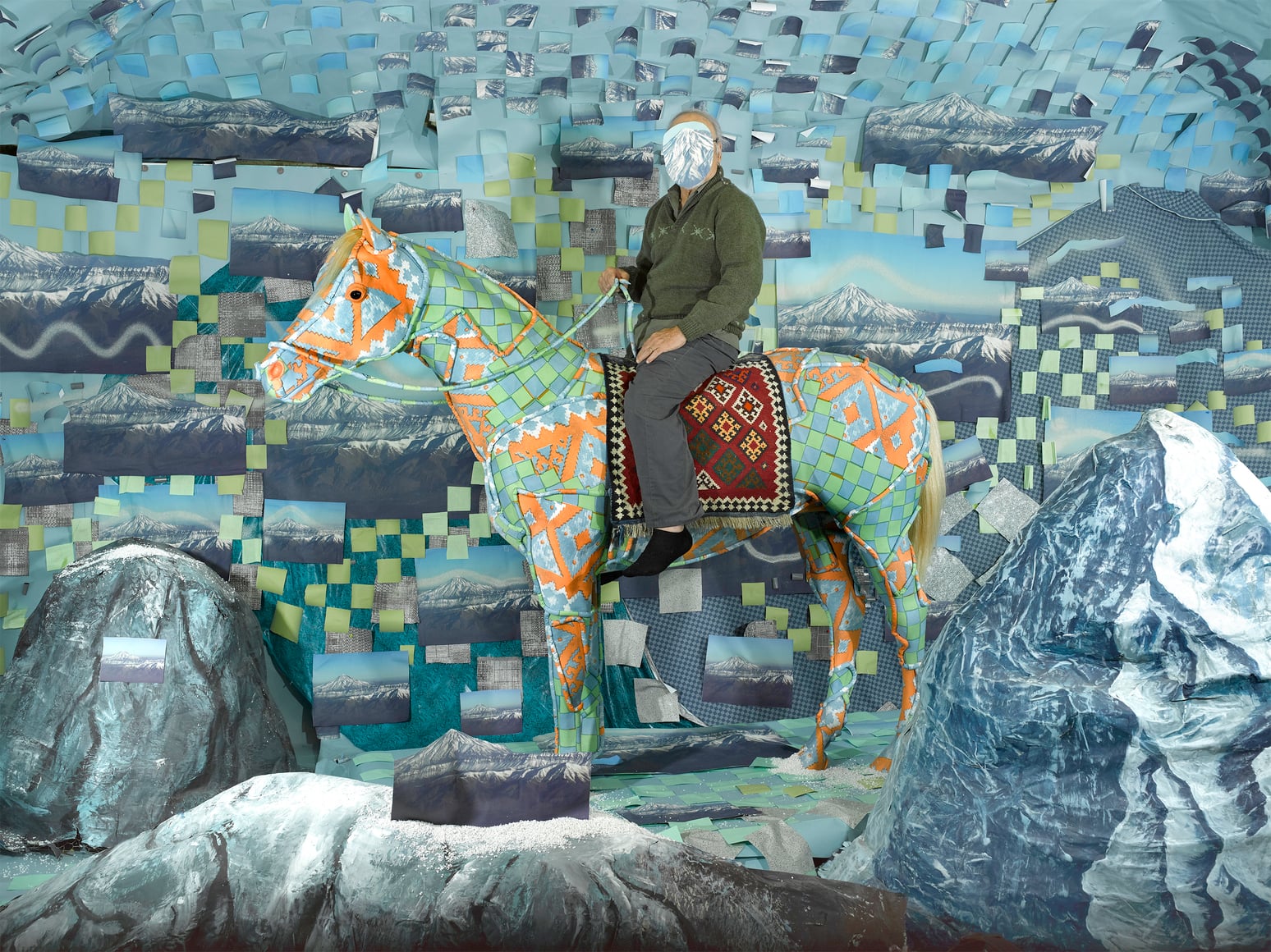
Yancey Richardson is pleased to present Forest of Stars, an exhibition by Iranian-American artist Sheida Soleimani, her first with the gallery. The exhibition builds upon her ongoing Ghostwriter series, which examines her parents' experiences of political exile following the 1979 Iranian Revolution, using it as a lens through which to consider broader systems of geopolitics, displacement and care. The exhibition will also include a new site-specific wall drawing by Soleimani's mother. The exhibition will be on view from April 16 through May 22, 2026. An opening reception will be held on Thursday, April 16 from 6–8PM. In the Ghostwriter series, Soleimani draws upon the history of her parents—pro-democracy activists who were forced to flee Iran and endure physical and psychological hardship before eventually resettling in the United States. The works operate as a form of 'ghostwriting,' narrating and reconstructing their lives without directly using their voices. Instead, fragments of memory, archival photographs and symbolic objects are assembled into intricate studio tableaux that blur the boundaries between documentation and imagination. Soleimani is known for constructing elaborate photographic compositions that combine images, sculptural props and living subjects—including birds and occasionally her parents themselves—into scenes that are both surreal and sharply descriptive. Artifacts from her parents' journey appear against layered backdrops derived from family archives, producing composite images in which personal memory and political history coexist within newly invented spaces. A recent development within the series is the Flyways photographs, which emerge directly from Soleimani's work as a federally licensed wildlife rehabilitator and founder of Congress of the Birds, a wild bird rehabilitation center in Rhode Island. This practice is deeply connected to her family history: after fleeing Iran, Soleimani's mother—once a practicing nurse—began caring for injured wild birds, passing this ethic of care on to her daughter. The site-specific drawing included in the exhibition is also her mother's work, extending this familial lineage of care and image-making into the gallery itself. Within Soleimani's photographs, migratory birds often assume the role of primary subjects, their bodies rendered in intense close-up, where feathers, talons and eyes become intricate landscapes. These birds function not only as living patients but also as metaphors for movement, survival and obstruction. Like migrants navigating geopolitical borders, they travel vast distances only to encounter human-made hazards along the way. By situating these animals within her constructed environments, Soleimani connects acts of care—both familial and ecological—to forms of resistance. The images suggest that tending to vulnerable bodies, whether human or animal, is itself a political gesture, one that resonates through her family's history and into the present moment.