Shilpa Gupta: What Still Holds
Shilpa Gupta

Tanya Bonakdar Gallery
521 W 21st St #1, New York, NY 10011
Tue-Sat 10am-6pm
Admission
Free Admission
This is a museum exhibition (Hamburger Bahnhof – Nationalgalerie der Gegenwart, Berlin). No explicit admission fee mentioned on this gallery website page.
About
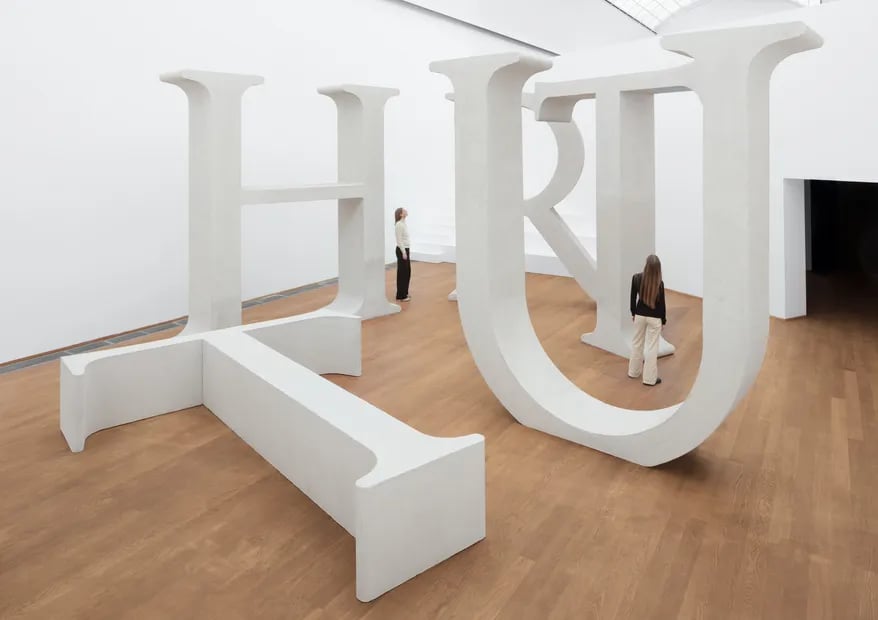
What Still Holds brings together eleven works by Shilpa Gupta from the last twenty years that explore language, power, borders, and collective memory. Across sculpture, sound installations, drawing, and participatory works, she examines how information is shaped, restricted, or erased. Visitors move between fragmented letters of the large-scale installation Truth (2022-25), trace missing figures in the participatory work Untitled (Nothing Will Go on Record) (2014/25), listen to resistance songs in the sound installation Listening Air (2019/23), and encounter voices that were censored or concealed. Maps drawn from memory in the series 100 Hand Drawn Maps of My Country (2008/14–ongoing) question national borders. The metallic library Someone Else: A Library of 100 Books Written Anonymously or Under Pseudonyms (2011) brings together books released under pseudonyms due to various reasons including fear of political persecution or discrimination. Produced for the exhibition is a marble sculpture from the series Don't See, Don't Hear, Don't Speak (2006/26). Several hands extend from a single body, reaching toward the eyes, ears, and mouth, overlapping and obstructing the senses. Gupta refers to the motif of the three wise monkeys, which embodies the principle "see no evil, hear no evil, speak no evil," originating from a 17th-century carving at a Buddhist temple in Japan. It was made popular in India via the teachings of the Indian independence leader Mahatma Gandhi (1869-1948) and commonly featured in schoolbooks. The exhibition concludes with the motion installation StillTheyKnowNotWhatIDream (2021), made of two mechanical flapboards. Such boards were once used in airports and train stations to announce departures and arrivals. The boards display short reflections by the artist and flip continuously, causing words to appear and disappear in a steady rhythm. The work shows how information moves unevenly and how understanding depends on context and belief, asking what still holds when messages flicker, shift, and remain incomplete.