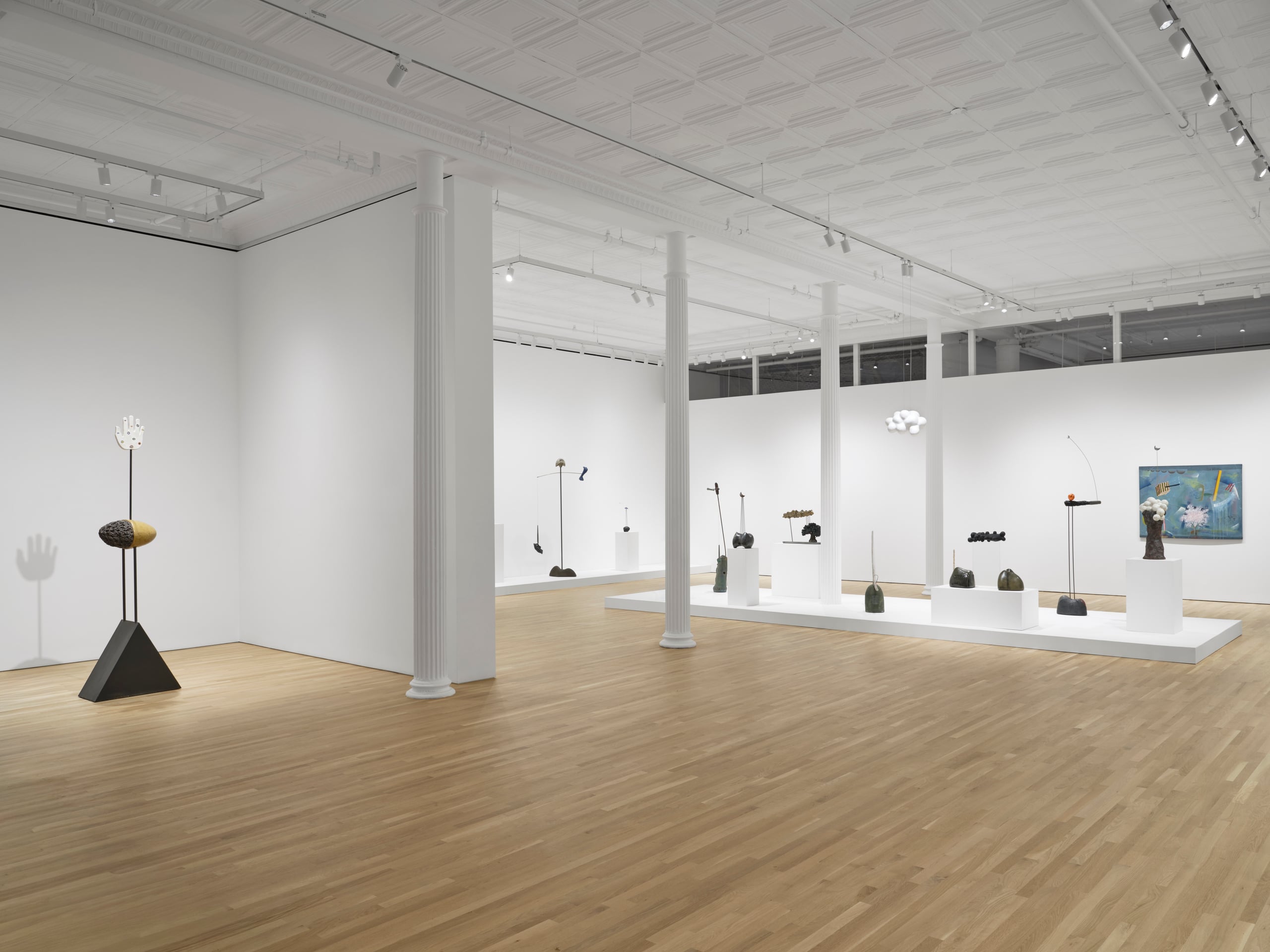
Megumi Yuasa - Letter to the World
Megumi Yuasa

Ortuzar
5 White St, New York, NY 10013
Tue-Sat 10am-6pm
Admission
Free Admission
Commercial gallery - no admission fees stated
About
Ortuzar is pleased to present "Megumi Yuasa: Letter to the World," a solo exhibition of work by Japanese-Brazilian sculptor Megumi Yuasa (b. 1938) and his first exhibition in the United States. Bringing together approximately thirty works from the early 1970s to 2025—including historic sculptures and a group of new works produced in New York—the presentation surveys six decades of Yuasa's practice across ceramic, metal, and stone. In conjunction with the exhibition, Ortuzar will publish a fully illustrated catalogue in collaboration with Gomide&Co, featuring a new text by novelist and historian Karen Tei Yamashita reflecting on her fifty-year friendship with the artist. Marking Yuasa's debut exhibition with the gallery, the exhibition traces the evolution of a distinct sculptural language: compact ceramic constructions from the beginning of his career; vertically oriented sculptures that fuse fired, glazed, and painted clay with iron, steel, and brass; and recent works that distill a lifetime's attention to form, gravity, and poetic transformation. Monumental works including Personagem Sensível [Sensible Character] (1988), Tropical (1980-2024), and the early Nuvem [Cloud] (c. 1975) establish the exhibition's physical and conceptual scale, while related sculptures—including key examples of the artist's Espássaro and Árvores [Trees] bodies of work—reveal a long-term investigation into balance, suspension, and the reciprocal pull between earth and sky. Although Yuasa has participated in the São Paulo Biennial and is represented in major Brazilian museum collections—including the Museu de Arte Moderna de São Paulo and the Pinacoteca do Estado de São Paulo—his work has rarely been seen in the United States. This exhibition situates Yuasa within a broader sculptural lineage that includes Constantin Brâncuși and Isamu Noguchi while foregrounding the distinct political, diasporic, and material conditions that shaped his work in Brazil.