APRIL GORNIK: LIMINAL STATES
April Gornik

Miles McEnery Gallery
525 W 22nd St, New York, NY 10011
Admission
Free Admission
Commercial gallery - no admission fee stated
About
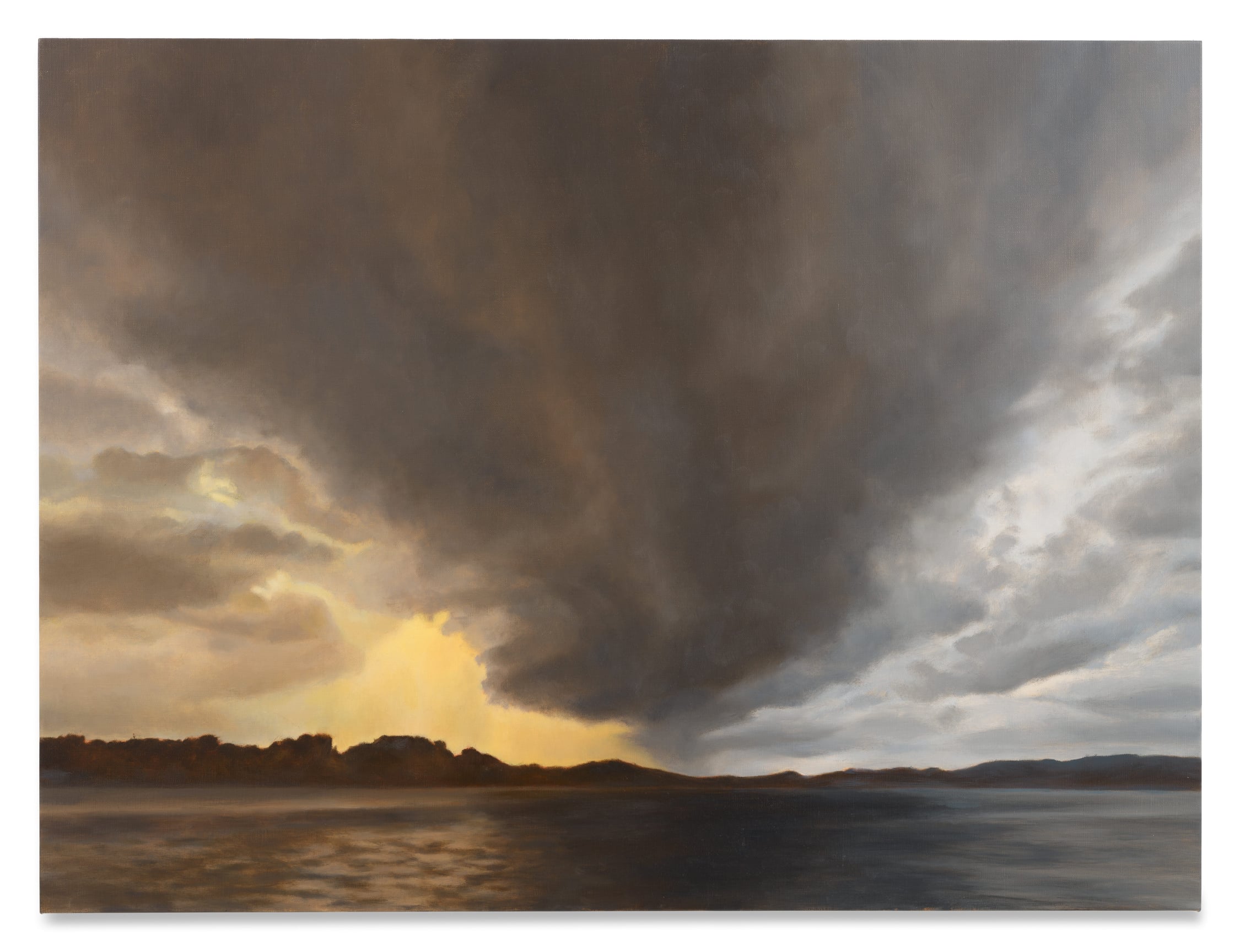
Miles McEnery Gallery is delighted to announce an exhibition of new paintings by April Gornik, on view at 525 West 22nd Street from 2 April through 9 May 2026. The exhibition will be accompanied by a fully illustrated publication featuring an essay by Richard Deming. While Gornik is widely recognized for her epic, large-scale landscapes, this exhibition also reveals the potency of her vision at a more intimate scale. Alongside the sweeping compositions that have long defined her practice, the artist presents seven more modestly scaled paintings, six of which are rendered in a richly minimal, almost grisaille palette and were created during a deeply personal moment in the artist's life. In this new body of work, Gornik advances her decades-long engagement with landscape and her goal of relocating emphasis from depiction to encounter. The artist uses shifts in the works' scale to encourage new kinds of suggestion and engagement, relying on emotional experience to create "place." Fields, skies, rivers, and expanses of water unfold without human figures or narrative cues, inviting viewers to locate themselves within the act of looking itself. As Deming writes, "Our eyes take part in the work of Gornik's art. They move and shift and turn as our gaze travels over the paintings. The images may seem like still scenes, ripe for meditation, but instead they are opportunities for attention. There is no human subject within the paintings, but we provide that, standing in front of them." In this way, Gornik's compositions do not dictate a single path through space; they remain open, allowing each viewer's perception to determine where to begin and how long to remain. Through this sustained engagement, Gornik's works give form to Deming's assertion that "A painting isn't actually a moment, either. It is an insight built up over time—one arrived at by layers of paint, countless brushstrokes and blotting, all coursing over the weave of the canvas. If anything, it is a revelation of our own threaded experiences of psychology, emotion, and corporality—of how we are as bodies and beings in a world ever in flux. Thus, one of the things we are seeing when we look at a landscape painting is an artist's sustained commitment to witnessing and to making that experience available—not despite the limitations of paintings but because of them."