BAYNE PETERSON - The Dolphin's Pearl
Bayne Peterson
Kristen Lorello
23 East 73rd Street, 5th Floor, New York, NY 10021
Admission
Free Admission
About
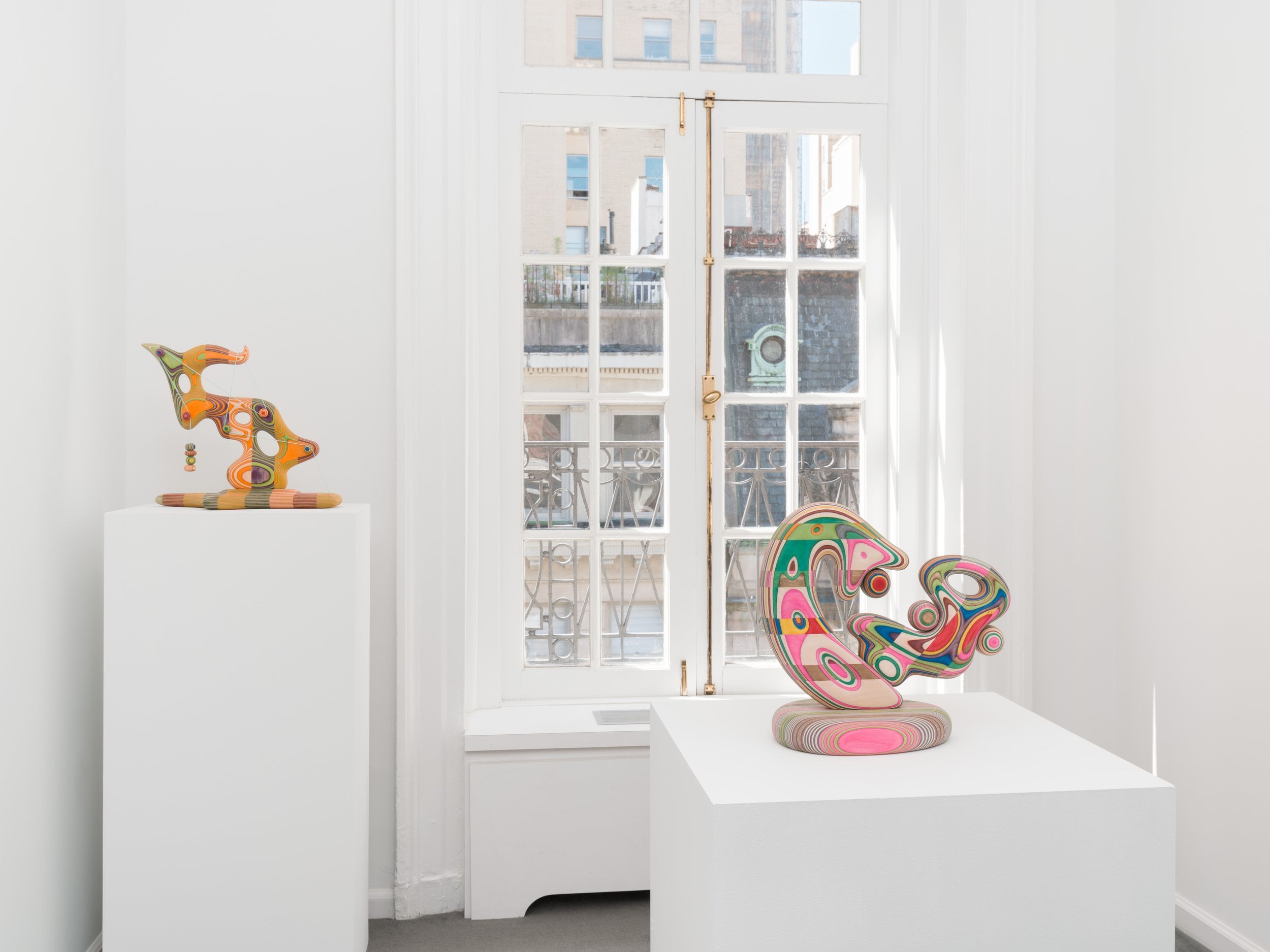
The gallery is thrilled to announce its fifth solo exhibition with Rhode Island-based sculptor Bayne Peterson. The exhibition features seven new hand formed pedestal-based sculptures in the artist's iconic medium of laminated plywood, a medium the artist has been exploring since the gallery's inception in 2014. Through luscious surfaces of sloping and concentric patterns, for more than a decade, Peterson has tested the optical and perceptual limits of hand formed three dimensional sculptures while refining his technical acuity in woodcarving. Labor, time, and the joy of process complement art historical and environmental research, resulting in sculptures that blend disparate themes and encourage the viewer to imagine beyond fixed categories. Abstraction that appears biological, ecological, and technological takes its cues from various architectural and craft traditions, Modernist sculpture, and aquatic life, as well as early and contemporary digital realms, quilt patterns, and manufactured objects. The Dolphin's Pearl takes its name directly from the title of a colorful and vivid computer game co-created by the artist's father, Dale Peterson, in the early 1980s. Its protagonist, a dolphin, uses cryptic clues and echolocation—a natural biological sonar—to find a pearl. Drawing from narratives such as Herman Melville's Moby-Dick and Ed Yong's 2022 scientific book about animal sense perception, An Immense World, in his new sculptures Peterson uses pattern and color to suggest various modes of sensation and communication between different parts of the sculptures. Articulating specific sections of sculpture through different color combinations enhances the sculptural element's reading as technological, ecological, or both. This use of varying patterns within one sculpture is a development from the artist's previous works which relied on one overall pattern. As Peterson writes, 'A specific pattern might echo from one form to another, like sound bouncing off an object and back to an animal. Appendages may reach from one object to another to perceive its disparate colors and patterns."