Eddie R. Aparicio: Rubberneckers
Eddie R. Aparicio

Jeffrey Deitch
18 Wooster St, New York, NY 10013
Admission
Free Admission
About
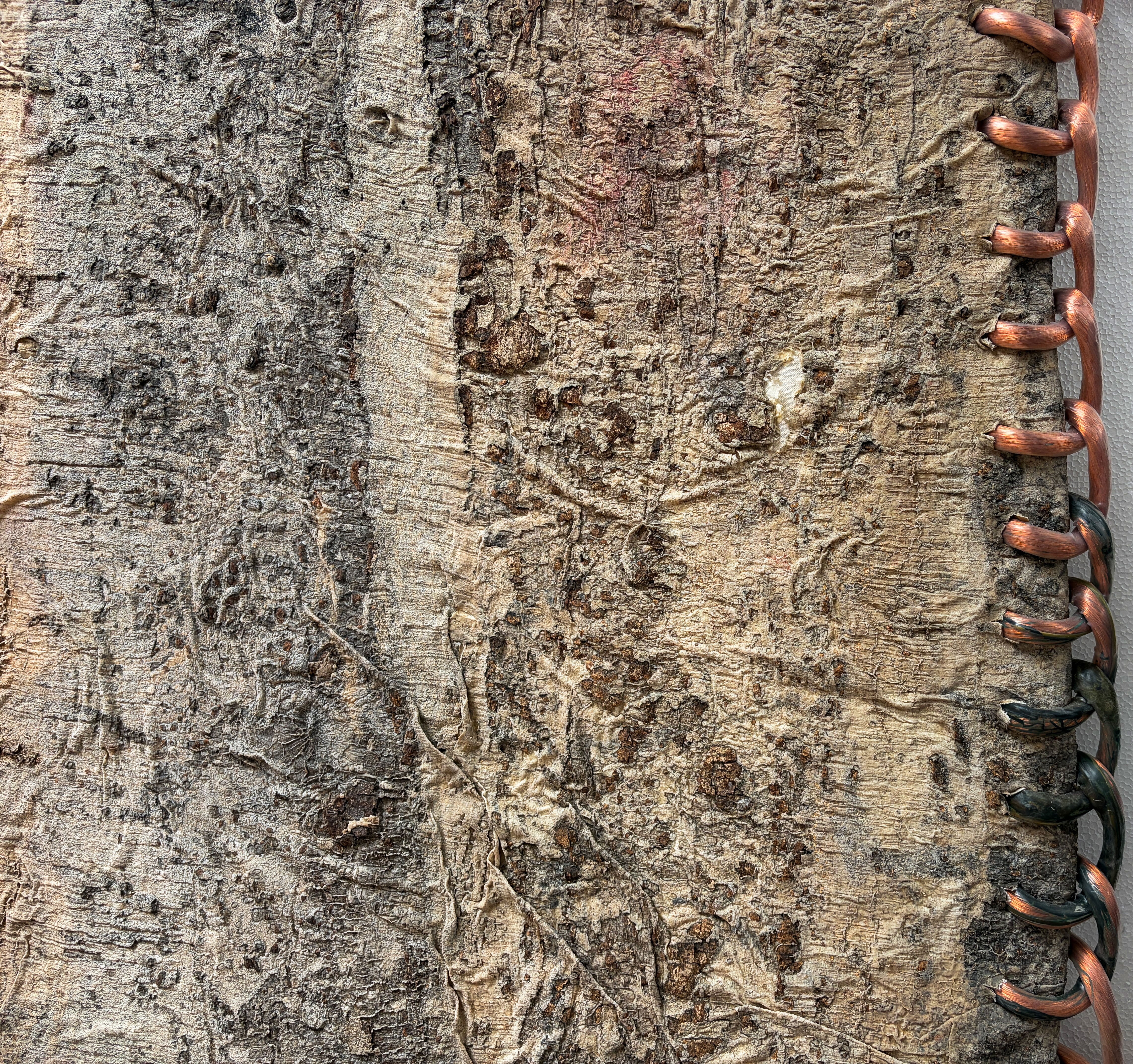
Eddie R. Aparicio has spent the past decade tracing how Los Angeles wires its neighborhoods unevenly, leaving some communities more precarious than others. In _Muñecas de transmisión_, his 2024 commission for Prospect.6 in New Orleans, electrical transmission towers are turned into dolls dressed in family clothing, arranged like the power lines that cut though the neighborhood of North Hollywood. Prospect.6 closed in early February. Just weeks earlier, in January 2025, decommissioned electrical transmission towers sparked the Eaton Fire that tore through Altadena, destroying Aparicio's Los Angeles home along with more than 9,000 other structures. _Rubberneckers_, Aparicio's first exhibition at Jeffrey Deitch's 18 Wooster Street gallery in New York, presents the body of work that emerged in the fire's aftermath. The exhibition takes its title from the freeway phenomenon of slowing down to stare at a crash on the opposite side of the road—a behavior deeply embedded in Los Angeles driving culture. Aparicio interprets the title as a critique of individualism: a person alone in a car, witnessing the world through glass, in a culture that increasingly consumes disasters through a screen. They are close enough to feel the impact of the damage and far enough to stay safe. That idea carries the process of making the wall works. Their edges are hand-sewn in diente de lobo, or wolf's tooth, the same stitch Aparicio's grandmother once used on dolls she made from clothing left behind by relatives who disappeared during the Salvadoran Civil War. New thread is tied off and left hanging rather than trimmed, so the seam shows its own labor instead of hiding it. The rubber castings that anchor the show, known as Aparicio's ongoing 'Caucho' series, come from a process he has used since 2015. Disguised as a city maintenance worker, he coats the trunks of ficus trees tagged for removal with liquid rubber, building up layers over several weeks before peeling the cast away like a mask lifting from a face. What remains is an index of everything the tree has accumulated: staple holes left by decades of flyers, discoloration from car exhaust, tags of graffiti, the marks of people who carved into the bark. The height of each cast is the height Aparicio can reach; its width is the tree's own. He works in Mid-City and Pico-Union, neighborhoods built up over generations by Latin American immigrant communities and where Aparicio spent his childhood. Many of the ficus trees planted decades ago are now being removed after their roots outgrew the sidewalks built around them. The electrical grid reappears throughout several of his new paintings in the form of a sunburst logo belonging to the utility company whose equipment has been tied to the Eaton Fire. Aparicio fragments and distorts the logo across scenes of the burned landscape so the emblem only resolves when a viewer shifts position. New to this exhibition is a series of amber works. While the rubber casts document a tree's surface, the amber sculptures preserve what residents place directly into Aparicio's hands: personal objects and fragments gathered through months of conversations in the neighborhoods where he works. Encased like insects suspended in fossilized sap, these materials become an archive of histories that rarely enter official records. For Aparicio, material is never neutral. Every substance arrives carrying its own social, political, and geopolitical history before it becomes sculpture. A new group of column works, made of street trees, extends the same thinking into sculpture, referencing minimalist sculptor John McCracken's columns and the collections of pre-Columbian objects many artists of his generation kept without fully reckoning with where those objects came from. Aparicio transforms uprooted trees into totemic forms. Squared, staked upright, and arranged in ordered rows, they echo the ways agricultural fields and city sidewalks alike discipline living landscapes into rational grids. None of the works in _Rubberneckers_ shows a human figure. Aparicio builds them larger than a single body on purpose: a tree carries the marks of decades of hands, not one person's, and he wants the work to carry the same weight. _Rubberneckers_ asks viewers to look at a familiar landscape and recognize how much of it, the trees, the infrastructure, the ground itself, was never neutral to begin with. Eddie R. Aparicio (b. 1990, Los Angeles) received a BA from Bard College (2012), an MFA in Painting and Printmaking from Yale University (2016), and attended the Skowhegan School of Painting and Sculpture. His work was the subject of a solo exhibition at the Museum of Contemporary Art, Los Angeles (2023–24), and has been included in the 2024 Whitney Biennial and Prospect.6 in New Orleans. Aparicio lives and works in Los Angeles.