Shuling Guo: Temple II
Shuling Guo
Hollis Taggart
521 W 26th St, New York, NY 10001
Tue-Sat 11AM-5PM
Admission
Free Admission
About
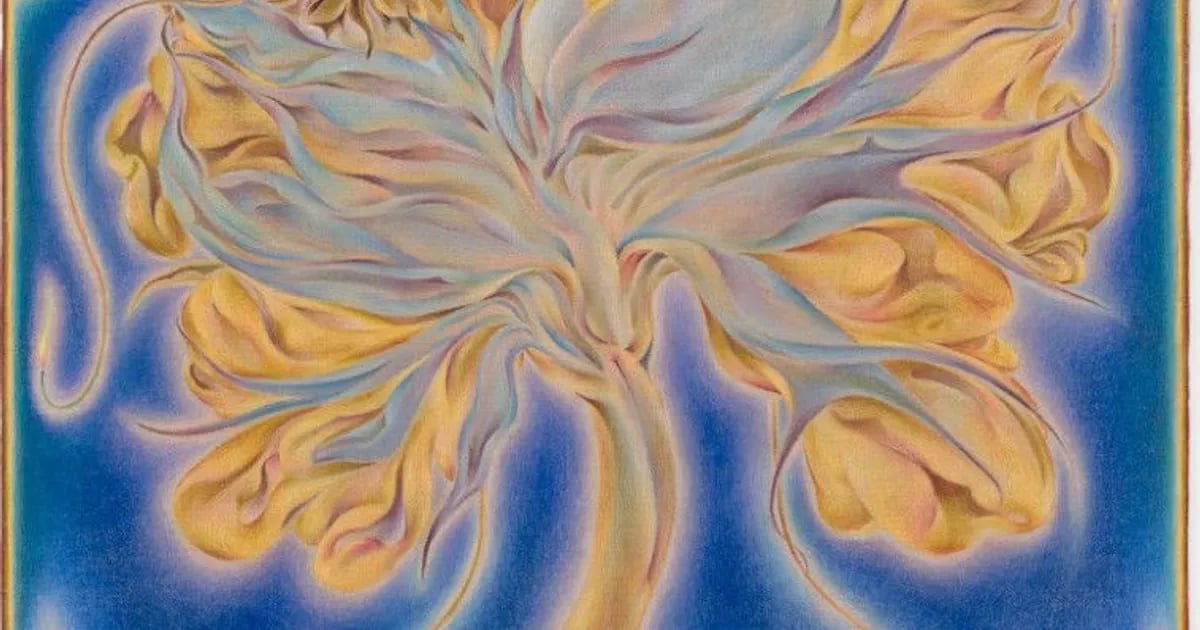
Hollis Taggart Downtown is pleased to present _Temple II_, a solo exhibition by Philadelphia-based artist Shuling Guo. In _Temple II_, Guo brings the female body, botanical forms, and devotional imagery together as a language shaped by motherhood, memory, and loss. Created following the birth of her daughter and the death of her grandmother, the paintings mark a return to the temple imagery and folk traditions of her childhood in Chaoshan, China, seen now through her experience as a woman and mother. Featuring new paintings, the exhibition will debut the artist's first mural, a site-specific extension of her painting practice conceived as part of the gallery's transformation into a sacred space. _Temple II_ will be on view at Hollis Taggart Downtown from October 15 to December 5, 2026, with an opening reception on Thursday, October 15, from 6–8 PM. Guo's Temple series marked a departure from her earlier work, initially centering on the idea of the body as a temple, with the temples of her childhood serving as a source of connection and memory; _Temple II_ moves more deeply into the temple, ritual, and folk memories of her childhood. Guo's visual language of botanical and other organic structures, bodily forms, and religious imagery converges in each composition, in which forms are enveloped in seemingly incandescent haloes rather than outlined, emanating an almost universal spiritual quality while remaining rooted in the artist's personal history and cultural heritage. Raised in China's Guangdong province, where Daoist and Buddhist traditions coexist with local folk beliefs and ritual, Guo made frequent visits to her village temple, where local wood carving, murals, and sculpture became part of her visual memory. Guo also draws on Early Renaissance painting, particularly Piero della Francesca, whose quiet, suspended figures resonate with the religious imagery and ritual forms of her childhood. In her paintings, these different visual traditions converge as a way of exploring devotion and ritual. Throughout _Temple II_, Guo explores the continuous cycle of life, from birth through aging and death, with the female body as a central theme. Growing up during China's one-child policy era, Guo was acutely aware of distinctions between boys and girls that shaped her understanding of being a girl, womanhood, and belonging. These distinctions extended to traditions such as dragon-boat racing, where women were excluded under the belief that their presence could cause the boats to sink. Guo's return to the religious imagery, folk traditions, and rituals of her childhood is not simply about rejecting them, but about reconsidering and reworking something that was formative to her. Shaped by her intense experience of labor and delivery, many of her paintings contain bodily forms drawn from her body's transformation through childbirth and from sensations and associations with organs and viscera. The bodily forms are rendered in flesh tones that viscerally evoke the harrowing physical and emotional vulnerability of the birthing process, while botanical imagery and wing-like forms preserve a sense of ambiguity and simultaneously grant the works a sense of whimsy. Guo builds her paintings through a slow process of layering, mounting linen onto wooden panels and applying clear gesso to preserve the raw linen's natural tone and edges. She then sands the surface to create a paper-like texture, layering colored pencil with oil paint while leaving some of the natural linen visible, resulting in a soft, matte luminosity. Her palette draws from dried flowers, aged frescoes, and the muted colors of objects altered by time. Guo describes the associative process through which her forms emerge when discussing her painting _Half of the Moon Anchors between Two Mountains_: _Looking at a dried salvia flower, my thoughts move to my breasts. Four years of breastfeeding_ _have them dried out and fallen like sad, sagging bags. A line from Neruda comes to mind:_ _'Almost out of the sky, half of the moon, anchors between two mountains.__' This is how a painting often begins for me. One image leads to another—an object, a memory, the body, a line of poetry—and they begin to intertwine._ Here, the breast, flower, moon, and landscape intertwine rather than remain distinct images. Across _Temple II_, Guo presents the body not as fixed or idealized, but as continually changing through motherhood, aging, memory, and time, and as a testament to the enduring power women possess. For Guo, painting becomes a way of holding onto experiences that cannot remain unchanged; here, those experiences come together to form a sacred space where the ephemeral is immortalized.