Anoushka Mirchandani: Everyone You Love Lives Here
Anoushka Mirchandani

FLAG Art Foundation
545 W 25th St #9, New York, NY 10001
Wed-Sat 11am-5pm, Summer (Jul-Aug) Tue-Fri 11am-5pm
Admission
Free Admission
null
About
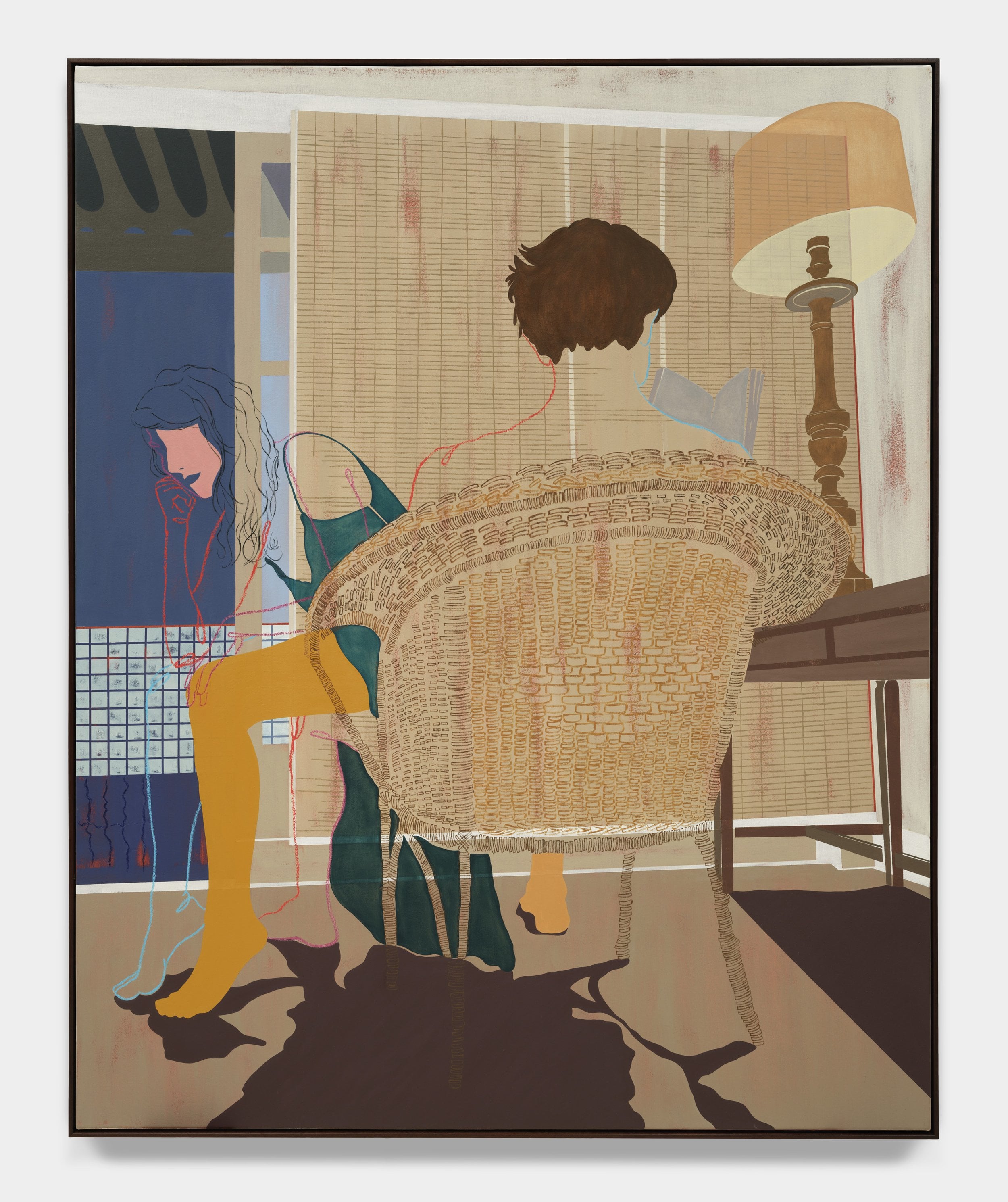
The FLAG Art Foundation is pleased to announce _Everyone You Love Lives Here_, an exhibition of new work by Anoushka Mirchandani, on view May 27–July 31, 2026, on the 10th floor. Bringing together new and recent paintings, the exhibition will trace Mirchandani’s development of new and ever-evolving formal strategies for exploring how identity exists in a constant state of flux and formation, of assembly and negotiation. Featuring works from three distinct yet interconnected and on-going series, _Everyone You Love Lives Here_ will situate Mirchandani alongside significant works by Louise Bourgeois, Cindy Sherman and Lisa Yuskavage, revealing that her work is part of a historical conversation around womanhood, memory, nature and ancestry. In Mirchandani’s paintings, female figures exist in a liminal space between action and contemplation, between transition and becoming. Rendered with a complex interplay of solid color forms and loosely delineated contours of the body, her figures possess a porous relationship to the space around them, whether that be a domestic interior defined by intricate patterning and detail or an expanse of nature wild and abstract. The tension between her figure’s interior worlds and the composite quality of their construction expresses a type of subjectivity she understands through her own diasporic experience of being born and raised in Pune, India, before moving to the United States in early adulthood. Having learned how to balance the memory and influence of her upbringing with the expectations of a new society and culture, Mirchandani brings that same sense of discovery and experiment to her work, where a connection to the past is not only maintained, but continuously renewed through its contact with the present. Deeply biographical, Mirchandani’s work references her matrilineal history, which she accesses through a family archive of images, ephemera and an oral history of stories and memory. _Everyone You Love Lives Here_ is organized around three groupings of Mirchandani’s work: solitary female figures positioned in transitory spaces, interiors featuring couples and lone figures and selections from her _Jungle Paintings_ series. In the abstract portraits, Mirchandani examines the idea of portraiture itself with female subjects that appear at the threshold separating one space or state of mind from another. Each painting shows a figure at a different state of attention, whether absorbed within or frankly addressing and returning the viewer’s gaze. Paired with one of Cindy Sherman’s _Film Still_ images—a groundbreaking photographic series that examined identity and feminism in the context of mass media—these paintings provide a contemporary reflection on how one’s sense of self changes in response to what surrounds them. In Mirchandani’s interior scenes featuring both couples and solitary figures, the architecture and objects that define domestic space become repositories of emotional connection and psychological tension. While each figure is constructed with a mix of forms both solid and spacious, the rooms they reside within are rendered with exacting detail and specificity, from a wicker chair to a carpet patterned with colorful diamonds, to the ornamentation embedded in the headboard above a mattress where a couple lay with arms intertwined. Placed in conversation with Louise Bourgeois’ sculpture _Couple_ (2004), which shows two pink fabric figures joined together while suspended within a glass case, Mirchandani’s scenes reveal both intimacy and interiority as elaborate constructions. With her _Jungle Paintings_,Mirchandani breaks free from the confines of architectural space, replacing the meticulously detailed interiors with lush green expanses of forest, field and water described with fluid and dynamic brushwork. In contrast to the tremulous dispositions of her interior subjects, these female figures invoke the ‘apsaras’ from South Asian mythology, mystical women born of mist and fog and known for their shape-shifting abilities. Here they coexist, merge and intertwine with landscapes real and imagined to create scenes that evoke a primordial site of belonging. Seen in tandem with Lisa Yuskavage’s painting _Mutualism_ (2006), which depicts the joining of the female body with a fantastical vision of nature, Mirchandani’s _Jungle Paintings_ express both wish and aspiration: they show the female body in a state of reciprocity with nature just as they envision identity being formed in concert with the world rather than in conflict with it.