Constellations of Movement
Sama Alshaibi, sheri crider, Esteban Cabeza de Baca, Francisco Donoso, Gloria Martinez-Granados
Center for Art and Advocacy
22 Bancroft Pl, Brooklyn, NY 11233
Wed-Fri 12pm-6pm, and by appointment
Admission
Free Admission
About
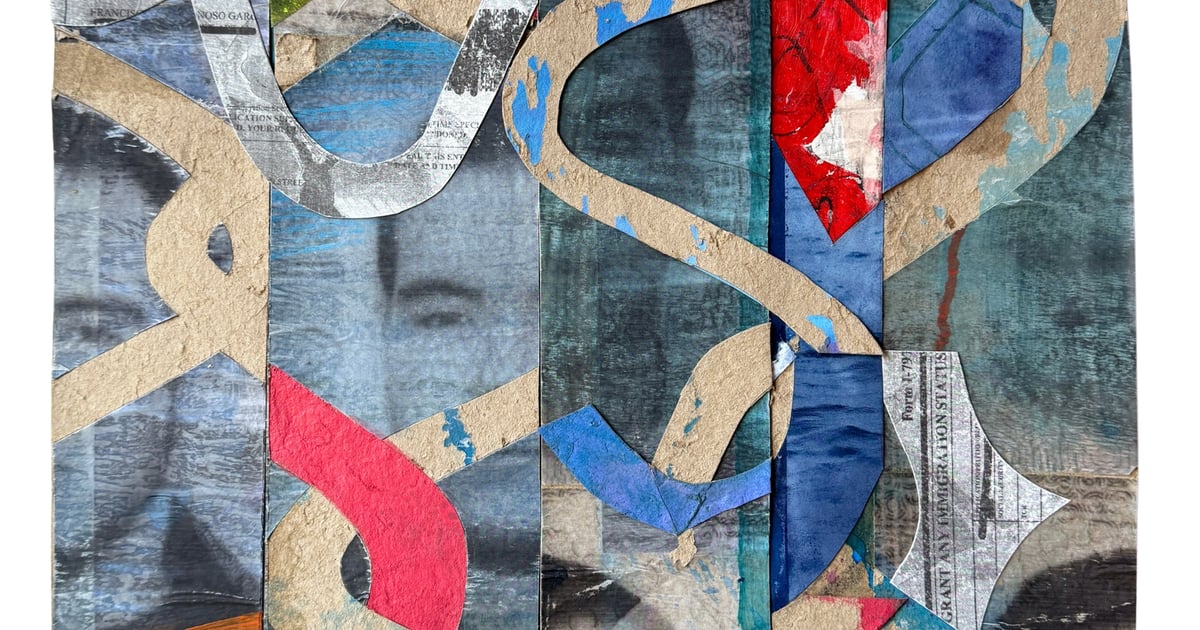
We are pleased to present **_Constellations of Movement_**, an exhibition bringing together work by five artists working across media that each explore the history, materiality and psychology of borders, whether as political realities or geographic fictions. Featuring work by **Sama Alshaibi**, **sheri crider**, **Esteban Cabeza de Baca**, **Francisco Donoso** and **Gloria Martinez-Granados**, the exhibition considers the border not only as a carceral construction, one with aims to discipline land, bodies and movement, but as one point within a larger assemblage of histories, architectures, ecologies and lived experiences. Borders are continually produced through policy, surveillance, war and shifting ideas of national security. They are built, expanded and maintained, rather than natural and found. Curated by **Alana Hernandez**, Senior Curator at the Arizona State University Art Museum, Constellations of Movement deconstructs the idea of the border as a singular place, or as something factual and incontrovertible. Instead, by tracing a network out of different yet mutually reinforcing experiences and artistic practices, the works in the exhibition reveal how movement is shaped across time and place, and thus how subjectivities and communities are shaped as well. Migration is understood not as a single act of crossing, but as a condition produced through strife, documentation, landscape, labor, memory and systems of control. The border is not approached as a fixed line, but as an ever-shifting relationship between people, place and power. The artists gathered here form a constellation of practices that illuminate these intersecting realities. Through collage and video work, **Sama Alshaibi** considers the afterlives of warfare and displacement, tracing how US intervention in Iraq continues to structure migration and memory. In her recent projects, Alshaibi renders Baghdad as a palimpsest. Distinct layers of modernization, conflict, and restructuring accumulate over the ancient city, compressing multiple temporalities without fully merging them. What remains is a form of peripheral evidence, continually improvised and reassembled, where voids carry the weight of intangible residue. **Esteban Cabeza de Baca's** paintings turn to landscape as a repository of memory, where histories of migration, labor and resistance remain embedded in the land. In his work, Cabeza de Baca employs a broad range of painterly techniques, entwining layers of graffiti, landscape and pre-Columbian pictographs in ways that confound Cartesian single-point perspective. In **sheri crider's** paintings of the American southwest, commercial, industrial and carceral forms converge to render the landscape both contested and in flux, at once able to register the historical traces of colonial violence while also remaining capable of regeneration. The lush and verdant natural features that populate her works are troubled by their proximity to the encroachment of political symbols, infrastructure and institutional power. **Francisco Donoso's** multidisciplinary practice lingers with migration as lived experience, imagining futures influenced by both departure and the impossibility of return. Working across painting, printmaking, drawing, collage, bookmaking and weaving, Donoso uses personal archives—photographs, immigration documents, ID cards, poetry—as raw material to navigate the emotional and spiritual terrain of undocumented life. **Gloria Martínez-Granados** reveals the bureaucratic conditions through which documentation produces belonging and exclusion. In her installation _The Uncertainty of Higher Education_ (2022), a group of ID cards that have been manipulated hangs from the ceiling to form a dense yet fluid field, one where traces of institutional identity remain legible just as they seem ready to dissolve entirely. In its examination of how personhood is formed and disassembled by the experience of moving across borders and interacting with their present-day political forces and their historical structures, Martínez-Granados' work reflects the larger thematic emphasis running throughout _Constellations of Movement_: to consider how documentation, surveillance, detention, displacement or the quiet negotiations of everyday life are shaped by the politics of borders.