Articles of Distinction
John White Alexander, Hugo Ballin, Varujan Boghosian, Struthers Burt, Alexander Calder, Henry Seidel Canby, Gilbert Cass, Willa Cather, Mary Frank, Walker Hancock, Childe Hassam, Winslow Homer, Alan Hovhaness, William Dean Howells, Leonebel Jacobs, John M. Johansen, Robert Underwood Johnson, Wolf Kahn, William Mitchell Kendall, Jacob Lawrence, Edward H. May, Albert Bigelow Paine, I. M. Pei, Martin Puryear, Orlando Rouland, Carl Ruggles, Joel Shapiro, Ron Sisco, Eugene Speicher, Edward Steichen, John Steinbeck, Ezra Stoller, Abbott Handerson Thayer, Carl Van Vechten
American Academy of Arts and Letters
Audubon Terrace, Broadway between West 155th and, NY 10032
Closed for installation, Opening March 14, 2026
Admission
Free Admission
Opening celebration on Saturday, March 14, from 4 to 7pm is free and open to the public
About
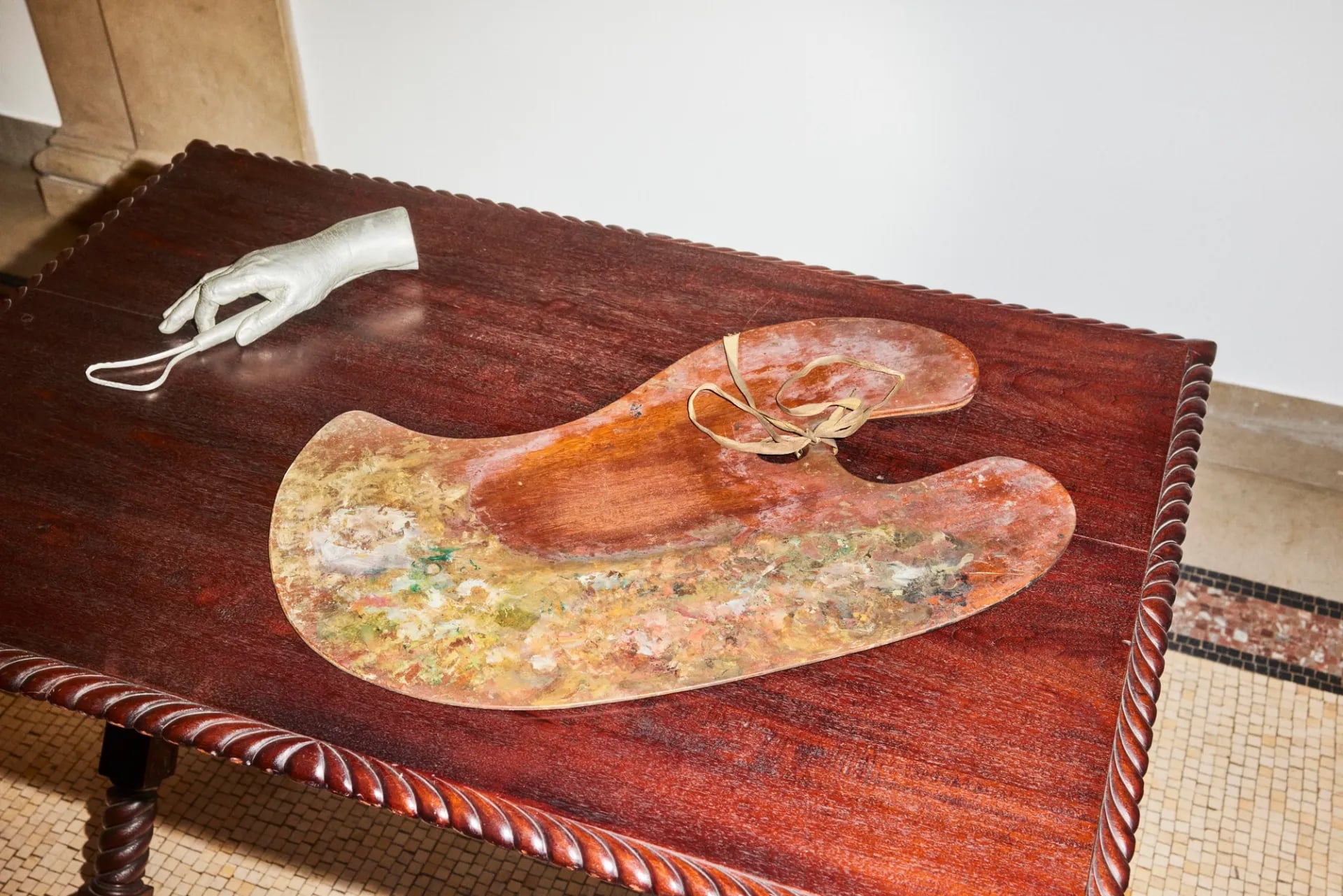
In 1915, Permanent Secretary of the American Academy of Arts and Letters Robert Underwood Johnson wrote to members soliciting "articles of distinction" for a new collection. As a public service, the directors intended to create "a treasure house of literary and artistic Americana." They received an eclectic mix of artworks and memorabilia that reflected members' values and tastes, and often, objects by which they could be remembered. Early gifts included Mark Twain's pipe, a Winslow Homer watercolor, and a plaster cast of Robert Frost's nose. As the collection continued, it gained formal portraits, musical manuscripts, bronze busts, and more—over a century of creative lives accumulated. To create this exhibition, we invited current members of Arts and Letters to select objects from the collection and write texts to accompany them. What objects did they find compelling and why? Some were drawn to archival documents; others considered paintings and sculptures, artists' tools, death masks, and furniture. Composer Annea Lockwood selected Charles Ives's metronomes, describing him as "a generative ancestor." Architect Sharon Egretta Sutton, who chose a drawing by Jacob Lawrence, writes about how the artist "pried open the doors of the art world." Artist Amy Sillman assembled a group of plaster and metal casts of members' hands. The hand, Sillman explains in her text, "extends itself, and receives its own welcome in the hands of others." All the objects here are also gestures—extending themselves toward others, and across time.