The Mud Room: Itinerant Artists, Folk Spectacles, and Painted Walls
Matthew Lutz-Kinoy, Natsuko Uchino, Kazunori Hamana

Amant
315 Maujer St, Brooklyn, NY 11206
Mon–Wed 9am–2pm, Thurs–Sun 9am–4pm (Café & Bookstore; galleries closed until March 18)
Admission
Free Admission
About
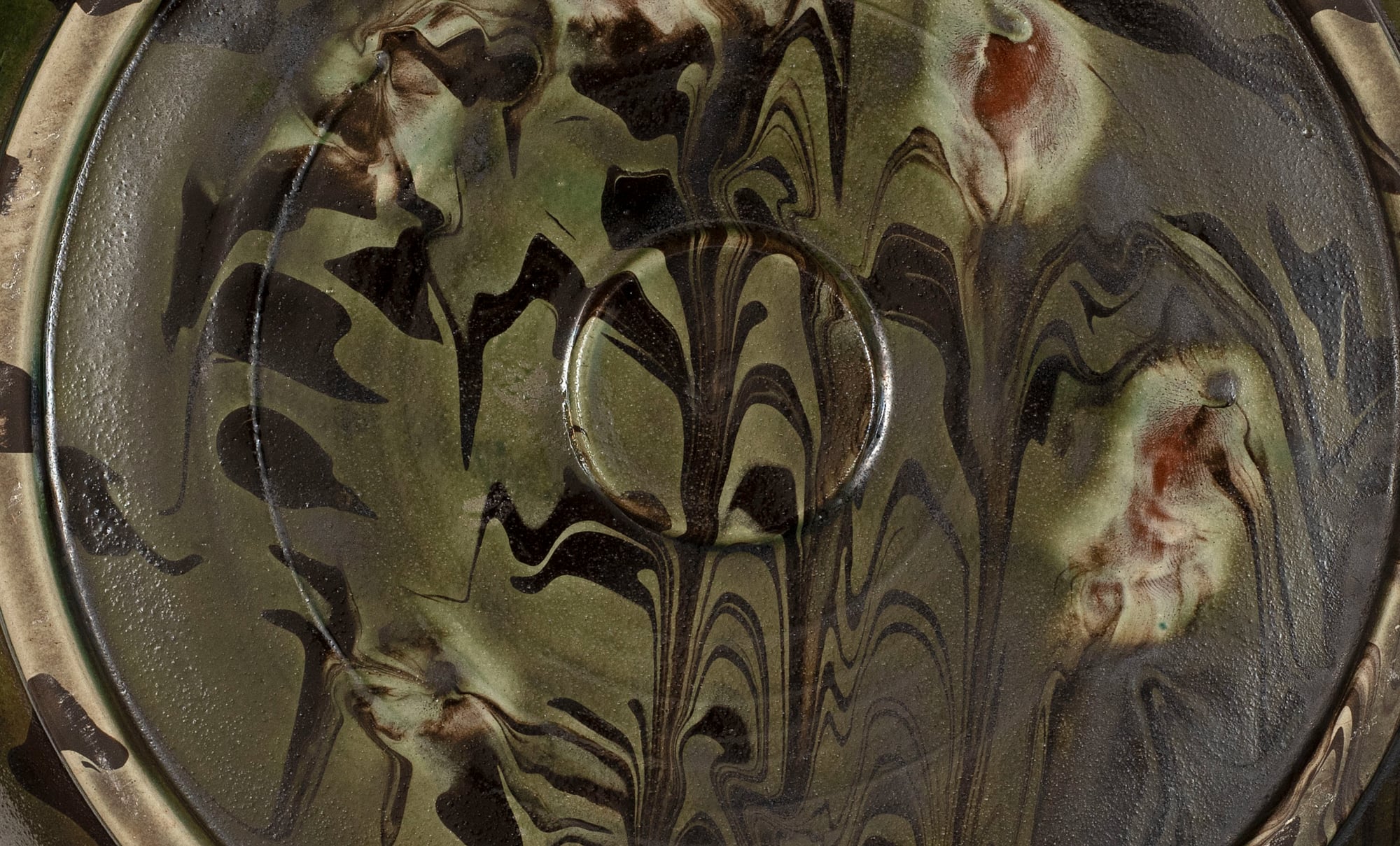
_The Mud Room: Itinerant Artists, Folk Spectacles, and Painted Walls_ is an exhibition developed by Matthew Lutz-Kinoy in collaboration with Natsuko Uchino and Kazunori Hamana. Reflecting on the lives and images of painters, potters, and muralists whose work transforms everyday public spaces into sites of collective imagination, the exhibition at Amant considers the ceramic studio as a living environment shaped by memory, tradition, and shared use. Situated at the center of Amant's AZ gallery, the studio functions as a performative space framed by four monumental paintings. _The Mud Room_ departs from questions surrounding the history of American art—more specifically, the place of ceramics within it. Rooted in the material realities of the workshop, the exhibition brings histories of craft into dialogue with North American art, specifically postwar painting and public art movements across New York City during the 1980s and 1990s. Lutz-Kinoy traces these lineages while registering a wide range of biographical and art-historical reference points: from Aaron Douglas's 1934 Public Works of Art Project (PWAP) four-panel mural, Aspects of _Negro Life_, at the Schomburg Center for Research in Black Culture; to Philip Guston and Reuben Kadish's monumental mural, _The Struggle Against War and Fascism_ (1934–35), in Morelia, Mexico; to Keith Haring's public murals executed across schools, hospitals, and urban spaces. Emerging from different historical moments, these artists share a commitment to public painting, social space, labor, and collective life. Through these references, Lutz-Kinoy questions the traditional divide between artist and artisan, examining whether physical mastery of a medium truly establishes a living connection to history. Rather than illustrating ceramics directly, the paintings created for _The Mud Room_ represent a broader visual field in which histories of muralism, craft and public art frame the live activity of the studio. If the paintings on canvas and translucent muslin encompassing the space reference historical American muralists and artisans, then inside the room, by collapsing the fourth wall, publics become their contemporary counterparts. Lutz-Kinoy's collaboration with Natsuko Uchino and Kazunori Hamana extends this conversation through Japanese ceramic traditions rooted in agriculture, daily life, local materials, and shared labor. Within this painted environment, two throwing wheels, a kiln, and a working table anchor the gallery as a site of production, where ceramics are created after hours throughout the run of the exhibition. The studio functions as both scenography and architecture, forming a backdrop against which tools, wet clay, and people circulate. By integrating artist talks, culinary gatherings, and theatrical performances, the _Mud Room_ positions ceramics not as a discrete medium, but as a durational, collective practice of cultural memory and hospitality.