Paper Doll
Jay Michelle Elizondo
A.I.R. Gallery
155 Plymouth St, Brooklyn, NY 11201
Wed–Sun 12–6pm
Admission
Free Admission
About
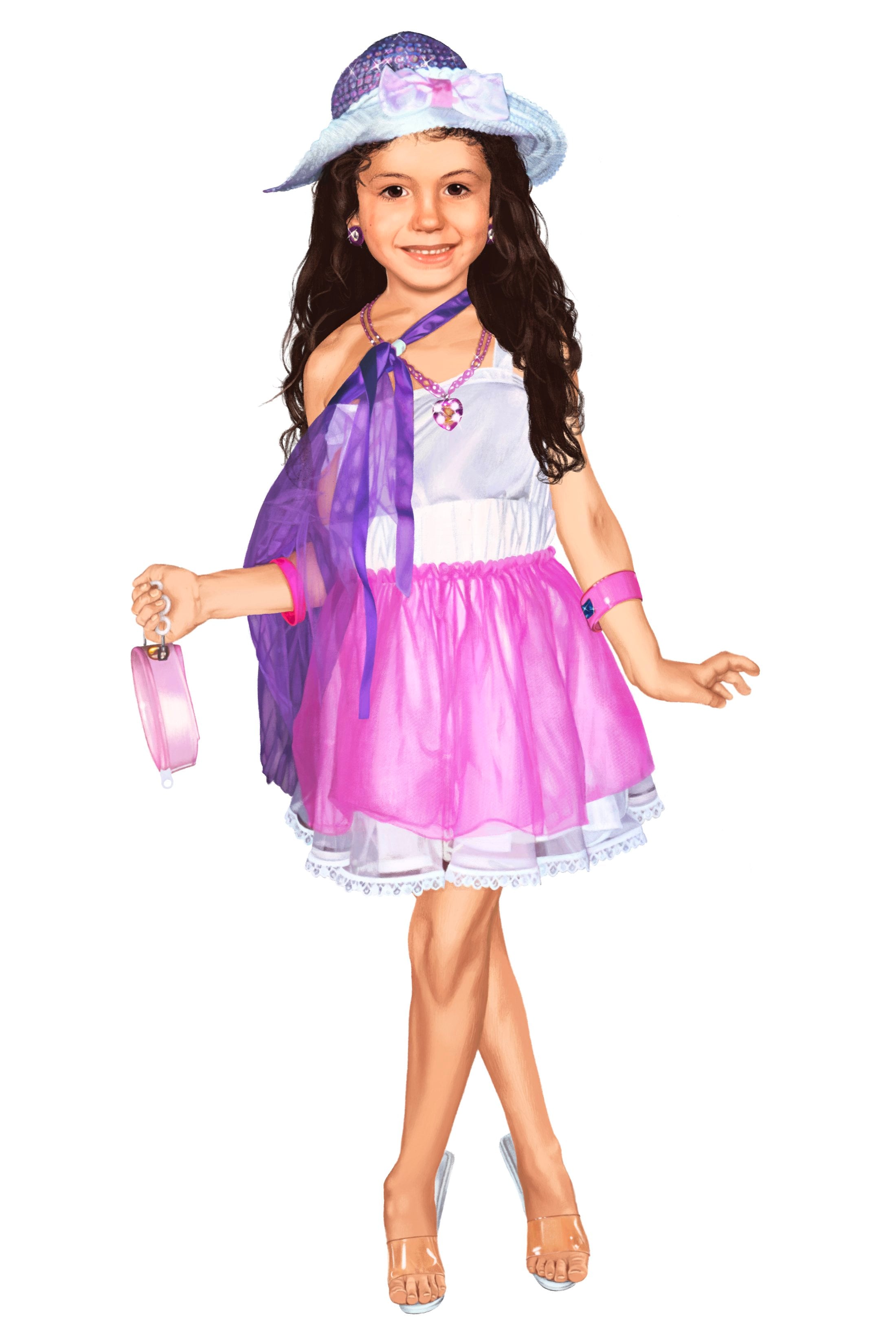
In 2025-2026 A.I.R. Fellow Jay Michelle Elizondo's inaugural solo show, _Paper Doll_, the artist invites viewers into an intimate, unfiltered world where she confronts complexities around nostalgia, home, family, and childhood trauma. _Paper Doll_ is a multimedia exhibition comprising two bodies of work: _Paper Dolls_ (2026), and _I'm A Girl_ (2023), creating a dialogue between imagined and lived personal histories respectively. _Paper Dolls_ is a series of six, nine-inch digital hand-drawn paper doll cut-outs depicting Elizondo as the little girl she was but never got to be. The dolls inhabit an accordion-style book which unfolds to reveal three-dimensional paper domestic environments, complete with paper cut-out furniture and accessories. The environments, reproduced from archival photographs of the artist's childhood, anchor the scenes in reality. The illustrated paper dolls, however, originate in the artist's imagination, in a stark contrast with their backgrounds. Reclaiming the visual language of her youth, Elizondo situates each doll in the Y2K aesthetic and hyper-feminine clothing she longed for in childhood. Each doll embodies a different aspect of girlhood Elizondo would have experienced: dressing up as Dorothy from _The Wizard of Oz_ on Halloween, dressing up in her grandmother's clothes, and donning her ballet leotard and tutu. She renders each doll in painstaking detail—an act of intentional re-imagining and care for the trans youth of her past. Elizondo models her own femininity from the examples of those around her—aspirational facsimiles of her mother, grandmother, and sister, as well as women in pop culture and media inform the artist's self-construction. A deployment of these iconographies is a deployment of the self. In doing so Elizondo escapes into a feminine fantasy as an act of survival, sheltering from the fear and shame she felt as a trans adolescent. While traditional paper dolls invite users to manipulate the doll, Elizondo's dolls are fully realized ephemera meant to be viewed, but not altered. By denying viewers the accustomed act of altering the dolls, she further enacts agency over her childhood self. Projected nearby is _I'm A Girl_, a five-minute home video archive featuring a four-year-old Elizondo in her grandmother's garden. Subtitles added to the archival footage emphasize the seemingly mundane words spoken throughout the video. A jarring, abrupt bleep redacts the utterances of the artist's "deadname." Elizondo creates a tension that is heightened in moments such as when she innocently proclaims, "I'm a girl," and is mocked by her family. Home videos and archival footage are the ultimate vessels of nostalgia, offering a warm, comforting window into the past, but Elizondo's interventions disrupt this comfort, creating an environment in which viewers are constantly encountering boundaries. As with _Paper Dolls_, the tension between what the artist reveals and withholds plays a nuanced, vital role. Visibility is important, but so is self-preservation. In the current political climate, trans youth is marked by fearmongering, propaganda, legislative bans on healthcare, bathroom laws, sports bans, restricted school environments, and forced outing policies—all attempts to control and regulate trans children. While the viewer is invited into Elizondo's space to witness her history, they are not entitled to consume every part of it, mirroring the constant tension between her strained nostalgia for home and her desire to amend it. _Paper Doll_ is both therapeutic and celebratory. A sort of untouchable nostalgia where tenderly, almost pathetically, Elizondo attempts to re–imagine a fantasy girlhood for herself—but like the dolls, her past is fixed. In healing the little girl she never got to be, she ultimately heals the woman she has become.