ChairBodies
Natalie de Segonzac
A.I.R. Gallery
155 Plymouth St, Brooklyn, NY 11201
Wed–Sun 12–6pm
Admission
Free Admission
About
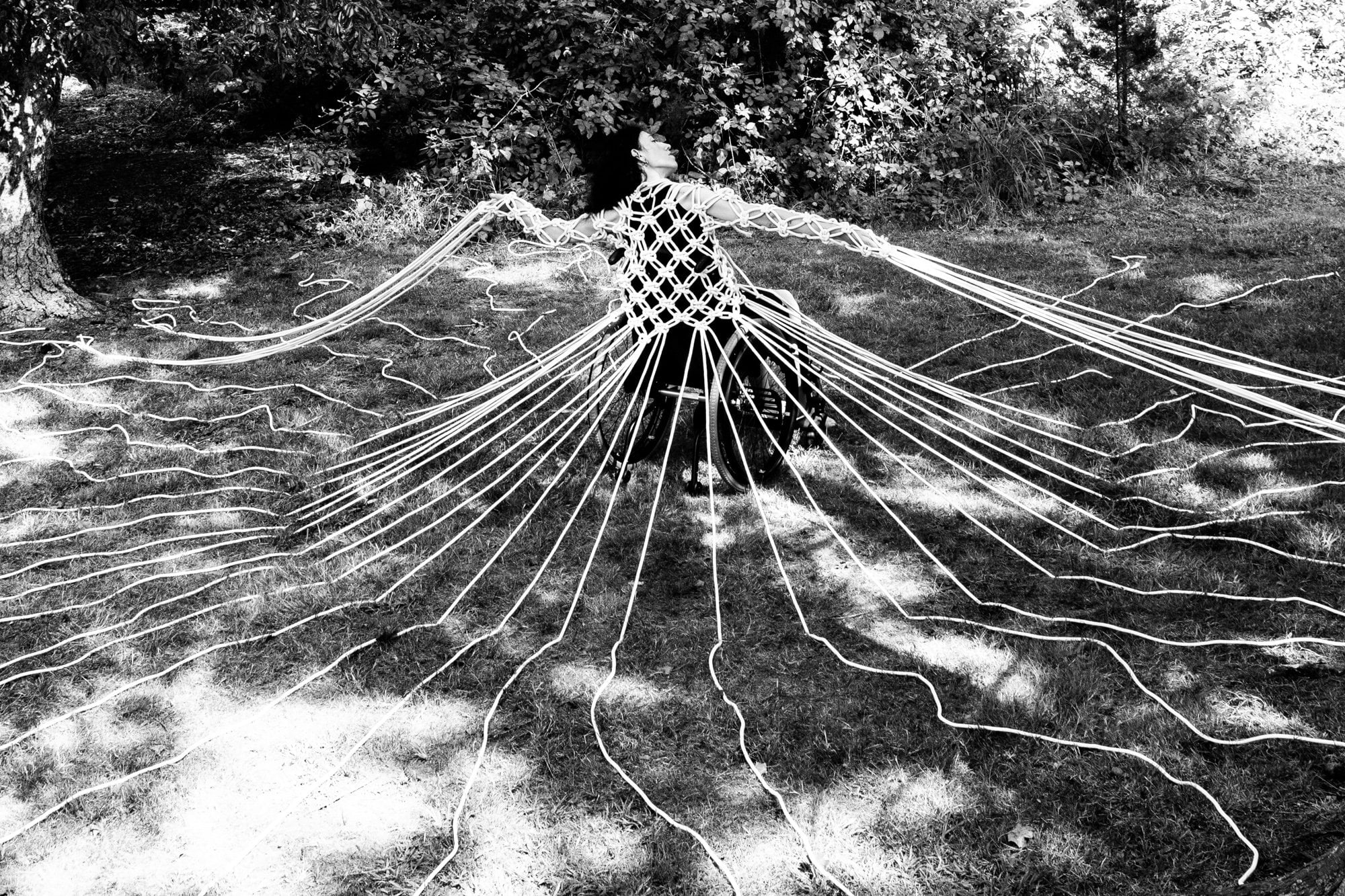
A.I.R. Gallery is pleased to announce _ChairBodies_, an exhibition of new photographic works by 2025-2026 A.I.R. Fellow Natalie de Segonzac. This is de Segonzac's first solo exhibition in New York City. _ChairBodies_ explores the artist's own changed body and identity through a disabled lens, investigating what it feels like to be reliant on a mobility aid. De Segonzac's self-portraits blur the line between body and wheelchair, alluding to the many transformations and versions of the self enabled by this union. Natural change is an inevitable characteristic of time passing, but what happens when change is sudden, producing an altogether new experience of reality that alters an internal/external dialogue? Rejecting the notion that a paralyzed body is a stagnant one, de Segonzac reveals a body constantly in motion. She constructs her images through choreography and gesture. Whether in the studio or out in nature, she incorporates sculptural elements and materials such as rope, fabric and light for her body and chair to engage with. While most of her photographs are either in color or black and white, _ChairBodie_s introduces cyanotypes to her art practice. At the center of the gallery lies _Rope_ (2025), a hand woven garment that appears in de Segonzac's largest exhibited photograph, _Rope (Tethered)_ (2025). This work is a result of her longing to be reconnected with nature, which is so often inaccessible as a wheelchair user. Missing the feeling of the ground pulsing beneath her feet, she adorns the rope in the woods with long strands extending out around her, anchoring her to the earth. _ChairBodies_ reveals de Segonzac's ongoing search for a sense of belonging in a familiar world that she must now, as a disabled woman, access in completely different ways. By examining her new silhouette and presenting it in its many forms, de Segonzac creates moments of rebirth. Placing herself in the frame is a way of marking the work, assuring us—and herself—that she is still here. Attending closely to and redefining what she sees, these images act as mirrors of her own experiences and bring to light questions of what it means to have a body and ultimately what it means to be human.