de aquellos barros, estos lodos
Asunción Molinos Gordo

Travesía Cuatro
Travesía Cuatro CDMX Calle de Valladolid 35, Roma Norte, CDMX 06700
Tue-Fri 11:00-19:00, Sat 11:00-14:30
Admission
Free Admission
About
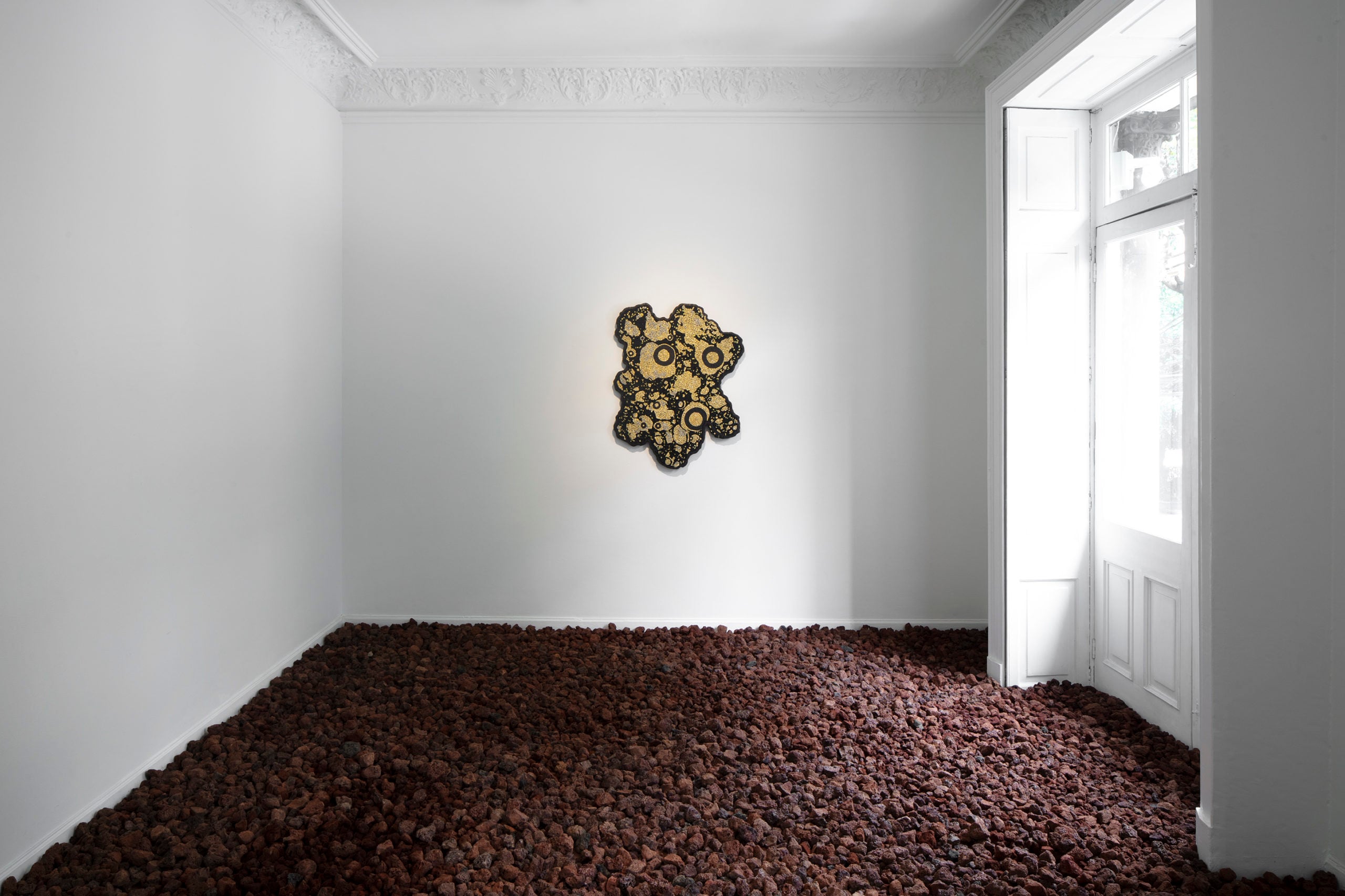
**Asunción Molinos Gordo**'s practice lies at the intersection of art and research. Her projects arise from historical, anthropological, and scientific inquiry, which the artist translates into objects, installations, and sculptures by transforming materials—wool, ceramics, stone, or glass—into vessels of meaning. She chooses materials that possess agency, and the processes she employs to work with them—casting, weaving, molding, reproducing, mixing—are in themselves acts of transmutation that physically condense what history has left without a visible form. _De aquellos barros, estos lodos_ revolves around the historical dynamics linking the destruction of Mayrit with the destruction of Tenochtitlan. Both cities—the ancient Al-Andalus city upon which Madrid was founded and the Mexica capital upon which Mexico City was built—shared overlapping histories and were subjected to very similar processes of erasure. In both cases, a sophisticated civilization was displaced, and its memory systematically suppressed. The exhibition also explores the denial of cultural hybridization that gave rise to the official narratives. Following the expulsion of the Sephardim (1492) and the forced conversion and expulsion of Hispanic Muslims and Moriscos throughout the 16th century, the "purity of blood" statutes institutionalized this denial: they barred access to military, academic, religious, and civil spheres for those who could not prove descent from Old Christians, and restricted the emigration of converts, Moriscos, and their descendants to New Spain. The identity that was to found the "New World" had to be, in theory, singular, Catholic, and pure. To this day, the hegemonic order rejects difference to the point of rendering it invisible, and new generations grow up knowing no other social, cultural, or political landscape, because they have never seen another. The exhibition's title draws on an old saying that establishes a direct link between past actions and their consequences in the present. _De aquellos barros estos lodos_: you reap what you sow; what is silenced returns. The six bodies of work that make up the exhibition address this idea from different angles—architecture, geology, migration, water, livestock, and law—but they share a common conviction: that hybridization is not an anomaly but the natural condition of every culture, and that its denial has consequences that endure for centuries. The memory of Mayrit and Tenochtitlan did not disappear entirely: it was embedded in matter and in bodies, in the knowledge that survived, not in the books written by the victors, but in gestures and crafts. The vestiges of both cities reappear in the composition of their stones, in the objects their inhabitants hid before being expelled, and in songs that crossed oceans. De aquellos barros, estos lodos proposes viewing this shared history as a way to understand the present and imagine the future. Alongside historical, archaeological, and scientific research, Asunción frequently turns to speculative fiction as a creative tool. Her works are not limited to documenting what happened but open up a space to imagine what did not happen—or what could still happen. The artist poses questions that official history has been unable or unwilling to answer: What would have happened if, instead of what has been sold to us as processes of cultural and racial mixing, the birth of a single, homogeneous nation—we could speak today of genuine coexistence and recognized diversity? What would our languages, our cities, and our ways of managing water and land be like? What would our society be like if states respected and celebrated the many nations and identities that inhabit their territory?