Una Obsesión por las Flores
Iván Argote, ASMA, Sophie Barber, Bianca Bondi, Sara Cwynar, Ileana García Magoda, Dalton Gata, Yann Gerstberger, John Giorno, Parker Ito, Kapwani Kiwanga, Enrique López Llamas, Jenine Marsh, Ad Minoliti, Erin Jane Nelson, Alberto Perera, Tourmaline

OMR
Córdoba 100, Roma Nte., CA 06700
OMR: Tue-Fri 10:00-18:00, Sat 10:00-16:00; Bodega: Tue-Fri 12:00-18:00; Bodega x OMR: Tue-Sat 11:00-17:30, Sat 11:00-16:00
Admission
Free Admission
About
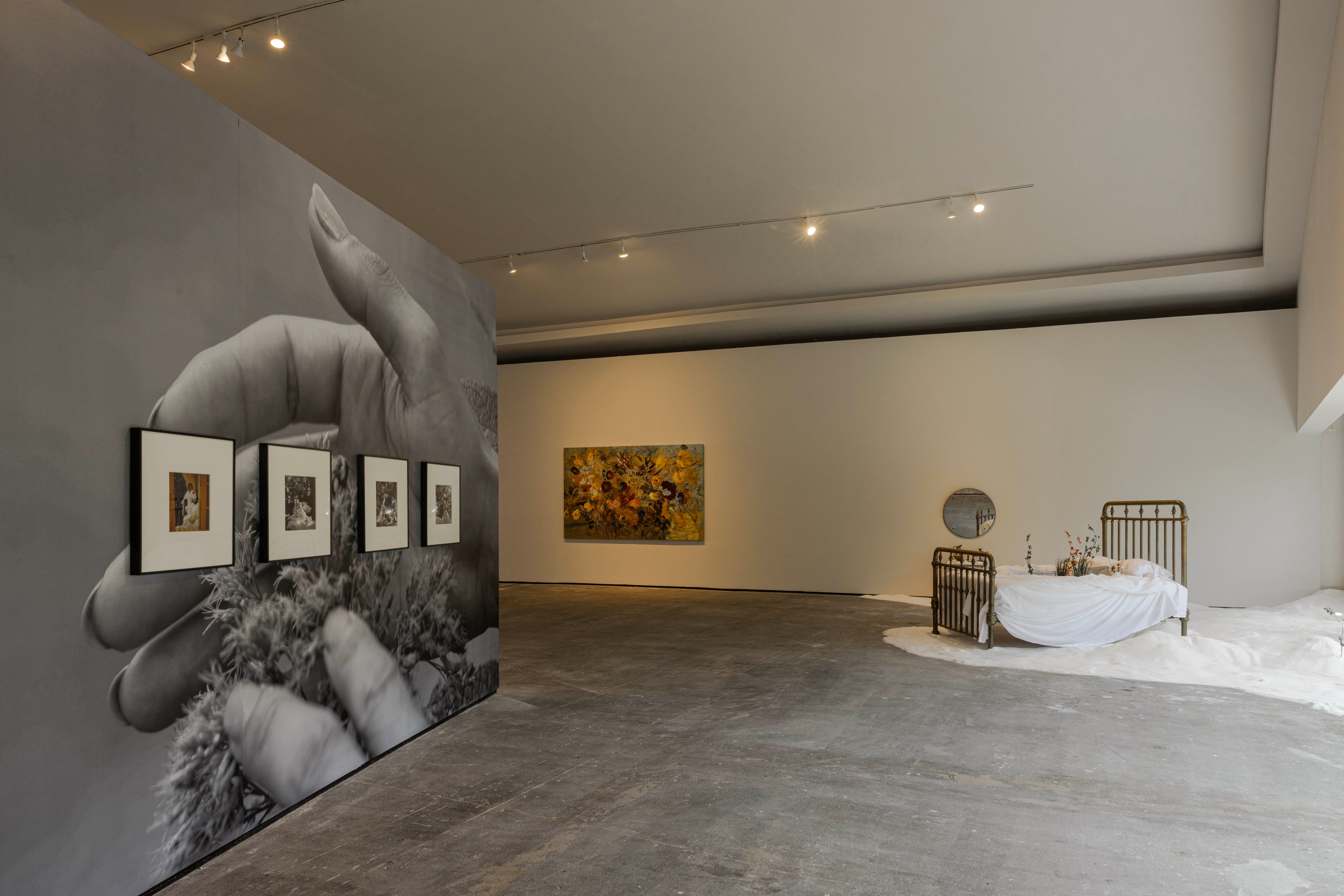
The exhibition imagines a fictional dialogue between two writers, Marcel Proust and Mario Bellatin, sparked by their shared fascination with flowers. One is an icon of twentieth-century French literature; the other, a cult figure of contemporary Peruvian-Mexican literature. In _In Search of Lost Time_ (1913–1927), Proust unfolds a mental landscape in which flowers stand for aristocratic families, feminine figures, or acts of love consummated in secret: the flower fixes time, desire, memory. In _Flowers_ (2001), Bellatin composes a still life in which each fragment of the narrative, devoted to the troubled fates of eccentric characters, is paired with a specific flower. It becomes an instrument for the deconstruction of norms and transformation of bodies. For both writers, the flower is a symbol, a code of multiple meanings woven into the very fabric of their novels: beneath a frivolous appearance, it embodies dissidence, social satire, nostalgia, and eroticism. To explore this ambivalence of the floral motif, the exhibition brings together seventeen international artists united by this same obsession. Through conceptual strategies, they create paintings, wallpapers, ceramics, photographs, sculptures, videos, and installations with an ornamental appearance. As for Proust and Bellatin, the flower is for them an ambiguous sign, a double-edged delicacy that oscillates between the beautiful and the political: through it, they subvert the very idea of decor and the decorative. The flower symbolizes depending on the context: a critique of colonial systems of exploitation and domination; a reflection on mimetic desire and digital images; an attempt to queer the world, love, and its representations; a reinterpretation of the classical vanitas to convey a contemporary melancholy; a talisman, protection, and invocation. And, in a play of affinities, references, and citations, all of this at once. _An Obsession with Flowers_ is a defense of beauty, strangeness, and ambiguity as forms of resistance and transgression, in an era marked by the simplification of narratives. In doing so, it celebrates obsession as a creative process, and literature as inspiration.