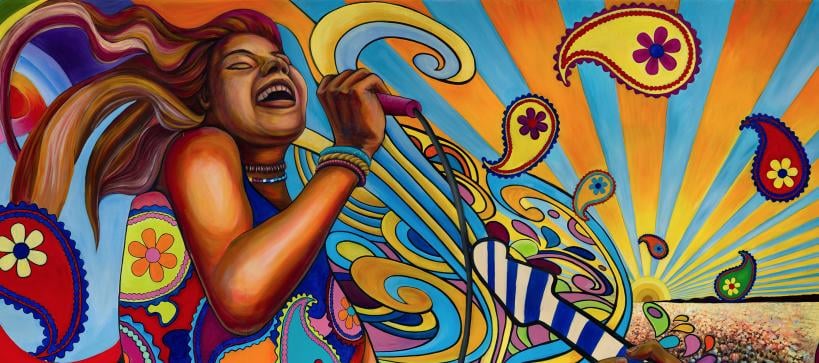
The 1960s—A Generation on Fire: Judy Baca's Great Wall of Los Angeles
Judy Baca

Skirball Cultural Center
2701 N. Sepulveda Blvd., Los Angeles, CA 90049
Tue–Fri, 12:00–5:00 pm, Sat–Sun, 10:00 am–5:00 pm, Closed Mondays
Admission
$20 General; $15 Seniors, Full-Time Students with ID, and Children 2–17; FREE to Members and Children under 2; FREE to all on Thursdays
General Admission tickets provide visitors access to all exhibitions on view at the Skirball, as well as the new Bloom Garden and other family-friendly activities.
About
An LA landmark comes to the Skirball with new, monumental murals that approach history as a living, contested, and shared narrative in which we all take part. In 1974, Baca conceived of the Great Wall as a monument to the people of California, featuring a visual history of ethnic peoples from prehistoric times to the 1950s. Soon after, Baca co-founded the Social and Public Art Resource Center (SPARC) and became its artistic director. The Great Wall was SPARC's first public art project which was completed over five summers and employed 400 young people and their families from diverse social and economic backgrounds working with artists, oral historians, ethnologists, scholars, and hundreds of community members to paint the mural on the walls of the LA River. Today with a group of researchers, digital assistant illustrators, muralists, and junior muralists in training and sponsored by SPARC, Baca's Great Wall team have developed a mural scrolling system where over 400 feet of artwork can be painted, moved, and viewed by the public within a single room. Through this groundbreaking method, new mural sections of the Great Wall are being painted indoors and traveling to institutions, galleries, and community spaces. This exhibition features recently completed mural sections focused on the 1960s that will soon be added to the existing mural, as well as drawing studies and an immersive video installation. As the new mural sections demonstrate, this decade was shaped by the moral courage, peaceful protests, and cultural awakening of the Civil Rights Movement (1954–1968). Activist Tom Hayden referred to the young people involved—self-described revolutionaries linking arms across faith, race, and identity—as "a generation on fire." These are not distant stories or people but instead a living history and community in which we all take part. The Great Wall of Los Angeles brings the past to the present and seeks to inspire the next generation. What can we learn from this "generation on fire" as we try to build a more just society?