
Moments of Being
Rodolfo Abularach, Lennart Anderson, Avigdor Arikha, Polina Barskaya, Paul Becker, Jyll Bradley, Drake Carr, Eugène Carrière, Diana Cepleanu, Louis Fratino, Joseph Geagan, Shirley Gorelick, Melle van Herwaarden, Boscoe Holder, Shelby Jackson, Gwen John, Cathy Josefowitz, Fernand Khnopff, Sergey Kononov, Rosalind Nashashibi, Jean Nipon, Thomas Schütte, Sylvia Sleigh, Yannis Tsarouchis, Andro Wekua
Jeremy Scholar
53 Welbeck Street, London W1G 9XR, UK W1G 9XR
Admission
Free Admission
About
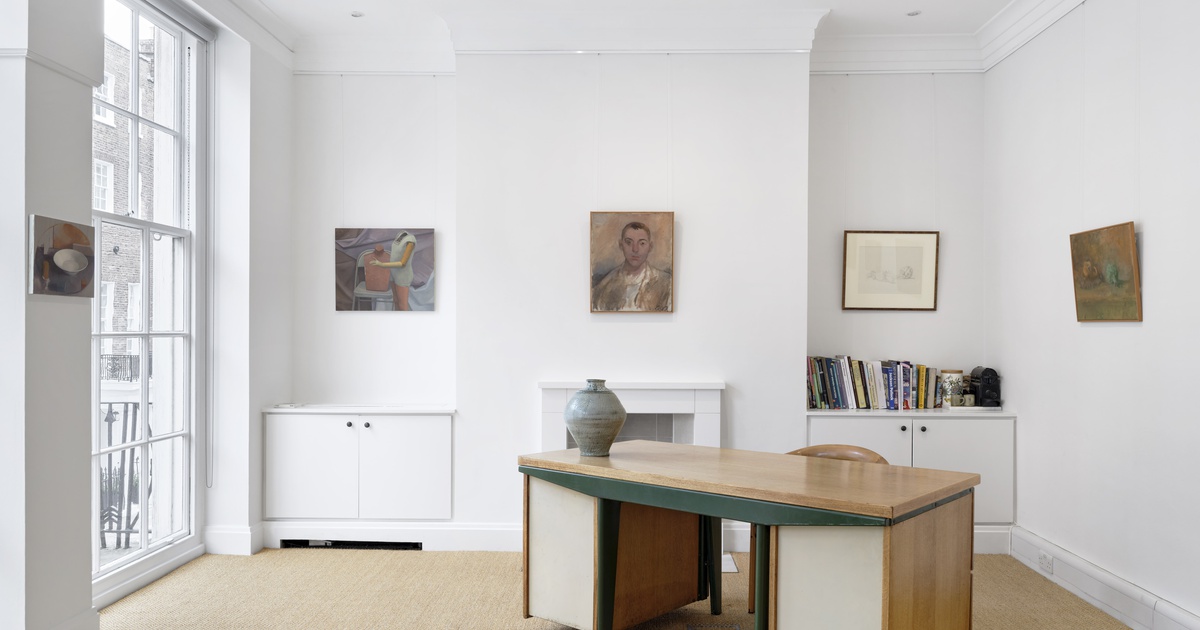
""_Moments of Being_" "Every portrait that is painted with feeling is a portrait of the artist, not of the sitter." – Oscar Wilde, Artistic portrayals of the human body have long been more than visual representation – they are ruminations on selfhood, philosophical enquiries, and metaphors for existence itself. This notion dates back to Leonardo da Vinci’s Renaissance _Virtuvian Man_, a measure of the universe, or Auguste Rodin’s late nineteenth-century sculpture _The Thinker_. In the twentieth century, portraiture excelled as a vehicle for subjective, individual expression. It revealed not only the outward appearance of a subject, but their inner life too: emotions, psychology, identity. Yet portraiture is never one-sided. As Oscar Wilde’s observation attests, it is both window and mirror, offering a glimpse into the world of the sitter, while reflecting the artist in return. _Moments of Being_ brings together twenty-six artists who explore the body as a site of exchange between painter and subject. Here, painting becomes a poetic distillation of time, or as the art critic John Berger once described “a moment made permanent”, a translation of fleeting human connection onto canvas. Bringing together modern and contemporary work, _Moments of Being_ traverses the last century, ambitiously demonstrating that artists continue to expand the parameters of portraiture, referring to the past and offering novel, conceptual renditions. Chronologically speaking, we begin with the Belgian artist Fernand Khnopff’s seductive work on paper _Des lèvres rouges_, 1900, an artist known for his surreal portraits of women at the turn of the century. Painted only decades later, the Welsh artist Gwen John’s pensive watercolour, _Seated Girl with Folded Arms_, late 1910s, was created when the 33-year-old moved to the Parisian suburb of Meudon, where she would remain until her death; embarking on a fraught, romantic relationship with Rodin and developing her celebrated, three-quarter-length portraits of women in quiet domestic interiors. Moving into the post-war era, the Welsh-born artist Sylvia Sleigh’s delicate chalk on paper work, _Untitled (Lawrence Nude)_, 1956, intimately portrays her husband and fellow artist, Lawrence Alloway, two years after their marriage. Meanwhile, the Romanian-French artist Avigdor Arikha – a Holocaust survivor who abandoned abstraction for portraiture in 1965 – also painted his spouse, seen in _Anne with a bad eye_, 1979. Shirley Goerlick’s detailed silverpoint drawing, 1976, captures the shadowy profile of an unknown woman, freezing her subject in time with astonishgly, intricate precision. In contrast, an ink on watercolour paper, c. 1974, by the New York-born, Swiss artist Cathy Josefowitz, delicately balances line and colour in a naïve, graphic style, bringing her love for performance into the painting. Later in the century, we reach the photographic _Self-Portrait, Bareback_, 1987, by the London-based artist Jyll Bradley, in which, by portraying herself from behind, she accentuates her vulnerability. Boscoe Holder’s _Christian, Barbados_, 1998, reveals the Caribbean dancer, musician and artist’s distinctive application of bold colour and dry brushstrokes, evoking the warmth of the tropics. And nearby, a large, textured work by the Ukranian artist Sergey Kononov, 2026, reveals a young girl, with plaited hair and wide eyes kneeling suggestively towards the viewer. Finally, the works of Polina Barskaya, Drake Carr, Diane Cepleneau, Louis Fratino, Joseph Geagan and Jean Nipon bring us back to the present. Nipon’s _Work It_ (2026) offers a paradoxical self-portrait. Psychologically loaded, we apprehend an interior, centred on an open cellar door. In this portrait, the body disappears, but – by balancing absence and presence – the self persists. As he explains, “work is the only thing defining me, making my life real.” Reflecting this idea, _Moments of Being_ is a testament to the act of creation –observation and interpretation, the real and the imaginary. _Lydia R. Figes, April 2026_