Amedeo Polazzo 2026
Amedeo Polazzo
Herald St
2 Herald St, London E2 6JT, UK E2 6JT
Tue-Sat 11am-6pm or by appointment
Admission
Free Admission
About
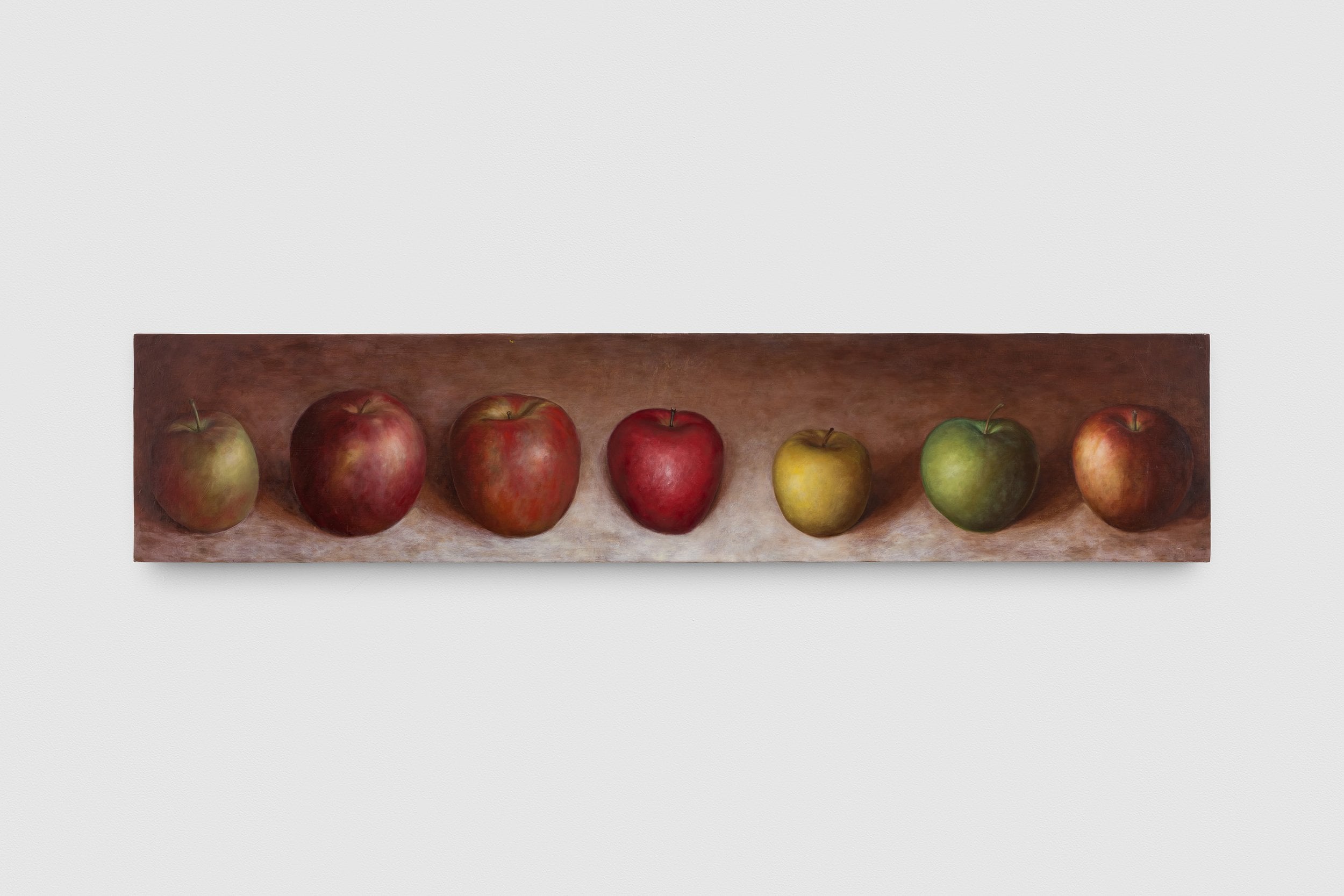
You’ve probably found yourself, at least once in your life, fixated on a word, repeating it until its familiarity fades away and its meaning becomes unknown, distant, and foreign. This phenomenon is called semantic satiation and is an ongoing motivation in Amedeo Polazzo’s practice. The subjects appear to be apples, bananas, and cherries that punctuate our everyday experience: when we go grocery shopping, when we open the fridge, when we watch an advert or sit down at the table. In Polazzo’s hands, these fruits become alien objects, stripped of the meaning most familiar to us, the meaning that makes us feel within a safe perimeter. Apples, cherries, and bananas take on dimensions that do not conform to what our senses recognize as real, and their bodies contradict the laws of terrestrial physics. They swim through the air as if navigating outer space or float on the surface of water as if on a planet where the laws of gravity have been overturned. By betraying every expectation of the familiar, Polazzo places us in an uncomfortable situation, one of subtle unease. The ‘Commedia dell’arte [Comedy of art]’ referenced in the exhibition title offers a solution to the dilemma. What we are observing is not the real world, but a staged performance in which nothing is what it seems. Every subject is a character playing a role. Apples, cherries, and bananas are masks, adopted to best perform a part in a show written by the artist-director, who always allows his subjects a margin for improvisation. At times they may embody a psychological state, represent a person, or transform themselves into actual functional objects, such as a lamp, as in _Banana Lamp_ and _Fruits of the Loom_ (both 2026). View fullsize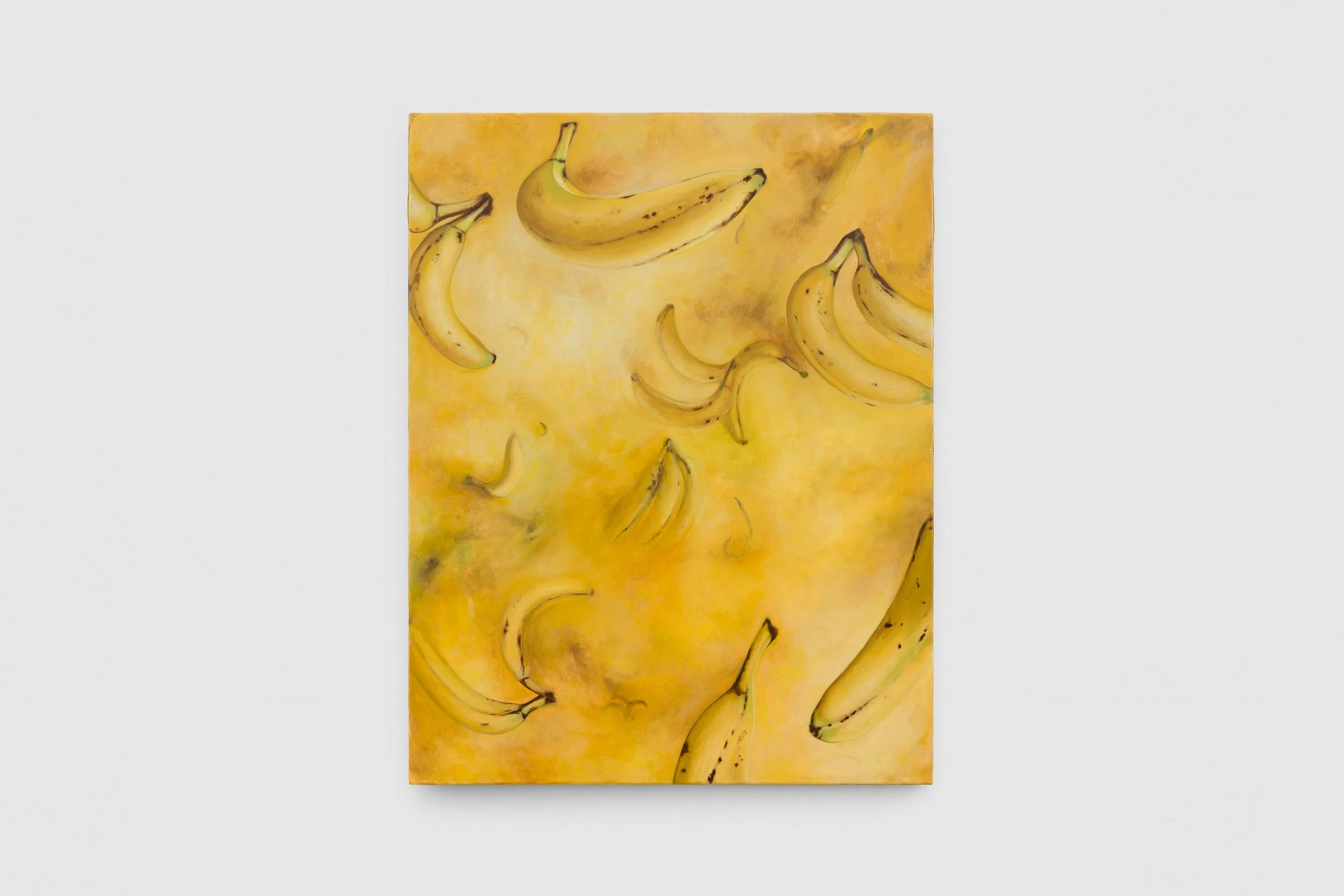 Bananarama 2026 Oil and acrylic on canvas 90.5 x 70.5 x 2 cm / 35.6 x 27.8 x 0.8 in HS22-APO9423P View fullsize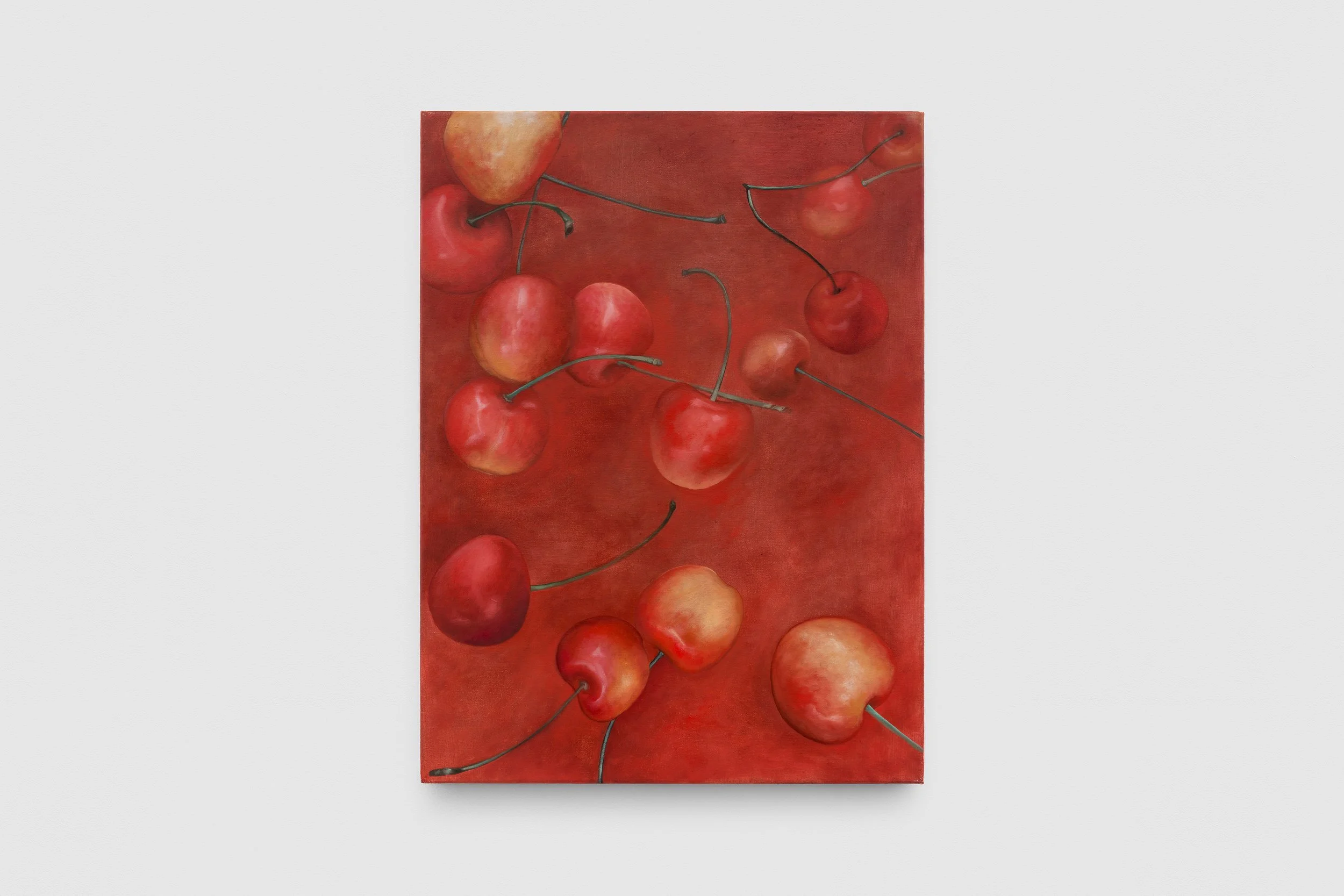 Roxy Music 2026 Oil and acrylic on canvas 63 x 47.5 x 2 cm / 24.8 x 18.7 x 0.8 in HS22-APO9414P Thus, while at first glance these works resemble still lifes, some such as, _Succession_, (2026), can be uncovered as portraits of a family. A small yellow apple in the foreground stands before two ancestors, a slightly larger green apple and a red one in the background, which appears gigantic compared to the first two. The formation recalls the structure of Victorian staged family photographs. Like a matryoshka doll, the largest apple contains the smaller ones, introducing another key theme for interpreting Polazzo’s works: the inexorability of time and the ephemeral nature of existence. _Passaparola_ (2026) refers to the lunar cycle, interpreted through different kinds of apples lined up on a table side by side While in _Passenger_ (2026), a solitary apple floats in a vast sea that has calmed after a storm, as sun and moon succeed one another on the horizon. In _Il Richiamo_ (2026), the same storm strikes an intimate pair of fruits. A pear and an apple cling to one another in an attempt to save themselves, waves crash inexorably over a small plum that prepares to be engulfed by it. By renewing and combining the conventions of still life and seascape painting with an irony tinged with bitterness, Polazzo depicts _vanitas_ for the contemporary world, interior landscapes that offer no comfort. View fullsize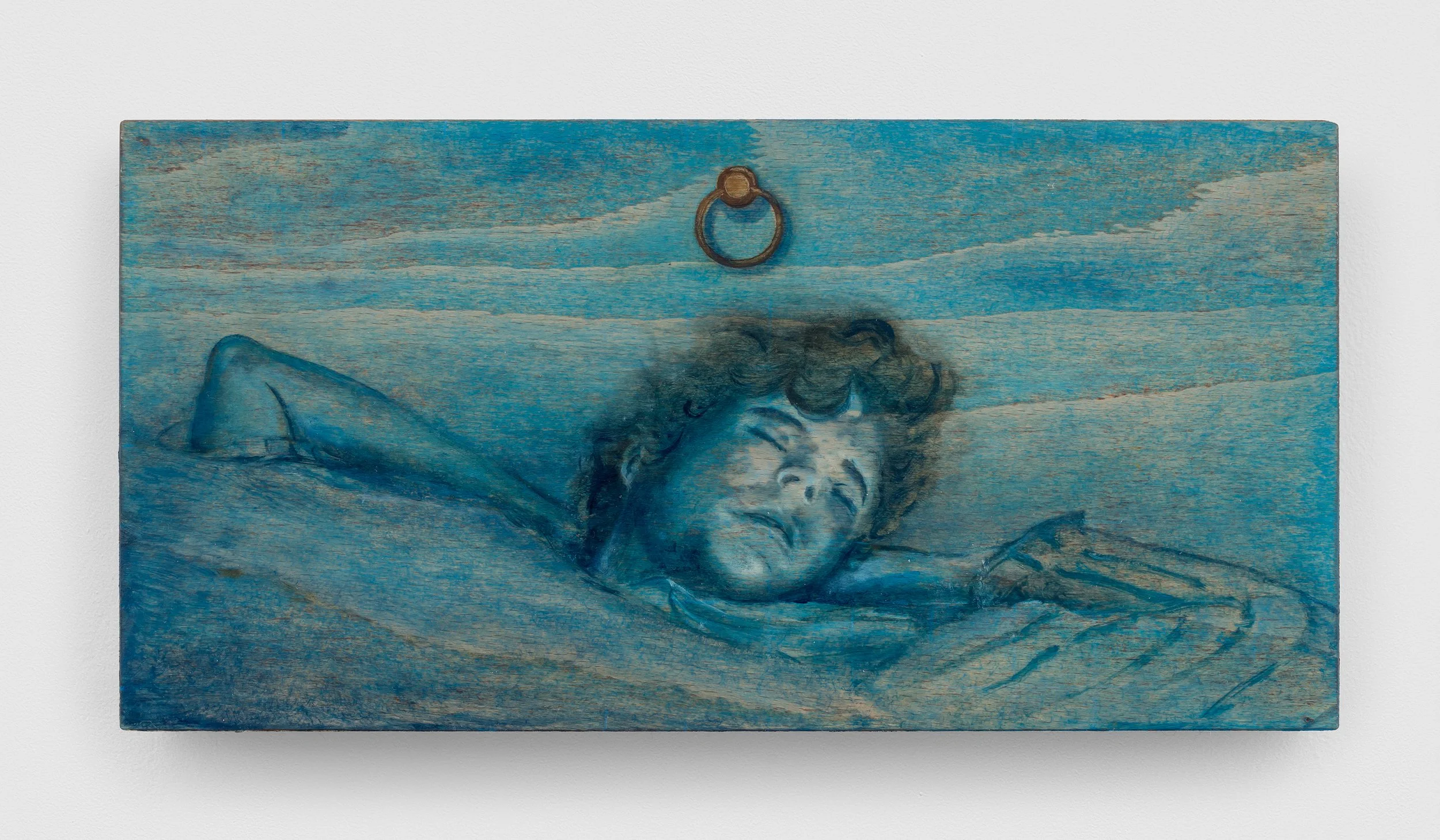 Sleeper II 2026 Oil on wood 15 x 30 x 3 cm / 5.9 x 11.8 x 1.2 in HS22-APO9434P The other paintings on view depict closed doors, drawers, and nearly abstract monochrome canvases scattered with patterns of floating fruits. All of them convey the sensation that the gaze cannot penetrate a secret hidden beneath the surface of the painting. _Taurusgate_, _Nesting Model_, _Sleeper I_, and _Sleeper II_ (all 2026) deceive the viewer’s eye with precise painting and hyper-realistic details, leaving behind the unsettling feeling of a well-kept secret. Another closed door is depicted in the work _Cave Canem_ (2026), where the artist plays with another perceptual phenomenon, in some ways similar to the semantic satiation, whereby one can read faces into abstract structures, as if one were cloud watching.. This is a form of subconscious illusion that leads us to recognise orderly structures and familiar shapes in images generated by chance, in this case, wood grain. The artist applies a first layer of colour on the panel and then works with delicate brushstrokes to bring out the outlines of animals – dogs, wolves, or foxes – which appear light on the surface of the painting, in contrast to the perfect realism with which the brass doorknob is rendered, where one can glimpse the artist’s reflection. The works _Body_ (2026) and _Bodies_ (2026) also deceive the viewer’s eye, hinting not too subtly at references to human body parts. A sense of menace pervades the works _Roxy Music_, _Bananarama_, and _Verde età_ (all 2026), as though the joyful, festive fruit concealed a lethal poison – in the case of the apples – or were in fact made of gleaming plastic, equally inedible. Through this uncanny effect, Polazzo leaves the viewer on the outside, peering in and imagining what simmers beneath the painting’s only apparently harmless surface. View fullsize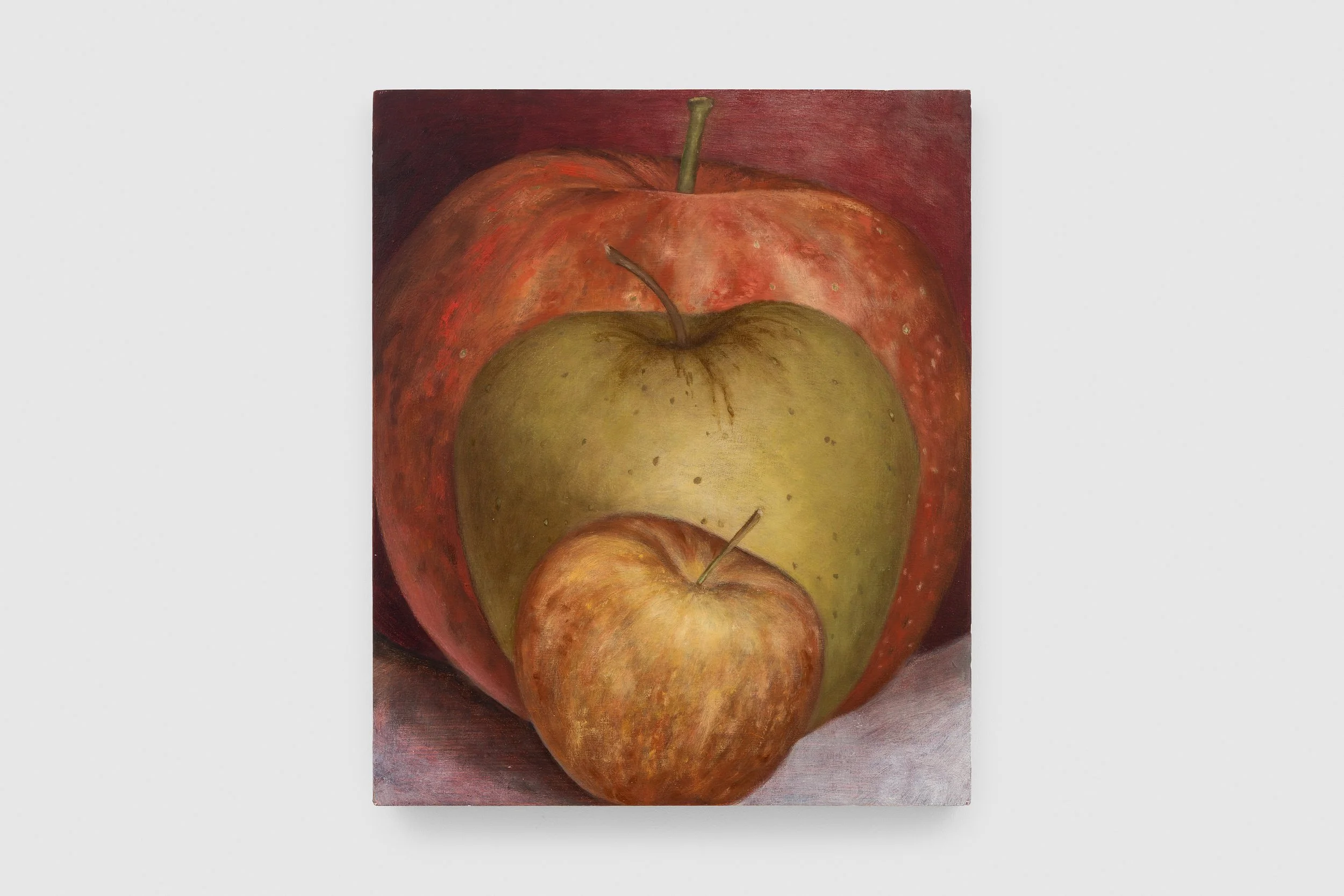 Succession 2026 Oil and acrylic on wood 30 x 25 x 3 cm / 11.8 x 9.8 x 1.2 in HS22-APO9397P View fullsize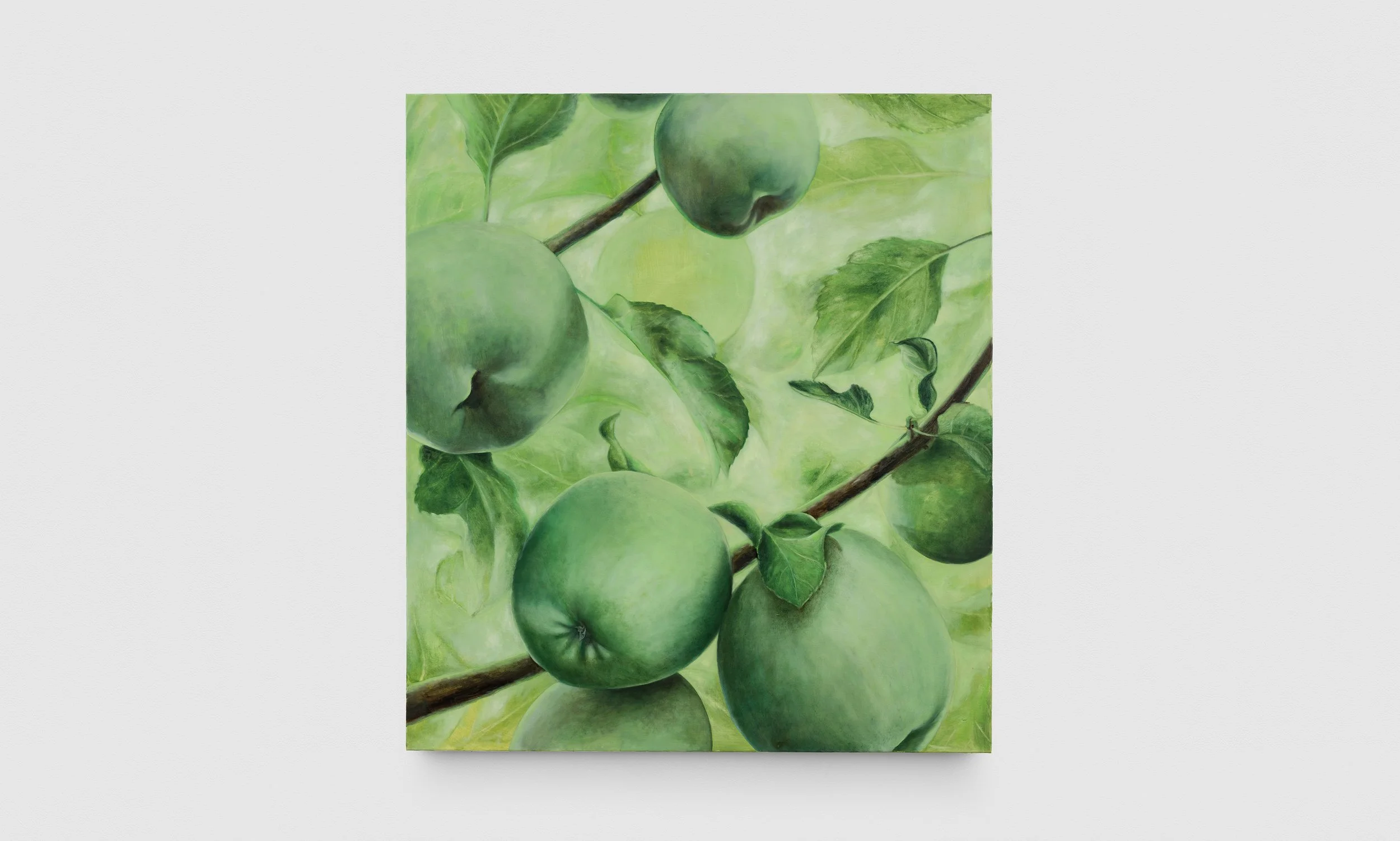 Verde età 2026 Oil and acrylic on canvas 117 x 104 x 2 cm / 46.1 x 40.9 x 0.8 in HS22-APO9413P Vi sarà successo almeno una volta nella vita di incastrarvi su una parola, e ripeterla fino a che la familiarità con essa veniva meno e così il suo senso, e la parola diventava sconosciuta, lontana, straniera. È un fenomeno chiamato sazietà semantica, e sembra essere quello che fa Amedeo Polazzo nei suoi dipinti. I soggetti sembrano essere le mele, banane, le ciliegie che costellano la nostra esperienza quotidiana: quando facciamo la spesa, quando apriamo il frigo, quando guardiamo una pubblicità, quando ci sediamo a tavola. Nelle mani di Polazzo questi frutti diventano oggetti alieni, privati del significato che ci è più familiare, quello che ci fa sentire in un perimetro sicuro. Mele, ciliegie e banane hanno dimensioni non conformi a quello che i nostri sensi riconoscono come reale, e i loro corpi contraddicono le leggi della fisica terrestre: nuotano nell’aria come se stessero navigando nello spazio siderale o galleggiano sulla superficie dell’acqua, come se fossero su un pianeta dove le leggi della gravità sono state sovvertite. Nel tradire ogni aspettativa sul conosciuto, Polazzo ci mette in una situazione scomoda, di inquietudine sottile. La “Commedia dell’arte” a cui fa riferimento il titolo della mostra offre una soluzione al dilemma. Ciò che stiamo osservando non è il mondo reale, ma una messa in scena in cui niente è ciò che sembra: ogni soggetto è un personaggio che interpreta un ruolo. Mele, ciliegie e banane sono delle maschere, adottate per interpretare al meglio una parte in uno spettacolo scritto dall’artista-regista, che concede sempre ai suoi soggetti un margine di improvvisazione: di volta in volta possono interpretare uno stato psicologico, rappresentare una persona, o trasformarsi in veri e propri oggetti funzionali, come ad esempio una lampada. View fullsize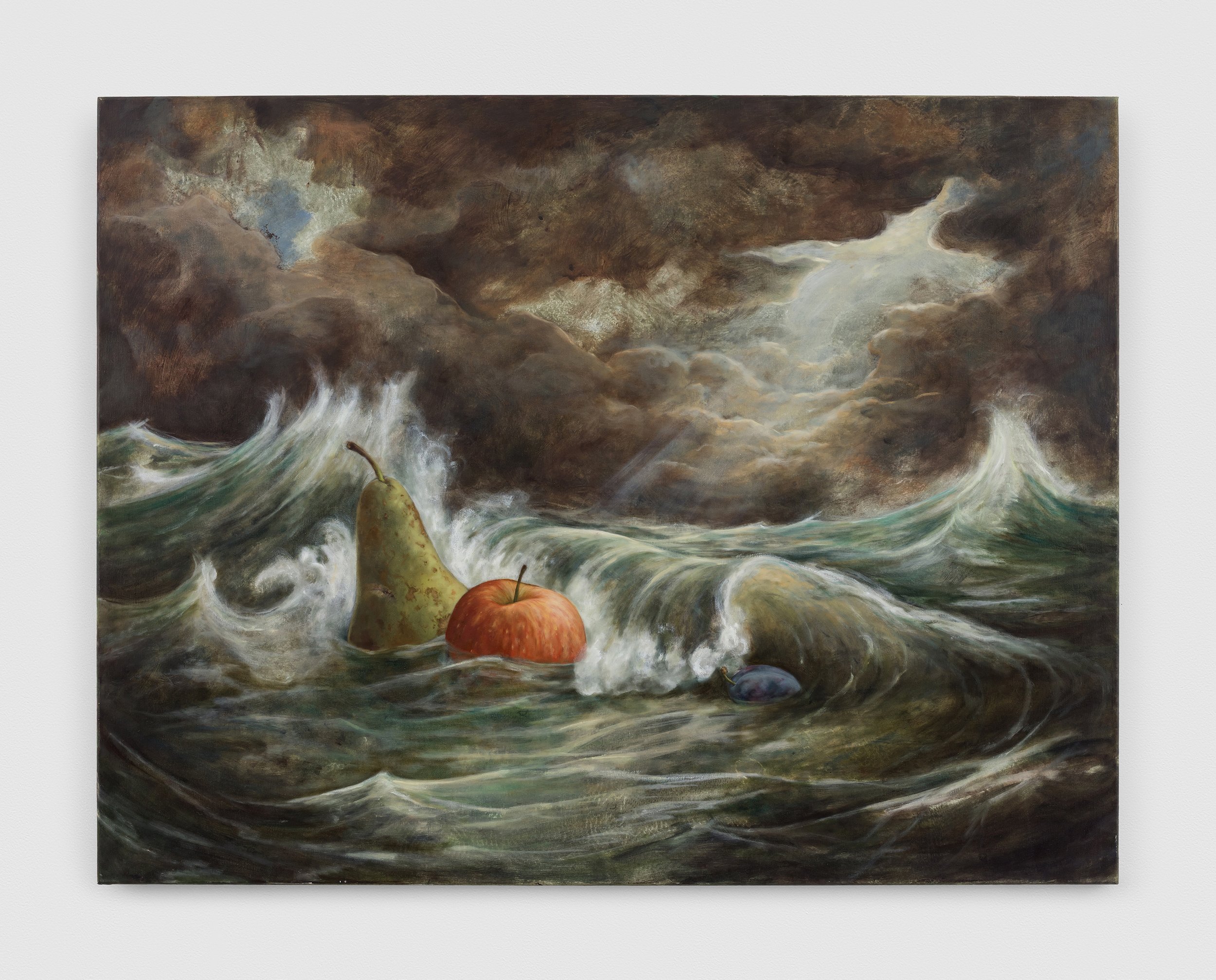 Il Richiamo 2026 Oil and acrylic on canvas 90.5 x 117 x 2 cm / 35.6 x 46.1 x 0.8 in HS22-APO9416P Così, quelle che a un primo sguardo sembrano nature morte diventano ritratti di una famiglia alto-borghese: una piccola mela gialla in primo piano ha alle sue spalle due antenati, una mela verde leggermente più grande e una rossa sullo sfondo, che risulta gigantesca rispetto alle prime due (_Succession_, 2026). Come una matrioska, la mela più grande contiene le successive, introducendo un altro argomento chiave per la lettura delle opere di Polazzo: l’inesorabilità del tempo e l’aspetto effimero dell’esistenza. _Passaparola_ (2026) fa riferimento al ciclo lunare, interpretato da diversi tipi di mele messe in fila su un tavolo una accanto all’altra, mentre in _Passenger_ (2026) una mela solitaria nuota in un vasto mare tornato calmo dopo una tempesta, mentre all’orizzonte sole e luna si succedono. Ne _Il Richiamo_ (2026) la stessa tempesta si abbatte su una sorta di famiglia: mentre pera e mela si stringono una all’altra per tentare di salvarsi, sulla piccola prugna i flutti si infrangono inesorabilmente e sembrano sommergerla. Rinnovando e combinando insieme i canoni della natura morta e della marina, con una ironia venata di amarezza Polazzo raffigura _vanitas_ per la contemporaneità, paesaggi interiori che non danno conforto. View fullsize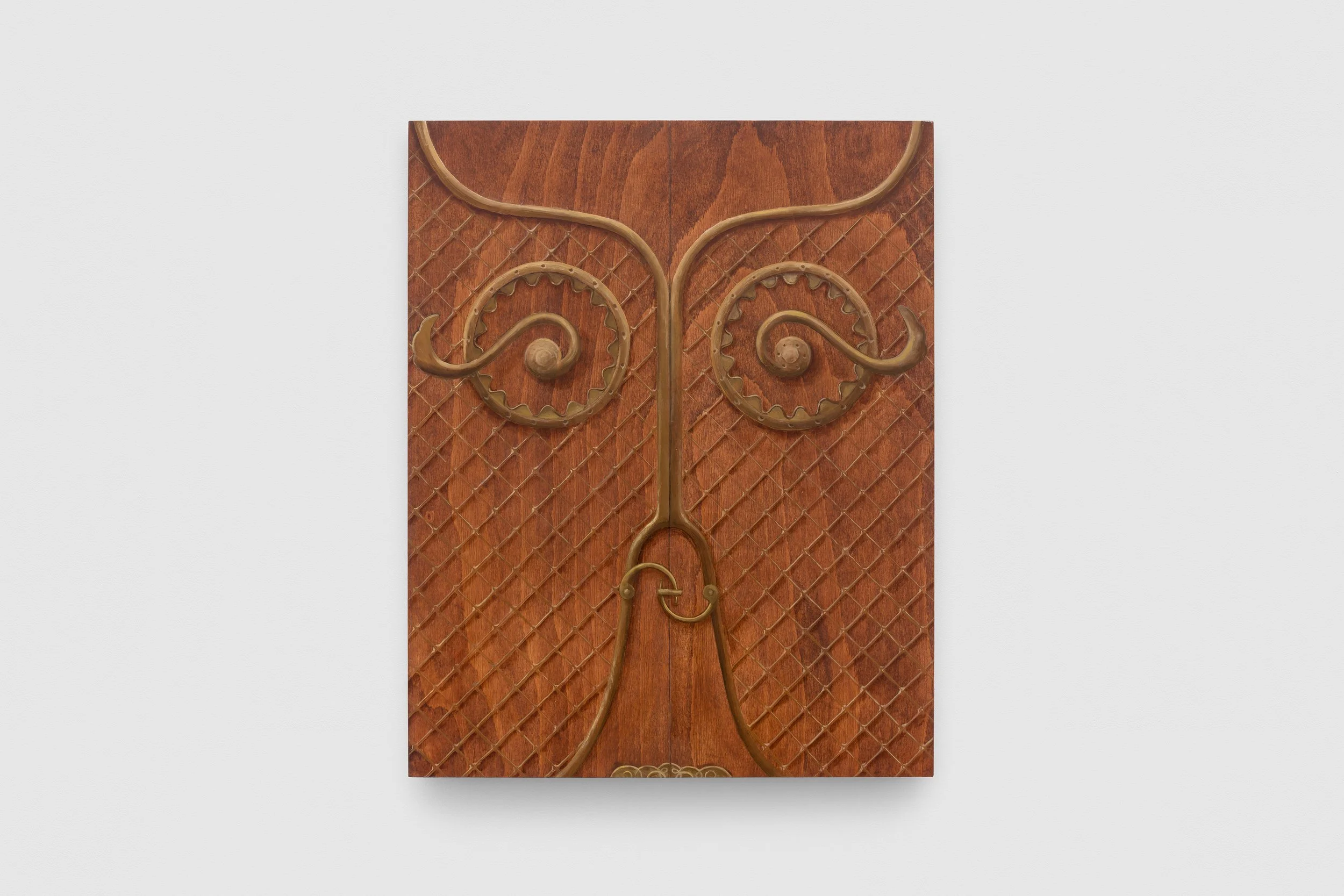 Taurusgate 2026 Oil on wood 50 x 40 x 3 cm / 19.7 x 15.7 x 1.2 in HS22-APO9412P View fullsize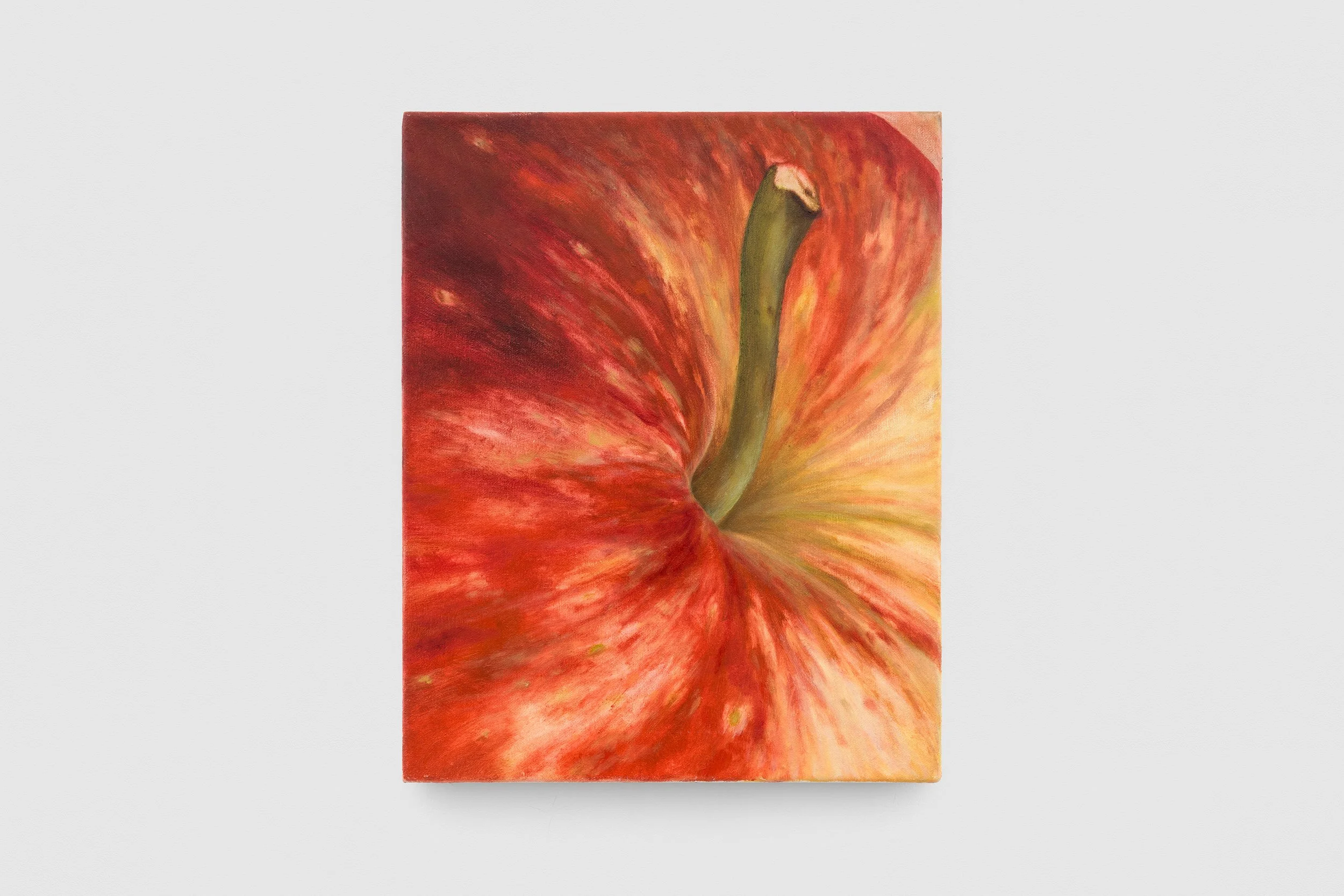 Body 2026 Oil and acrylic on canvas 36 x 29 x 2 cm / 14.2 x 11.4 x 0.8 in HS22-APO9418P Un’altra porta chiusa è rappresentata nell’opera _Cave Canem_ dove l’artista gioca con un altro fenomeno percettivo, per certi versi simile alla sazietà semantica: la pareidolia, una forma di illusione subcosciente che ci porta ritrovare strutture ordinate e forme familiari in immagini generate dal caso, come le nuvole o le venature del legno. L’artista stende un primo strato di colore sulla tavola e poi lavora con pennellate delicate per far emergere i profili di animali – cani, lupi o volpi – che appaiono leggeri sulla superficie del dipinto, in contrasto con il perfetto realismo con cui viene rappresentato il pomello di ottone di una porta, in cui è possibile intravedere il riflesso dell’artista. Anche le opere _Body_ e _Bodies_ ingannano l’occhio di chi guarda, lasciando intendere neanche troppo implicitamente il riferimento a parti del corpo umane. Una sensazione di minaccia pervade le opere _Roxy Music_, _Bananarama_, _Verde età_, come se quella frutta così gioiosa e festosa nascondesse un veleno letale – nel caso delle mele – o fosse in realtà di luccicante plastica, ugualmente non commestibile: un effetto perturbante con cui Polazzo lascia lo spettatore fuori, a spiare e immaginare cosa ribolla sotto al piano solo apparentemente innocuo della pittura. Text by Marta Papini