Harmony Hammond
Harmony Hammond

Edel Assanti - St James
11 Bury St, London, UK SW1Y 6AL
Admission
Free Admission
About
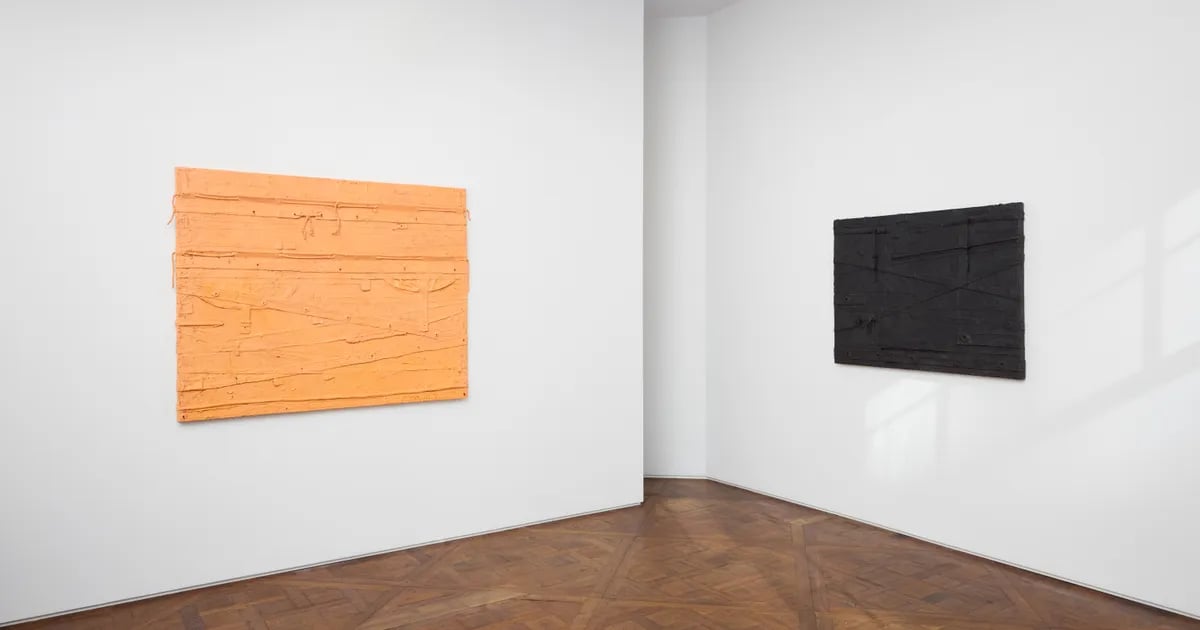
Edel Assanti is pleased to present an exhibition of paintings and monotypes by the pioneering American artist, writer and curator Harmony Hammond, her first with the gallery. Drawing on Hammond's longstanding investigation of the bodily and corporeal potentialities of abstraction, these works engage with Minimalism and imbue it with political narrative, reflecting a practice shaped by time and tenacity. Hammond was a leading figure in the development of the feminist art movement in New York in the early 1970s. She co-founded A.I.R. – which, in 1972, became the first women's co-operative art gallery in New York during the second wave feminist period – and _Heresies: A Feminist Publication on Art & Politics_ (1976). Throughout her five-decade long career, she has worked at the very limits of the surface of painting, using additive and accumulative techniques – collaging, wrapping, patching and braiding – to disrupt and penetrate what she calls the 'skin of paint.' Hammond's _Grommetypes_ – a term coined by Lucy Lippard – refuse printmaking's emphasis on replication, favouring disruption and peripheral control. Titles like _Rims_ and _Aperture_ nod to the technical language of construction and engineering; coloured all-over in tones that sit somewhere between gunmetal, mud, parchment and blood, built up in thin layers of printed ink, they are studded at regular intervals with metal eyelets. Elsewhere, strips of canvas belts are adhered directly to near-monochrome surfaces, bound together, in places, with thick, painted twine. As Hammond has written, 'abstraction, like queerness, is indeterminant.' The grommeted, sutured and ripped surfaces of these works belie their ambiguous material charge; although appearing to be something like flags, or warnings, they refuse to be categorised, occupying territory somewhere between sculpture, painting and print. For Hammond, this indeterminacy is politically generative: 'I do not think that art can be reduced to a single framework or looked at thru a single lens. Every work is open to multiple readings.'