Zsuzsi Ujj
Zsuzsi Ujj

Arcadia Missa
35 Duke St, London W1U 1LH, UK W1U 1LH
Tue-Sat 12-6pm
Admission
Free Admission
About
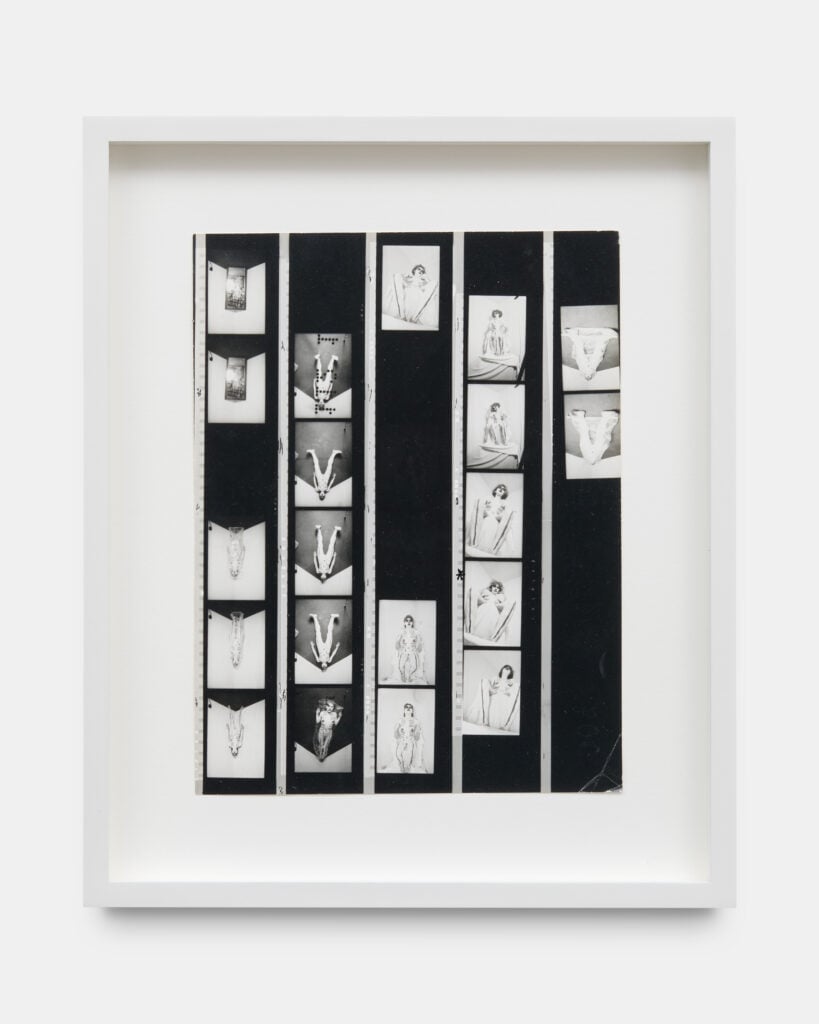
Zsuzsi Ujj’s presentation at Arcadia Missa marks her first solo exhibition in the UK, comprising a selection of photographs taken between 1985 and 1991. A celebrated figure of Hungarian underground culture, Ujj was steadfastly multidisciplinary, working as a photographer, performer, singer, and member of the fledgling underground art and music scene. Poetry, lyrics, music and visual art worked in close unison within her practice, bound together by a powerful skill for image-making and an ability to convey melancholic moods infused with ironic, at times grotesque humour. As the frontwoman of the band Csókolom, or “I kiss \[your hand\]” in English, she had an uninhibited approach to the camera, with the directness of a performer rather than the caution of a documentarian. Produced in solitude, across a concentrated period in late 1980s Budapest, it was a process somewhat closer to ritual than documentation. Set against the socio-political landscape of the Eastern Bloc, Zsuzsi Ujj’s work embodies the tension between communist rule and growing openness. As Hungary approached a period of transition and uncertainty, her works naturally surveyed themes around alienation, self-performance and resistance. The twelve works gathered at the gallery unfold as a single, sustained act of self-possession, almost like a ceremony. In her series of self-portraits, she establishes not only photography but her own body as the medium. Works such as _Háttal fóliás / Wrapped from behind_, 1986, and _Esküvős / Bridal_, 1986 – 2023, reflect the isolation inherent to her process, which involved mostly a self-timer and body paint. The body paint acts as a mask, veiling vulnerability, while emphasising the female corporeal experience through a character that is not recognisable as her. What results is a construction of scenes that absorb and then quietly demolish the social scripts written for women’s bodies. Ujj as bride and skeleton, as lover and corpse; paint covering her body in gestures that compress a wedding portrait into possible readings of life, death, love, self-discovery, destiny, and command. She stages the coupledom, but plays all the parts: herself, the partner, the institution, and its undoing. Her titles are blunt, carrying the same quality as her music, a quiet contradiction that refuses to prettify what it narrates. Ujj’s cinematic thinking plays a prominent role, visible in the way she tells stories and in her use of film-style settings. As a self-professed lover of legends and tales, particularly about women, Ujj’s practice contains a mythological sensibility. In _Körbe / Circle,_ 1991, the final series in Ujj’s oeuvre, rite has a different register. Across the sequence of four frames, the inverted double exposure allows Ujj’s figure to multiply, resurface and finally, dissolve, drawing a full circle. Despite her self-proclaimed aversion to community and inclination towards solitude, her works can be viewed as relational and tender, reaching for something beyond performed societal constraints. The photographs are all at once a record of someone performing for no one, and for everyone.