A salvo
Selva Aparicio

Volume Gallery
1700 W Hubbard St, Chicago, IL 60622
Admission
Free Admission
About
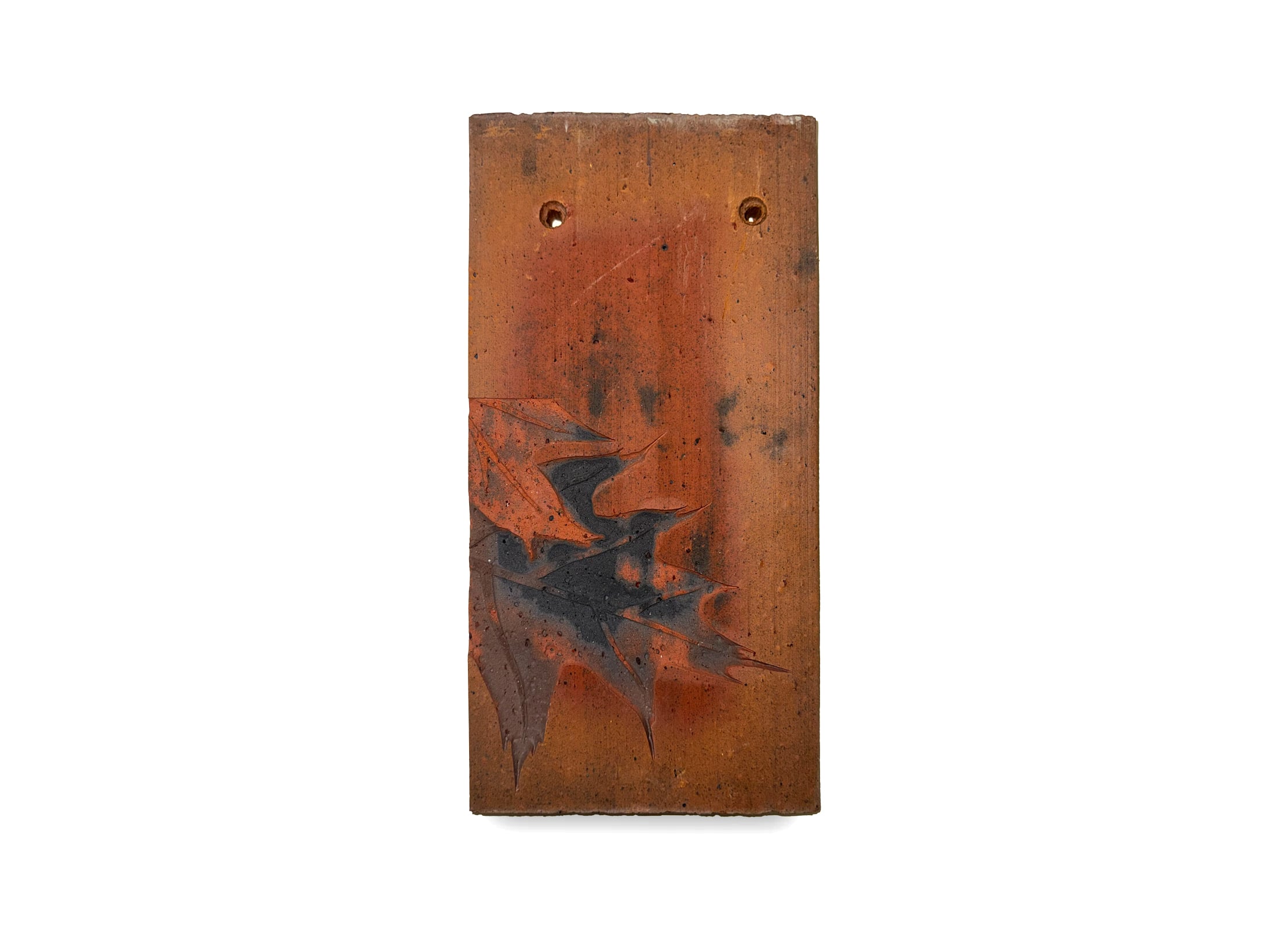
Volume Gallery is pleased to announce _A salvo_, a solo exhibition by Selva Aparicio, her first exhibition with the gallery, opening Saturday November 7, 2026 from 4 to 7PM. Aparicio's practice moves between the personal and the symbolic, giving form to mourning and memory. Her process is often labor-intensive, transforming living, transitory materials into profound reflections on presence and loss, revealing unusual and surprising beauty. Working with materials that contain memories, she understands each piece as a collaboration with living matter—an extended act of care. New work by the celebrated artist captures the ephemeral with devotional attention. Through realistic depictions of crumpled oak leaves carved into ceramic tiles—appearing both individually and as a large architectural installation—and interventions with wasp nests, Aparicio transforms found materials into artworks that slow time, preserving moments that would otherwise slip away. Across the exhibition, the concept of shelter emerges as both a physical and emotional necessity—something that protects and constrains. The exhibition's centerpiece, _Bajo un mismo cielo_, 2026, is a large installation with two hundred and thirty one hand-carved clay roof tiles courtesy of Frank Lloyd Wright's Martin House, Buffalo, NY arranged over a frame of reclaimed barn wood slanted like a pitched roof. Carved impressions of oak leaves appear drifting and wilted as if freshly dried and fallen. Aparicio's carvings fossilize the dying leaves, arresting their decay. By rendering a trace of something living, she points to the fleeting nature of life, the cycle of deterioration and regeneration always going on around us. Roofs are symbolic for Aparicio, as a liminal barrier between inside and outside, meant to protect us. For her, a tiled roof scattered with leaves is an image weighted with memories: "As a child, the roof of my mother's house was the place I escaped to. It was also the most dangerous place, high, steep, and tilted, but somehow it was where I felt most free. I remember lying there for long periods of time, feeling the weight of my body pressing against the terracotta, looking at the sky and the trees around me. I keep returning to that memory while making this work: the body resting against a structure made to protect it, while that structure remains continuously exposed to the world outside." On the roof, she was simultaneously free and in danger, lying in the open above the complications of home, feeling safest perched on the precarious ceramic tiles. Alongside the installation, individual carved tile works, entitled _Roof Traces_, on the wall are more concentrated encounters with the same gesture: recreating those lonely moments of perilous but precious escape. The clay roof tiles have been provided by Frank Lloyd Wright's 1903 Martin House in Buffalo, NY. A gift to the artist for this project following a residency, the tiles carry the legacy of the historic site. Intended as replacements as the original roof wears away, the tiles introduce questions of preservation, authenticity, time, and the struggle against inevitable entropy. _Exuvias_, new wall works, are made from abandoned paper-wasp nests. Wasps gather plant fibers, chew them into pulp, and construct remarkably delicate architectures to shelter their bodies and offspring. Once the nests have been abandoned, Aparicio carefully peels apart and flattens the paper, then cuts them into small rectangles based on the proportions of roof tiles. These fragments are overlapped again, like shingles, transforming the remnants of one form of shelter into another. Across the two bodies of work, human and nonhuman architectures begin to mirror one another. Leaves become permanently embedded in a human-made roof, while the architecture of wasps is dismantled and reconstructed through the language of human shelter. _A salvo_ means safe, protected, out of danger. Yet the structures that keep us safe are themselves vulnerable. Roofs weather. Nests are abandoned. Leaves disappear. Bodies leave. What remains are materials that have held those bodies, carrying traces of contact, labor, exposure, and time. The works begin with a simple contradiction: the places that shelter us are never entirely sheltered themselves. _A salvo_ will be on view through December 19, 2026.