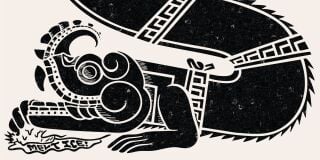
¡TINTA ARDIENTE!
Atlan Arceo-Witzl, Carlos Barberena, Cirilo Esquivel, Eric J. García, Eric Gasca, Jose L. Gutierrez (elgtz), Salvador Jiménez-Flores, Cynthia Marris, Epifanio Monarrez, Antonio Pazaran, Vanessa A. Sanchez, Ricardo Xavier Serment, CHema Skandal!, Alex Velazquez Brightbill, Daniel Amora Mora, René Arceo, Nancy Ariza, Iván Bautista, Liz Born, Paulina Camacho, Alejandra Carrillo, Edith Chávez, Natalia Cuevas, Nicolás de Jesús, Juana Estrada Hernández, Sandra C. Fernandez, Juan R. Fuentes, Sarita Garcia, Daniel González, Manuel Guerra, Ester Hernandez, Judithe Hernández, Celia Herrera Rodríguez, Kill Joy, Kitchen Table Puppets & Press, Poli Marichal, Álvaro Daniel Márquez, Josué Homie Martínez, Oscar Moya, Meli Marie Nava, Paloma Núñez-Regueiro, Pablo O'Higgins, Katia Pérez Fuentes, Yvette M. Pino, Gilda Posada, José Guadalupe Posada, Charlie Ramirez, Rebo, Sergio Sanchez Santamaria, Bernard G. Silverstein, Diana Solís, Shinzaburo Takeda, Maria Cristina Tavera, Misayo Tsutsui, Gabriel Villa

National Museum of Mexican Art
1852 W 19th St, Chicago, IL 60608
Tue-Sun 10am-5pm
Admission
Free Admission
Always Free (museum admission policy)
About
Bound by a shared vision and supported through a vast network, Instituto Gráfico de Chicago (IGC) embraces printmaking—a historically democratic medium that allows for widespread communication—as a tool for education and activism. The work of this volunteer collective amplifies the visibility of contemporary Latinx print artists, while advancing the power of art to ignite social change and foster solidarity. Since 2010, eight print portfolios have emerged as sites of encounter where collective members and invited artists have responded to shared social and political concerns. Simultaneously, IGC's Grabadolandia, the only free printmaking festival led by a Latinx collective in the Midwest, ensures the medium's vitality by fueling new artists and community-led initiatives. This exhibition brings together selections from IGC's print collection, objects, event documentation, and traces of print histories from Mexico and Chicago, presented alongside works from the NMMA's Permanent Collection. Together, these works create an evolving archive of learning, resistance, and exchange—held together through the language of print.