Gordon Cheung: Consensual Halluci/nation
Gordon Cheung
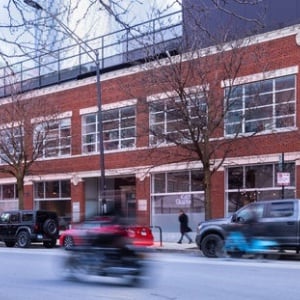
Kavi Gupta Gallery | Washington Blvd
835 W Washington Blvd Fl. 1-3, Chicago, IL 60607
Tue-Fri: 11am-6pm, Sat: 12pm-5pm
Admission
Free Admission
About
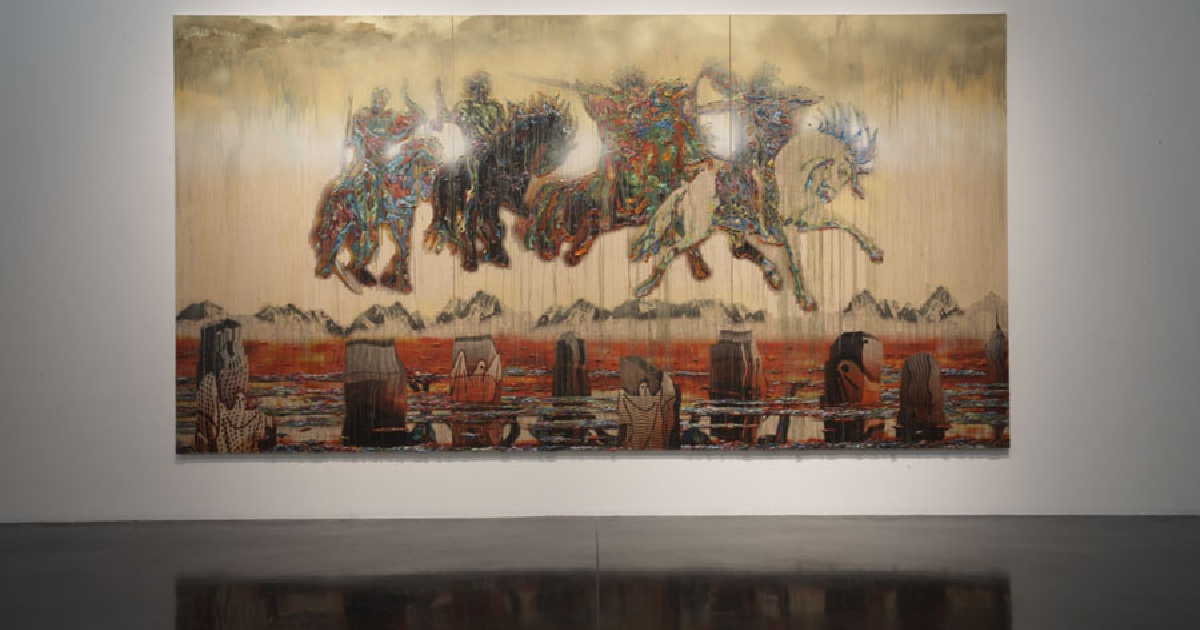
Kavi Gupta is pleased to announce Gordon Cheung's first solo exhibition with the gallery, Consensual Halluci/nation, opening September 17, 2026, in Chicago. Drawing on the artist's experience growing up between London and Hong Kong, Consensual Halluci/nation examines the entanglement of technology, global finance, colonial history, and systems of belief. Born in London to parents from Hong Kong and a twenty ninth generation Cheung, the artist's practice has developed from a sustained engagement with the cultural, economic, and technological transformations that have defined the late twentieth and early twenty-first centuries. Cheung came of age during a period marked by the transition into the digital age, the millennium bug, the tech stock crash, and the collapse of Enron and WorldCom. These early manifestations of financial systems built upon collective belief became important precedents for his understanding of capitalism as a form of "consensual hallucination" vast structures of value that exist because millions of people agree to believe in numbers on screens. The subsequent economic rupture of 2008, alongside the events of 9/11 and the War on Terror, further informed his interrogation of the grand narratives through which histories of civilization are constructed and understood. From these fractures emerged Cheung's concept of the "technosublime," in which technology assumes the role once occupied by nature within the Romantic Sublime. Where the Sublime traditionally overwhelmed the individual through encounters with the vastness and power of the natural world, Cheung considers the overwhelming scale of contemporary technological and financial systems. The internet, itself born from the nuclear age as a decentralized network designed to survive annihilation, becomes both subject and metaphor for a world defined by constant technological flux. Within these systems, Cheung constructs landscapes in which power, capital, technological acceleration, and collapse converge. The artist's longstanding use of stock listings from the Financial Times provides both material and conceptual ground for this inquiry. The financial newspaper becomes a matrix of information moving at the speed of light, with trillions of dollars translated into abstract datascapes that accumulate into speculative utopias and dystopias. In Cheung's studio, newspapers are crushed and folded until they acquire the density and physical presence of stone, becoming scholars rocks and spirit stones forms historically associated with contemplation and the natural world, here transformed through the language of finance and technology. Spray paint in cyberpunk colors, sand, acrylic, digital imagery, and layers of varnish further complicate the surfaces, creating works in which the distinction between screen and pigment, nature and civilization, and information and matter begins to dissolve. The title Consensual Halluci/nation draws on William Gibson's description of cyberspace in Neuromancer as "a consensual hallucination experienced daily by billions of legitimate operators, in every nation." It also plays on the Latin root hallucinari, meaning to wander in the mind or to dream. For Cheung, the consensual hallucination describes not only a shared illusion but a collective drifting of perception a nation of minds agreeing to inhabit the same dream. The title therefore speaks to the systems of collective belief that underlie finance, technology, national identity, and the construction of history. Cheung's material practice reflects this tension between immaterial systems and physical experience. Obsolete financial newspapers, AI-generated imagery, historical references, and digitally developed forms are synthesized through successive layers of acrylic and hand-embellished 3D-printed motifs. His sculptural works similarly bring technological processes into dialogue with ancient and natural forms, particularly the Chinese scholar's rock, whose associations with contemplation and landscape become newly charged when constructed from the visual and material remnants of global financial systems. Viewed from a distance, Cheung's compositions evoke speculative landscapes, cosmic vistas, or futuristic environments; at close range, their dense surfaces reveal the physical labor required to transform information into matter. Cheung's practice spans painting, sculpture, installation, 3D printing, and emerging new media technologies, including artificial intelligence, while remaining deeply committed to the material possibilities of painting. His works transform systems that ordinarily operate at speeds beyond human perception into objects that can be physically encountered and contemplated. Capital moves at light speed; in Cheung's work, it is forced into weight, silence, and slow time. The resulting landscapes become meditations on what it means to be human as civilizations rise and fall, and as histories continue to be shaped by those who write them.