Road to the Farthest Room
Jobe Gemmell Hughes, Julia Firestone Callis, Ben Driggs
Devening Projects
3039 W Carroll Ave, Chicago, IL 60612
Sat 12-5pm, by appointment
Admission
Free Admission
About
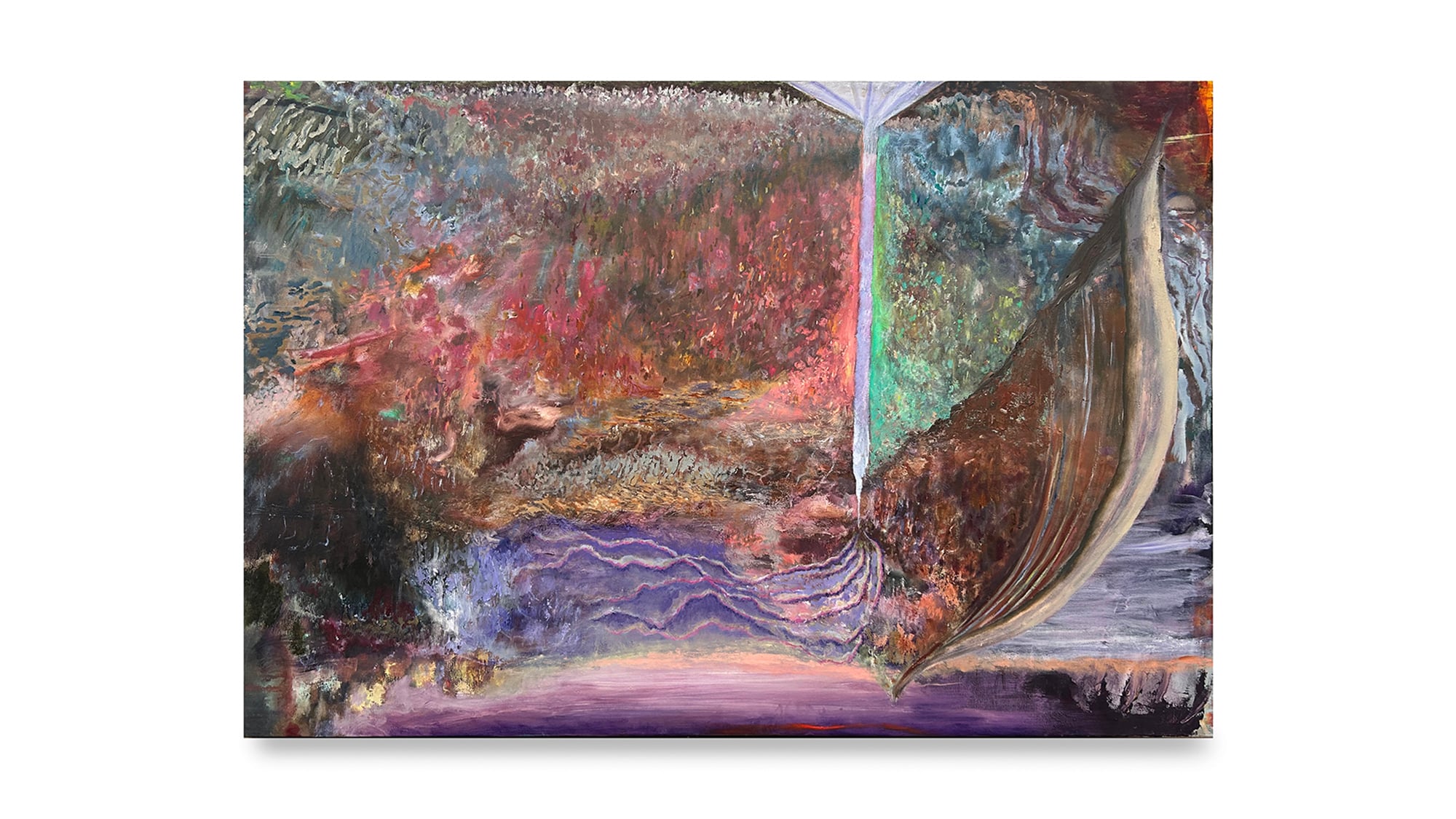
Devening Projects is excited to start off the fall 2026 season with a curatorial collaboration with Elizabeth Lalley of Slow Dance Projects. Together we're presenting Road to the Farthest Room featuring paintings by Jobe Gemmell Hughes and Julia Firestone Callis and sculpture by Ben Driggs. The show will open with a reception for the artists on Sunday, September 13th and will continue until October 24th. We're also looking forward to hosting these artists during Chicago Exhibition Week 2026 from September 14th – 20th. Road to the Farthest Room presents the work of three artists whose visually disparate practices share an abiding trust in the private life of attention—in what solitude, repetition, and uncertainty can reveal. These are practices that proceed through voracious curiosity, rather than toward resolution. Operating within a kind of dream logic, paintings by Julia Firestone Callis and Jobe Gemmell Hughes and sculptures by Ben Driggs are rooted in domestic and psychic spaces, yet they do not present life as a coherent image of itself. Instead, these are works born from quiet thought, fixation, and the desire to attempt. Meaning arrives slowly in these works, through embodied encounter and atmosphere rather than immediate recognition. For Jobe Gemmell Hughes, painting is "the act of traveling towards some strange light," trying and failing, leaping and falling. His billowing paintings, like stormy skies with light streaming through the fray, appear to construct spaces as much as disassemble them. They feel their way towards something–at times the paint appears to unfold, like curtains or wallpaper coming unstuck. Gemmell's paintings are searching, risking, assembling space that is as unstable as memory. In Julia Firestone Callis's paintings, intimately familiar images occupy spaces without stable ground or ordinary perspective. Forms hover near one another without resolving into narrative, held together instead by association, memory, and feeling. Her paintings preserve the intimacy of recognition while withholding the reassurance of orientation. Held together in an unknowable space, the familiar things in Callis's paintings exist like so much in life: their material presence is only one part of what they contain, propelling us into a mental landscape of shadows, memories, and dreams. Ben Driggs's sculptures are domestic objects that are, quite literally, made for his home. A front door, a garden gate–unhomed in the gallery and made newly strange, already imbued with a mystery of use. His works understand the home not as a completed structure, but as something continuously assembled through labor, attention, and inhabitation: a life always unfinished, always unfolding. The intimacy of Driggs's pieces and temporary estrangement from their domestic environment reveal absence as something deeply weighted, tender, and laden with a human impulse to understand why people make the things they make, why they value the objects and spaces they do. Through these absences, these fragments of information, the work asks that we exist, temporarily, in the same space as their logic. The works in Road to the Farthest Room refuse the reassurance of a floor. Familiar forms drift loose from ordinary perspective; objects associated with the home enter the public space of the gallery, carrying the inside outward. Scale, distance, and relation become uncertain. Yet the works do not abandon space so much as make it provisional, asking us to navigate by instinct, memory, and attention. These works unsettle space not to leave us lost, but to make navigation an imaginative act. A journey without arrival.