Sediment Tracks
Sean Nash

Andrew Rafacz
1749 W Chicago Ave, Chicago, IL 60622
Tue-Fri 10am-5pm, Sat 11am-5pm
Admission
Free Admission
About
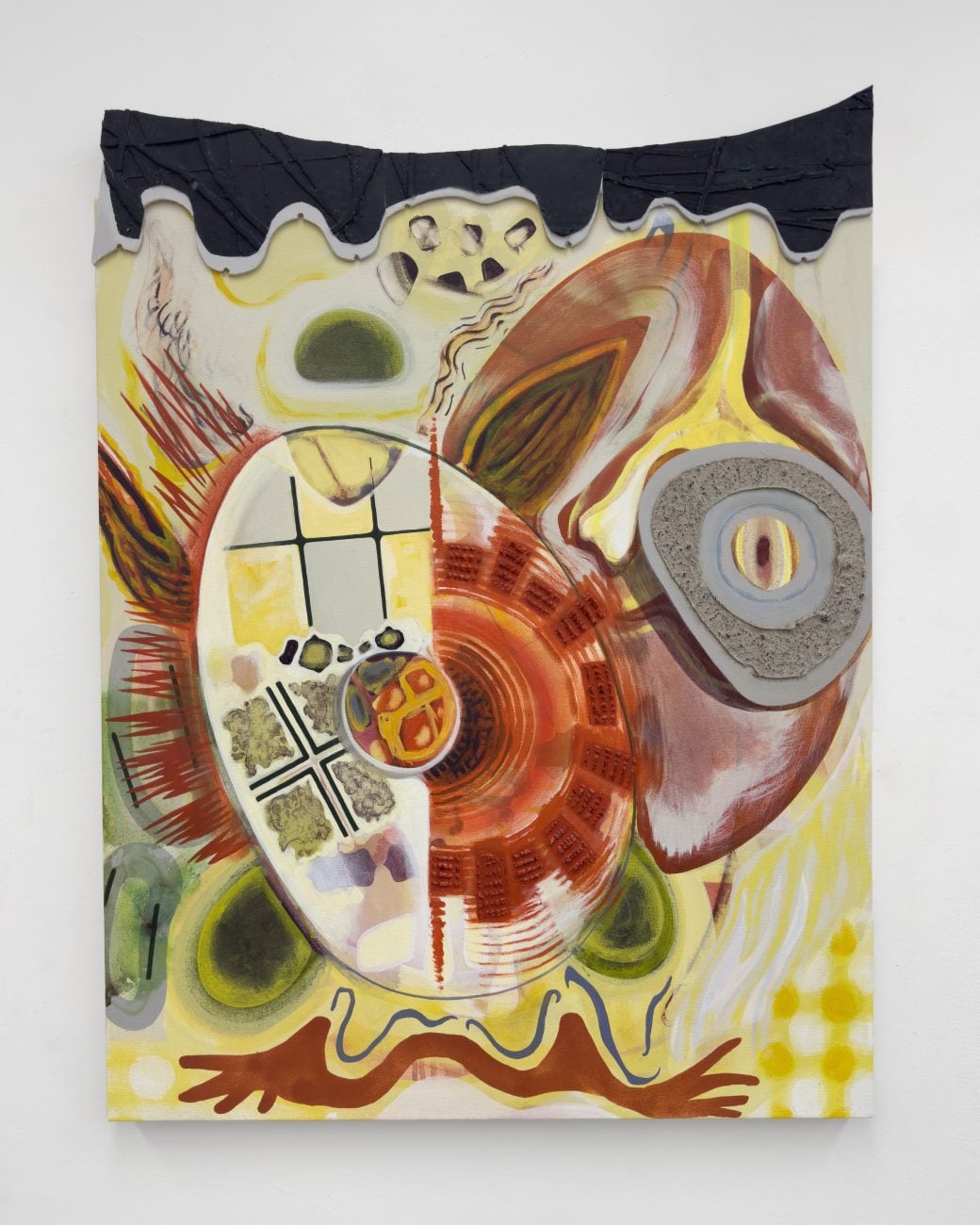
**ANDREW RAFACZ** is thrilled to announce _Sediment Tracks_, a solo exhibition of new paintings from Sean Nash, in Gallery Two. The exhibition opens Friday, November 6th and continues through Saturday, December 19th, 2026. This is the artist's first solo exhibition with the gallery. In _Sediment Tracks_, Sean Nash presents a series of paintings that explore ecological relationships beyond conventional distinctions. Drawing on experiences with fermentation and microbial research, as well as collaborative projects informed by feminist and queer approaches to science, the artist explores notions of the subvisible or agential matter as a site for rethinking interdependence, embodiment, and difference. These concerns extend directly into a visual language of layered imagery, textured surfaces, and speculative biological forms. The exhibition interprets the scientific concept of "trace fossils"—preserved evidence of biological activity in sediment that is buried and transformed over geological time. Here, these traces, repetitions, holes, tunnels, and grooves become a generative framework for thinking about material memory and the presence of energies existing just past the limits of our conscious awareness. By combining expansive painted imagery with cast and collaged elements such as sand, composite resin, and fiberglass fabric, the artist brings low relief and flatness into a dynamic dialogue. These material contrasts portray the hidden structures and processes of biological existence, suggesting worlds that unfold beneath the surface of our everyday visibility. Play, improvisation, invention, and happenstance are central to Nash's practice. These open-ended methods echo physicist and feminist theorist Karen Barad's concept of "intra-action," which challenges the assumption that entities exist as separate, independent individuals before they encounter one another. Instead, identities and boundaries emerge through entangled relationships—a framework that directly informs the exhibition's attention to the mutual shaping of material realities.