List Projects 35: Pap Souleye Fall
Pap Souleye Fall
MIT List Visual Arts Center
20 Ames Street, Bldg. E15-109, Cambridge, Massachusetts 02139
Tue–Sun 12–6 pm, Wed–Thu until 7 pm
Admission
Free Admission
null
About
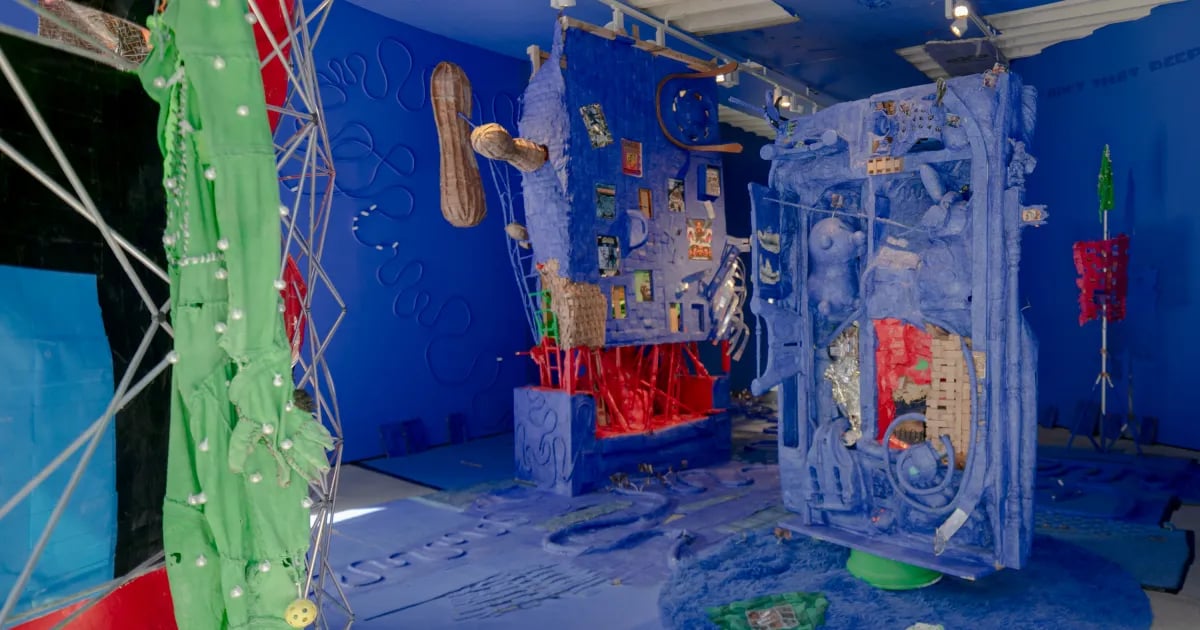
In Pap Souleye Fall’s practice, technological error is a space of refuge one can slip into, concealed from larger systems of control. Both an artist and a comic book illustrator, Fall has recently created work that emerges from the world of _DEAD PIXEL_, an ongoing story they developed, which reveals itself through installation, performance, drawing, sculpture, and video. Often used by gamers, the term “dead pixel” describes the black spots that appear on-screen when hardware fails and a pixel permanently goes dark, thus disrupting the continuous, smooth image of the game. Fall imagines these malfunctions as portals to hidden realms of autonomy, as a way of exploring the dynamics of visibility and invisibility that shape contemporary life. For their _List Projects_ exhibition, Fall will present a new installation that furthers the _DEAD PIXEL_ saga. In the show, the story’s protagonist—also named DEAD PIXEL and typically represented in vivid, green-screen green—sits atop a tomb-like structure made from blocks of quilted textiles, electronic waste sourced from MIT’s campus, and papier-mâché sculpture, among other materials. When seen from a particular angle, this tableau blends into a mural on the surrounding walls, creating the illusion of a virtual glitch in real space. On one side of the structure, the illusion breaks, revealing a glowing interior chamber filled with found objects and sculpture, alongside a small library that includes Fall’s hinged wooden “books” covered in intricate drawings. DEAD PIXEL is endowed with an extraordinary capacity for camouflage, enabling them to elude the story’s villain, THE DATA COLLECTOR. In Fall’s story, data is treated as a precious material, with the artist likening it to the soul and to the wealth of knowledge we each hold in personal, collective, or cultural forms. THE DATA COLLECTOR acts as an avatar for data mining and predictive analytics, practices that enable social control through advancing technologies of algorithmic behavior modification and surveillance. Encounters between THE DATA COLLECTOR and DEAD PIXEL appear in small drawings embedded into the structure, infusing this narrative into the installation. The _DEAD PIXEL_ story evokes ideas of fugitivity, elaborated by thinkers such as Fred Moten, which describe forms of Black life, thought, and creativity that refuse capture by dominant systems of power. These ideas appear through the dynamics of pursuit and evasion that drive Fall’s story, as well as through historical referents incorporated into the objects; Fall’s patchwork textile blocks, for example, refer to a system of quilt patterns used on the Underground Railroad to encode and convey messages to those escaping enslavement. These moments ground the installation in a centuries-long lineage of resistance and freedom of movement in the face of opposing forces. Taken altogether, Fall’s exhibition points to the importance of spaces that lie outside of view, positioning them as sites that preserve community, knowledge, and self-determination. _DEAD PIXEL_ exemplifies both the power and the stakes of being able to move through the world unseen.