Better Happy Than Normal! Queer Experiences in Christian Fundamentalist Contexts
Pauli Linke, fog gender, Jay Hulme, Stuart Beatch, i Coristi Chamber Choir

Schwules Museum Berlin
Lützowstraße 73, Berlin, Berlin 10785
Mon, Wed, Fri: 12pm–6pm; Thu: 12pm–8pm; Sat: 2–7pm; Sun: 2–6pm; Tue: closed
Admission
Free Admission
About
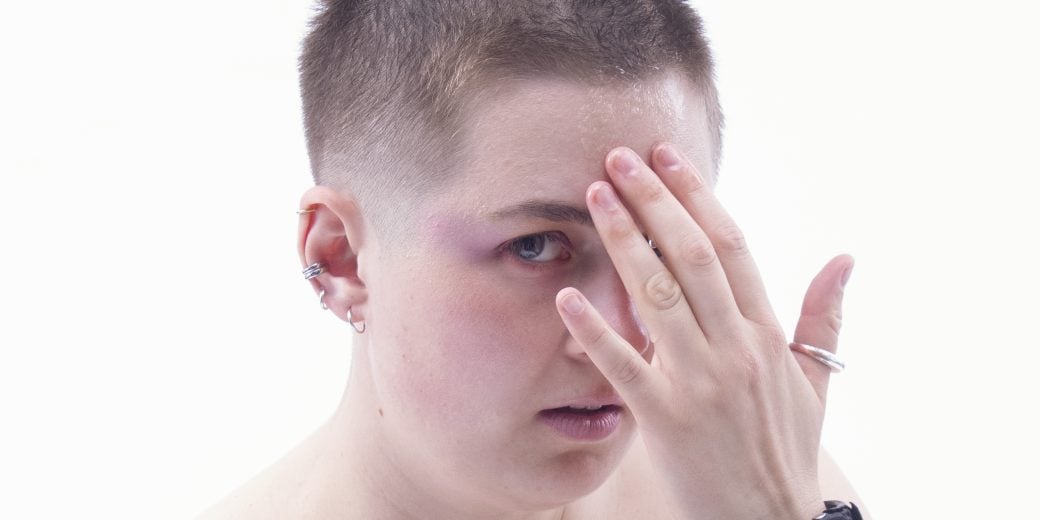
Subtle rejection, ranging up to open hatred and political campaigns against queer identities, are central elements of Christian fundamentalist ideologies. Heterosexual marriage between a man and a woman is regarded as the only legitimate and ‘natural’ way of life, and there are two, and only two, biologically determined genders. Queerness, by contrast, is understood as a rejection of God’s plan – as a sin that must be corrected and as a particularly severe test from God. Queer people are told that they are wrong. They are offered – or pressured into accepting – support to deny their gender identity or their desires and to live as God supposedly intended for them. This ranges from a ‘pastoral care’ conversation, dressed up in friendly terms, to violent measures under the guise of so-called ‘conversion therapies’. Although these are now prohibited by law, they continue to exist – under different names, in grey areas or in secret. Hostility toward queer people is often attributed solely to other religions and cultures, whilst being overlooked within one’s own traditions. Yet queerphobia is deeply rooted in the so-called Christian-Western dominant culture. Christian fundamentalism merely expresses in a radical form what continues to operate unspoken in many parts of society: the notion that it is better not to be queer. The title of this exhibition is inspired by Jeanette Winterson. In her autofictional novel Why Be Happy When You Could Be Normal?, she recounts her childhood in a strict evangelical environment, as well as the rejection she experienced as a young queer woman at the hands of her adoptive family and the congregation. At the same time, she recounts her journey towards a life of self-determination. When she falls in love for the first time, her adoptive mother asks precisely that: why she would want to be happy when she could just as easily be normal. Queer people are also familiar with the pressure to forgo their own happiness in order to conform to the norm, even in supposedly tolerant Christian circles. While queer people are welcome, their queerness often is not. In a series of interviews, this exhibition gives voice to queer (ex-)Christians who have lived – and survived – in fundamentalist communities. They speak of psychological pressure, spiritual abuse and social exclusion, but also of their journey out of destructive belief systems. Some also find new approaches to the Bible and spirituality in the process. Thus, some interviews also feature groups that are attempting to reconcile faith with being queer. The works of Pauli Linke, the group fog gender, Jay Hulme, Stuart Beatch and i Coristi Chamber Choir use artistic means to open up visual, poetic and musical avenues to these experiences and the complex processes of adaptation and rejection, loss and liberation, with all their ambivalence. The exhibition presents a polyphonic narrative, brings mechanisms of violence to light, celebrates the resilience of those affected, and honours their resistance as well as their spiritual creativity. **Concept**: Birgit Bosold & Sophie Rauscher **Project management**: Brigitte Oytoy **Camera & editing**: Christopher Hewitt **Artists**: Pauli Linke, fog gender, Jay Hulme, Stuart Beatch & i Coristi Chamber Choir **We would like to thank everyone who shared their experiences with us.**