Inscape: KEA BOLENZ, CAROLINE DOUVILLE, GALA LILLIAN GLOTZBACH, ANT ŁAKOMSK, ANTONIA NANNT, JOSEPHINE ROTHÄUSER, KLAUDIA SCHIFFERLE, ALINE SCHWIBBE
Kea Bolenz, Caroline Douville, Gala Lillian Glotzbach, Ant Łakomski, Antonia Nannt, Josephine Rothäuser, Klaudia Schifferle, Aline Schwibbe

Kraupa-Tuskany Zeidler
Regina-Jonas-Str. 41/43, Berlin, Germany 10999
Tuesday–Saturday 11–6 pm
Admission
Free Admission
About
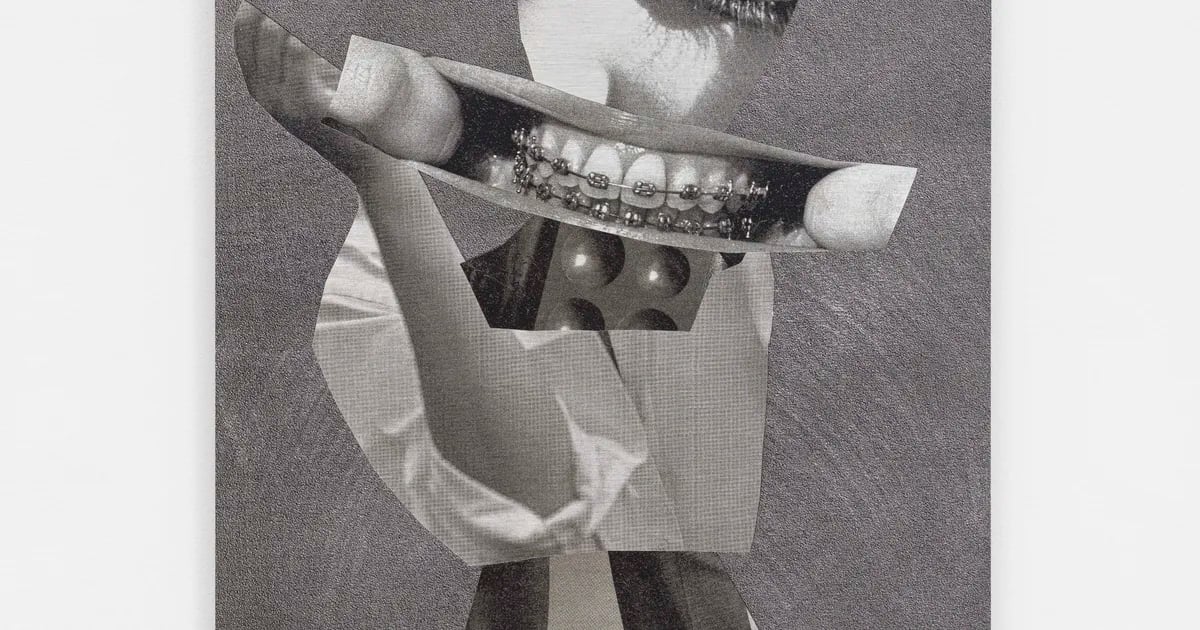
Kraupa-Tuskany Zeidler is pleased to announce _Inscape_, a group exhibition curated by the gallery team, presenting established and emerging artists working across various media. The word inscape enters the English language in two registers, from two distinct moments. The Victorian poet Gerard Manley Hopkins derived it from the medieval philosopher Duns Scotus's concept of haecceitas, or thisness: the irreducible inner form through which each individual thing enacts its own identity, in all that it assimilates and carries within. This form is not static but performed; continuously expressing the selfhood that lives within. Later the term was adopted by the Chilean surrealist Roberto Matta, who used it to describe his paintings of the late 1930s: works he called psychological morphologies, explorations of the mind conceived as a three-dimensional space, a landscape one could enter and depict. Inscape, then, is both portmanteau and proposition: the interior treated as terrain, the psyche as a geography with its own topography, its own shadow and unmapped expanse. The works in the exhibition come together in response to this proposition, presenting interior landscapes that are plural by nature, at times intentionally unresolved and ambiguous. Space, in this sense, is understood as the product of simultaneous and intersecting stories: never singular, never settled. It is shaped by those who inhabit it, pass through it, are excluded from it, or claim it on their own terms. To map a space is therefore to map a set of relations: between bodies and boundaries, between presence and absence, between what is permitted and what is withheld. Borrowing from psychogeography the understanding that space is navigated through the psyche rather than through strictly cartesian parameters, the exhibition suggests that space is never neutral but shaped by gender and power long before the body arrives in it.