Today yet, tomorrow surely
Juliet Bashore, Kerstin Bastian, Konstanze Binder, Lilly Grote, Ulrike Herdin, Julia Kunert, Ludger Blanke, Tsitsi Dangarembga, Jochen Denzler, Lew Hohmann, Petra Tschörtner, Hans Wintgen, Johann Feindt, Jeanine Meerapfel, Helga Reidemeister, Dieter Schumann, Tamara Trampe, Nele Güntheroth, Thomas Hahn, Kerstin Honeit, Brenda Akele Jorde, Riki Kalbe, Ingo Kratisch, Jutta Sartory, Betina Kuntzsch, Angelika Nguyen, Pınar Öğrenci, Helga Reidemeister, Pim Richter, Karl Farber, Elske Rosenfeld, Bernd Sahling, Volker Sattel, Viola Stephan, Petra Tschörtner, Chetna Vora

Museum Ephraim-Palais
Poststraße 16, Berlin, Berlin 10178
Tue–Sun 10am–6pm, Mon closed
Admission
7 euros (single ticket) | 15 euros (combi-ticket*) | free admission (under 18 years or with reduction)
*Valid on two consecutive days for the Museum Ephraim-Palais, the Museum Nikolaikirche and the Museum Knoblauchhaus.
About
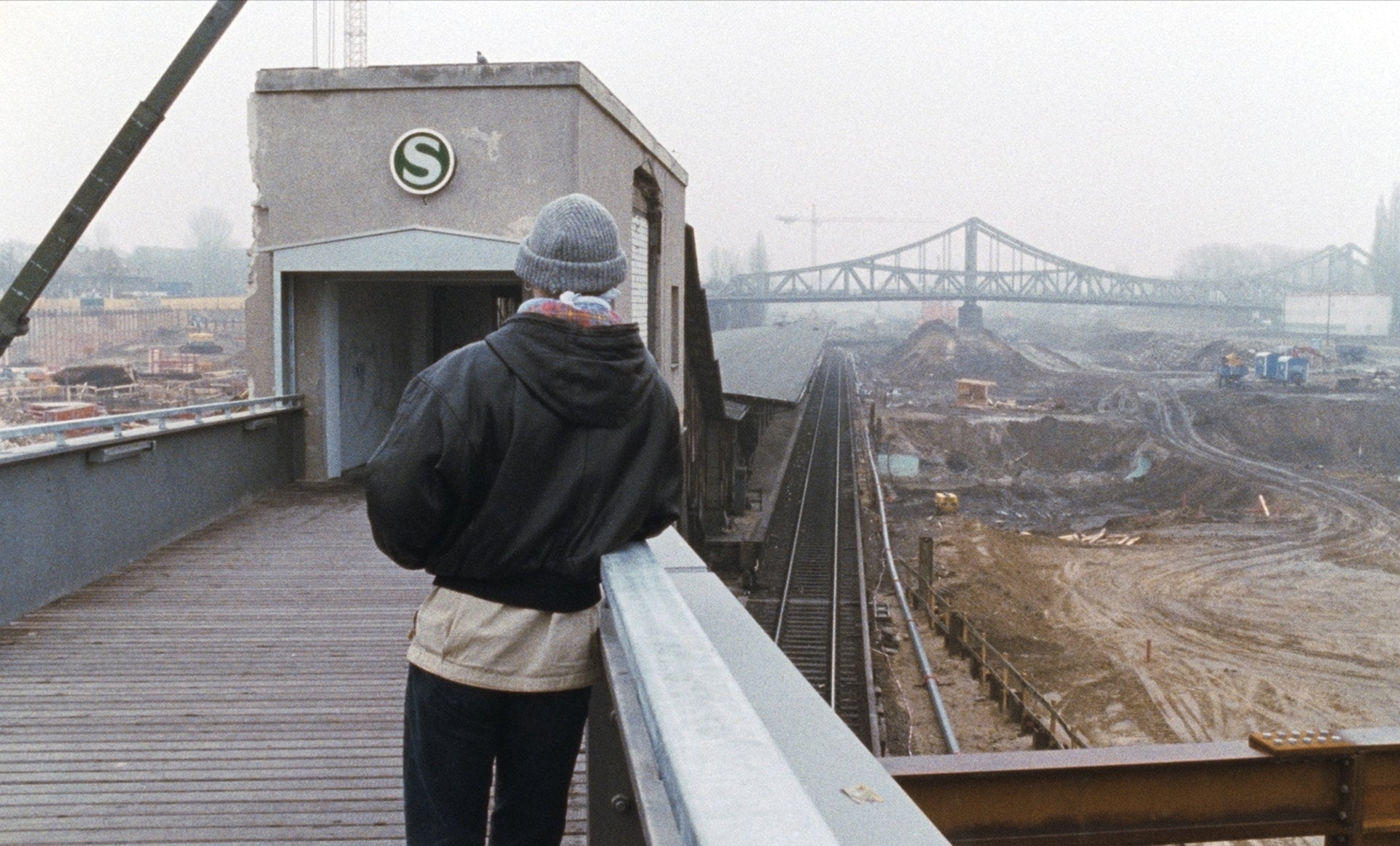
35 years after the end of the division of Germany, the Stadtmuseum Berlin has dedicated a large scale film exhibition in the Museum Nikolaikirche to the upheavals in Berlin around 1990. Short documentary films, as well as excerpts from film and television span a period of four decades, affording rare insight into the far-reaching changes of this era. Above all in East Berlin, people experienced a storm of seemingly contradictory events. On the one hand, self-empowerment and new freedoms arose, not to mention the promise represented by the market economy. On the other hand, uncertainty prevailed, as did the threat of unemployment, and of violence directed against those who were perceived not to belong. At the same time, the exhibition includes artists who investigate those years from today’s perspective. They look at the spatial and societal ruptures and continuities between then and now in a city that, perhaps more than any other, represents the political history of Europe in the 20th century. On January 11, 1991, at the Museum Nikolaikirche, the constitution for unified Berlin was determined. However, shared life is structured not only by the democratic principles of this document, but above all by everyday life, the economy, and architecture, as well as by cultural modes of belonging and structural inequalities. The exhibition offers a space for examining a period replete with hope and disappointment, pointing towards personal histories, experiences, and perspectives that are often not heard or have been repressed. What, for example, did the outbreak of nationalism and racism after the fall of the Wall mean for people with migrant backgrounds in West and East Berlin? “Today yet, tomorrow surely” consciously casts light on events that are no longer remembered, or remembered differently. This includes the Monetary, Economic and Social Union on July 1, 1990, which went hand-in-hand with the end of internal border controls in Germany. Many hours of film material are embedded within a scaffolding structure that fills the museum, containing nine large-format screens. Visitors are invited to dive into filmic representations of lived experiences, from film-makers whose practices range from participant observation, to open conversations, to artistic appropriation of history and the present. A journey of discovery through the shifting landscapes of past and present Berlin.