Graciela Iturbide | Eyes to Fly With
Graciela Iturbide

C/O Berlin
Hardenbergstraße 22–24, Berlin, Berlin 10623
Daily 11:00–20:00
Admission
Free Admission
Visitors can enjoy reduced admission to the Botanic Garden Berlin by presenting of their exhibition ticket through June 10, 2026.
About
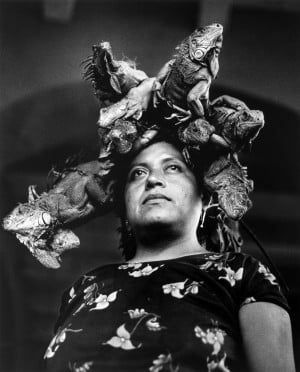
C/O Berlin presents the first major retrospective of Graciela Iturbide (b. 1942, Mexico) in Berlin, taking an in-depth look at the oeuvre of one of the leading voices in contemporary photography. Developed in close collaboration with the artist, the exhibition includes iconic series along with pictures that have rarely if ever been presented, tracing the development of the artist’s photographic practice that has helped to shape the image of Mexico and its people for over five decades. **Content Note** The exhibition _Eyes to Fly With_ contains photographs with sensitive content, particularly addressing death and rituals in Mexican culture. Individual images depict the laying out of a deceased child, ritual animal slaughter, and nudity in the context of sex work. Iturbide’s work explores the often intimate relationships between identity, ritual, and society. Her sensitive manner of approaching the people and communities that are the subjects of her images results in the poetic quality of her documentation. The exhibition’s title _Eyes to Fly With_ finds inspiration in the title of one of her self-portraits and refers, on a metaphorical level, to Iturbide’s understanding of photography as a means of exploring both herself and the world, one that is liberating and opens up new perspectives. One central theme of the exhibition is the depiction of women and their role in society. In _Juchitán de las Mujeres_, her series about the Zapotec people in Juchitán, Oaxaca, Iturbide portrays a social structure in which women occupy major economic and public positions, in this way challenging gender stereotypes. Her photographs evince a range of gender identities. This project exemplifies her interest in female autonomy and cultural diversity. Additional series explore other regions and social contexts. In the 1970s and 1980s, Iturbide photographed the nomadic Seri people in northwestern Mexico, whose way of life is characterized by nonconformity. Her impressive photographs provide insight into their day-to-day life and reveal the diversity of Mexican culture, in which precolonial and colonial continuities still shape the present. Iturbide’s series _La Matanza_ is an independent series documenting the ritual of slaughtering goats that is practiced in the Mixteca region, showing the intersection of colonialism, ritual, survival, and death. In the 1980s Iturbide also depicted the everyday life of the cholos and cholas, a Mexican-American subculture that has evolved in East Los Angeles, among other places. Inspired by these encounters, she began a long-term project, titled _White Fence_, that continued for more than three decades. Featuring people whose self-image is shaped by their heritage and present circumstances, as well as experiences of marginalization and migration, her photographs offer a nuanced reflection on community and cultural continuity in urban space. In her photographic exploration of _Casa Azul_, Frida Kahlo’s famous “Blue House,” Iturbide focuses on Kahlo’s perceptible presence. Decades after the artist’s death, she photographed personal items—clothing, and relics that remained in the house—and explored the traces of a life marked by pain, creativity, and self-assertion. The photographs highlight the fine distinction between life and death, suffering and joy, and the closely intertwined realms of experience that are central to many of her works. The retrospective also contains rarely shown photographs that were taken on trips to India and Bangladesh. Over the decades, Iturbide developed her own distinctive visual language. Her photographs combine documentary observation with personal reflection, developing over time from socially contextualized series to increasingly introspective, almost meditative explorations of transience and spirituality. The tension between tradition and modernism is a recurring motif in her work. With around 250 works, including numerous vintage prints, contact prints, rarely seen color prints, and black-and-white photographs, the retrospective reflects the extraordinary range of her work from the late 1960s to the present. The show was curated by C/O Berlin curator Sophia Greiff and guest curator Melissa Harris.